Emigrant Stories in Stitch; The Art of the People will not be Disappeared

If you are interested in exploring more about humanity’s Devotional Arts and the Arts of Immigration, subscribe for FREE to Ancestors Walking on Substack.

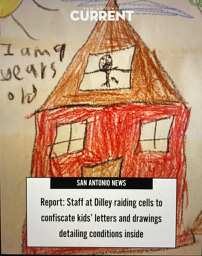
Since I published this brief but revealing testimony last week on my first Substack, emigrant children’s drawings and letters are now being confiscated in detention facilities, so that the truth does not get out. As a former art therapist, I learned a long time ago that nothing reveals the truth like ART, especially the artwork of children, followed by their mother’s handwork.

Emigrants: Empire can try to deny your humanity, but no one can deny your story, your dignity, your incomparable truth. To migrate from peril to promise is a human instinct following in the footsteps of our ancestors.
Readers: This Substack explores humanity’s devotional arts through the arts of the marginalized, from art produced by women religious to emigrants in detention and citizens in prison, to art of the streets, all informed by historical references e.g, retablos & ex-votos from the U.S.-Mexico border, Art from the Holocaust, visual stories of refugees and survivors of war.

In this current regime hostile to anyone deemed the other, I post less digitally largely to protect the artisan families that we lift up, but the stories of the people will not be disappeared. In the midst of mass distractions and glittering screens, the still silent image; contemplative visual art allows us to stop, look, and feel. This work demands our attention and commands our presence, deepening our understanding and telling us what we need to know. Please seize the time to see.

In the following piece about emigrant stories in stitch, we cherish these slow-stitch depictions of family migration, lest we ever lose our neighbors and, God forbid, forget what they go through to reach safety and freedom. After what went down in Minnesota and what’s happening now in communities, big and small, across the country, people are mobilizing, doing what they can behind the scenes to safeguard the families in their midst.

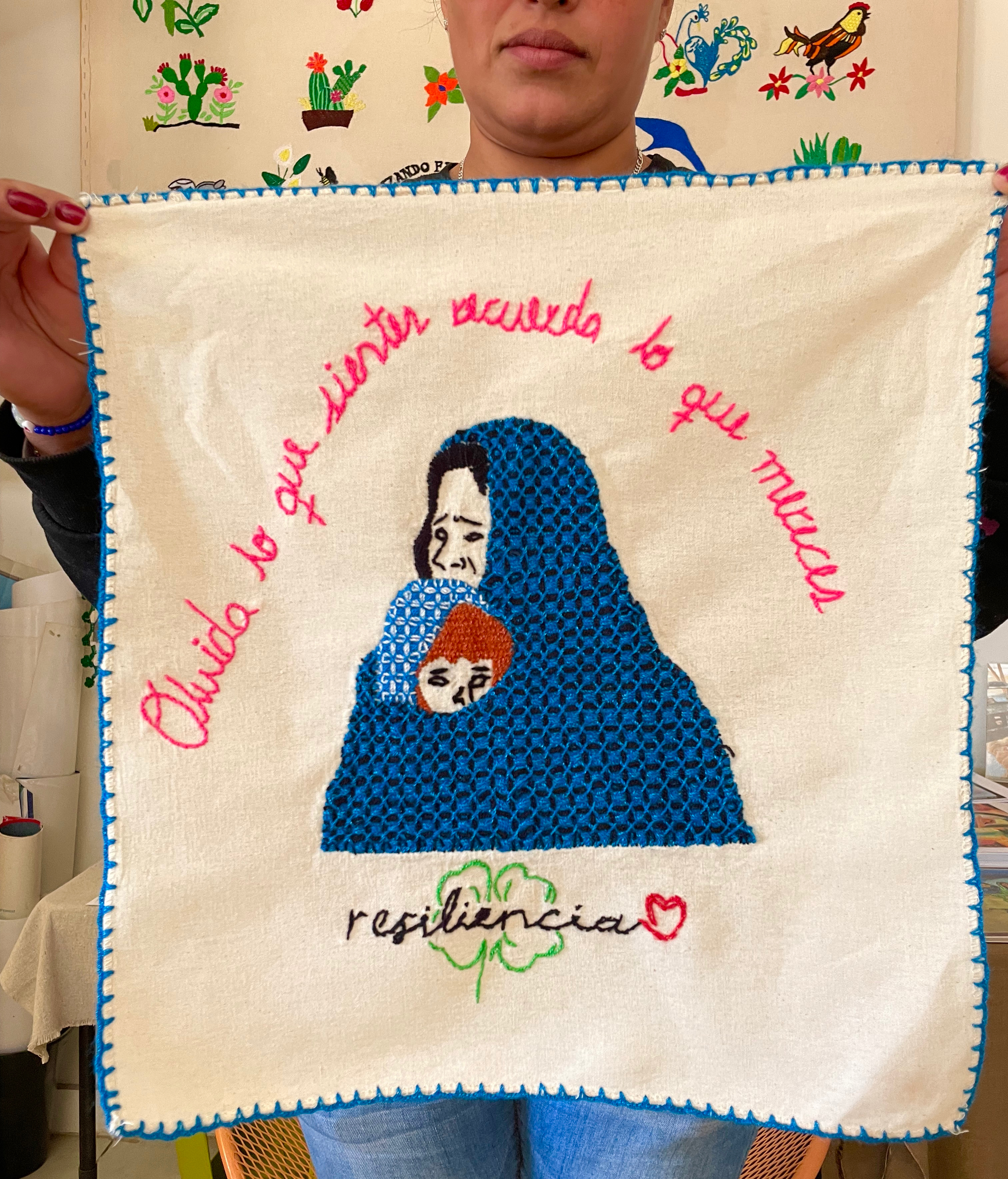
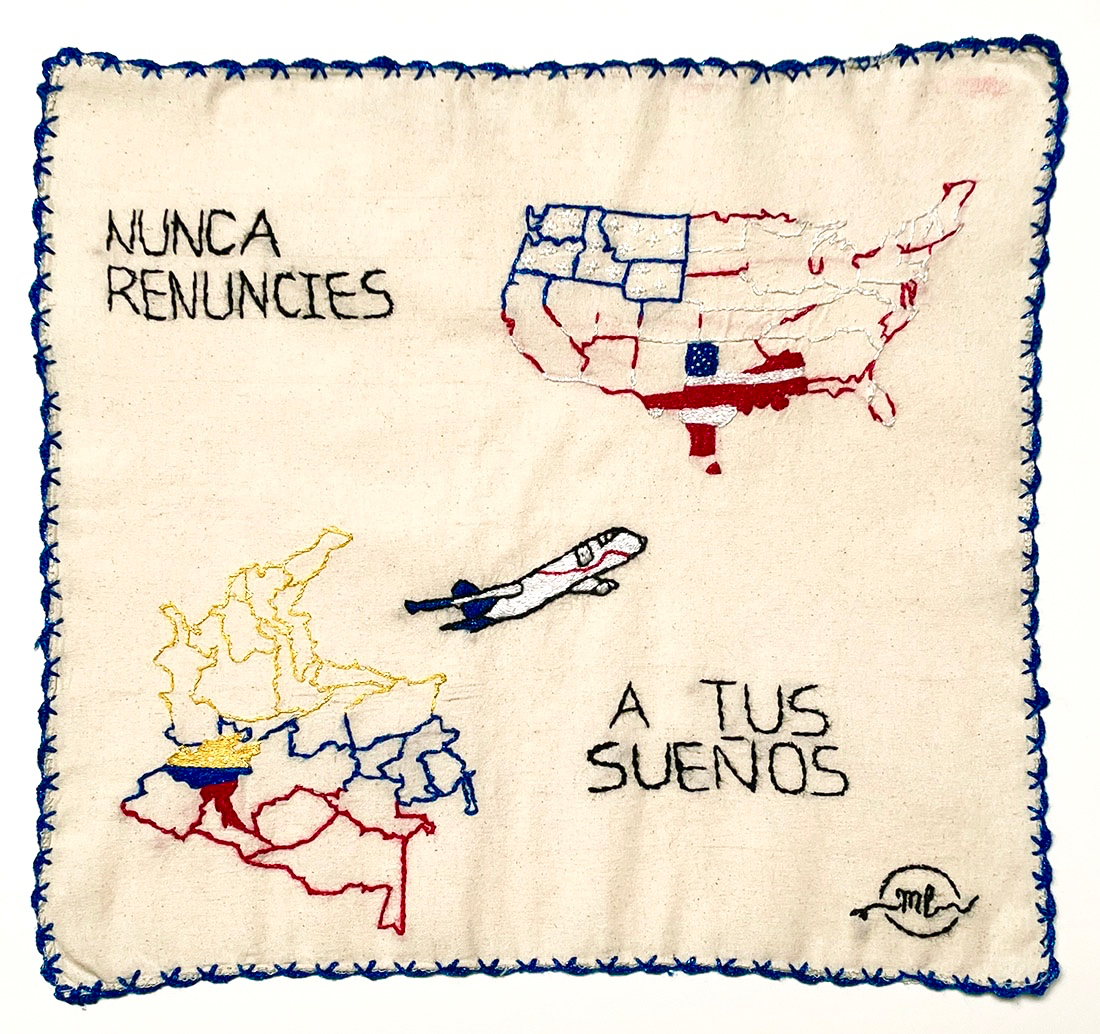
This series of embroideries was created by a woman we will call Ana to protect her identity. It pains me to be forced to use an alias for a woman who committed no crime. And not being able to publicly credit her as the fine artisan she is infuriates me. In the latter part of 2024, I discovered the remarkable embroideries at the bottom of a stack offered for donation by residents at the House of Mercy and All Nations shelter – la Casa de la Misericordia de Todas Naciones, in Nogales, Sonora. Shortly after our visit to the shelter, Ana and her family finally crossed the border legally, petitioned for asylum, and are now in a city somewhere in the U.S., trying to hold on.

Ana stitched the story of the violence her family experienced migrating through Mexico, where they were robbed of all they had, kidnapped at gunpoint, hurt, and desperate for food and water. Still, she said she never lost faith. Many Strangers helped them along the way.

Ana had never embroidered before coming to the shelter. She learned from other bordadoras at the shelter’s Bordadoras de Esperanza – Embroiderers of Hope program. Ana’s ability to convey, with her hands, so beautifully what she and her family experienced to make it to the shelter is extraordinary.

“It (the embroidery) healed me,” she said. I know this because I no longer cry when I tell my story.”
“Never give up your dream.”

“Our trip from Colombia to the United States, Ana explains. We disembarked in Mexico and then had to find our way to shelter.”
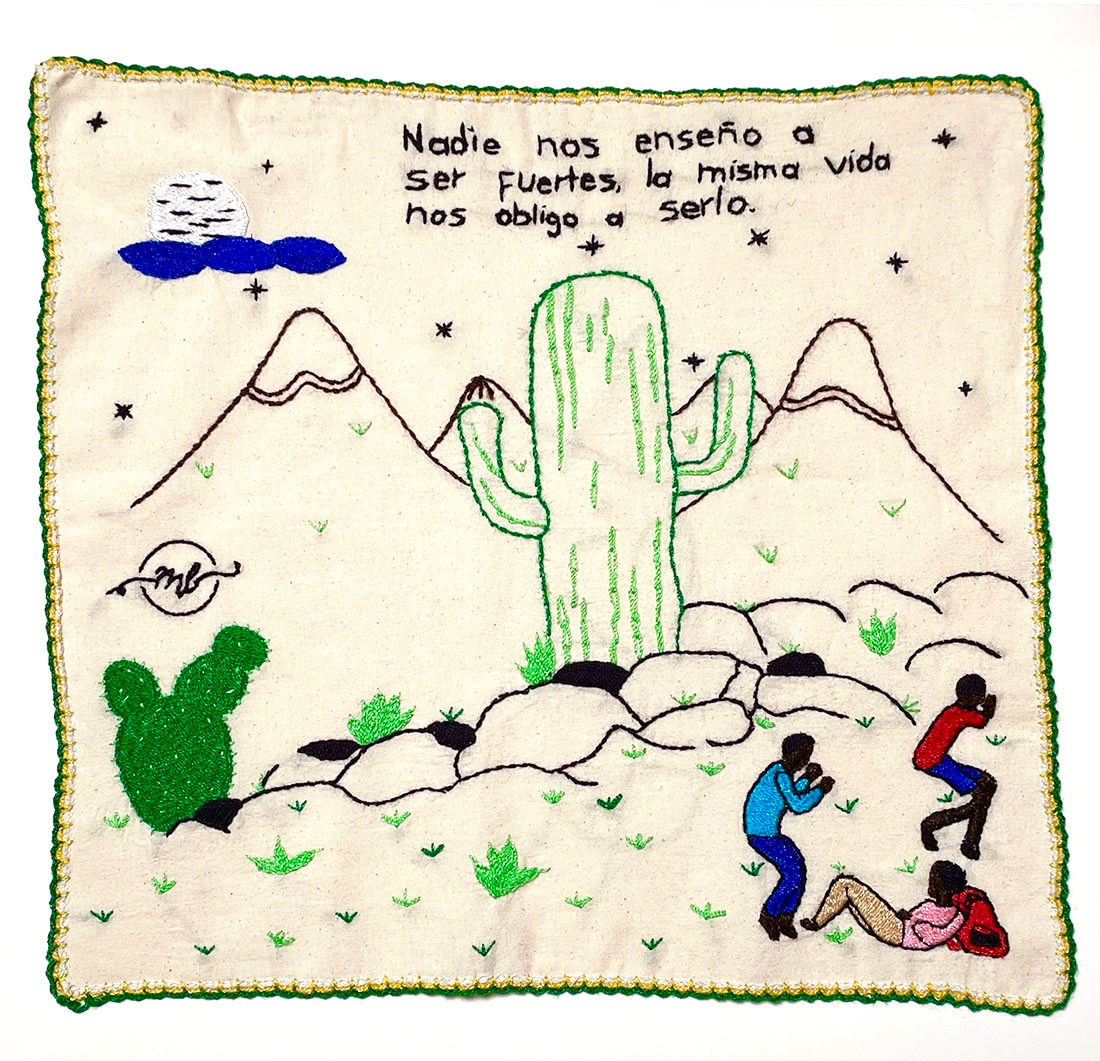
“No one teaches us to be strong; life itself forces us to be”

“When we ran from the men who kidnapped us, we fled in an unknown direction through the mountains full of cacti, thorns, bones, and animals.

“We spent three nights sleeping on open ground. Tired, devastated, with wounds on our arms, thorns in our shoes and jackets, and torn bags, without a drop of water. With mixed feelings, we decided to go out on the road to look for water. Thank God, travelers showed up and helped us with water, food, and hydration drinks for the children.”
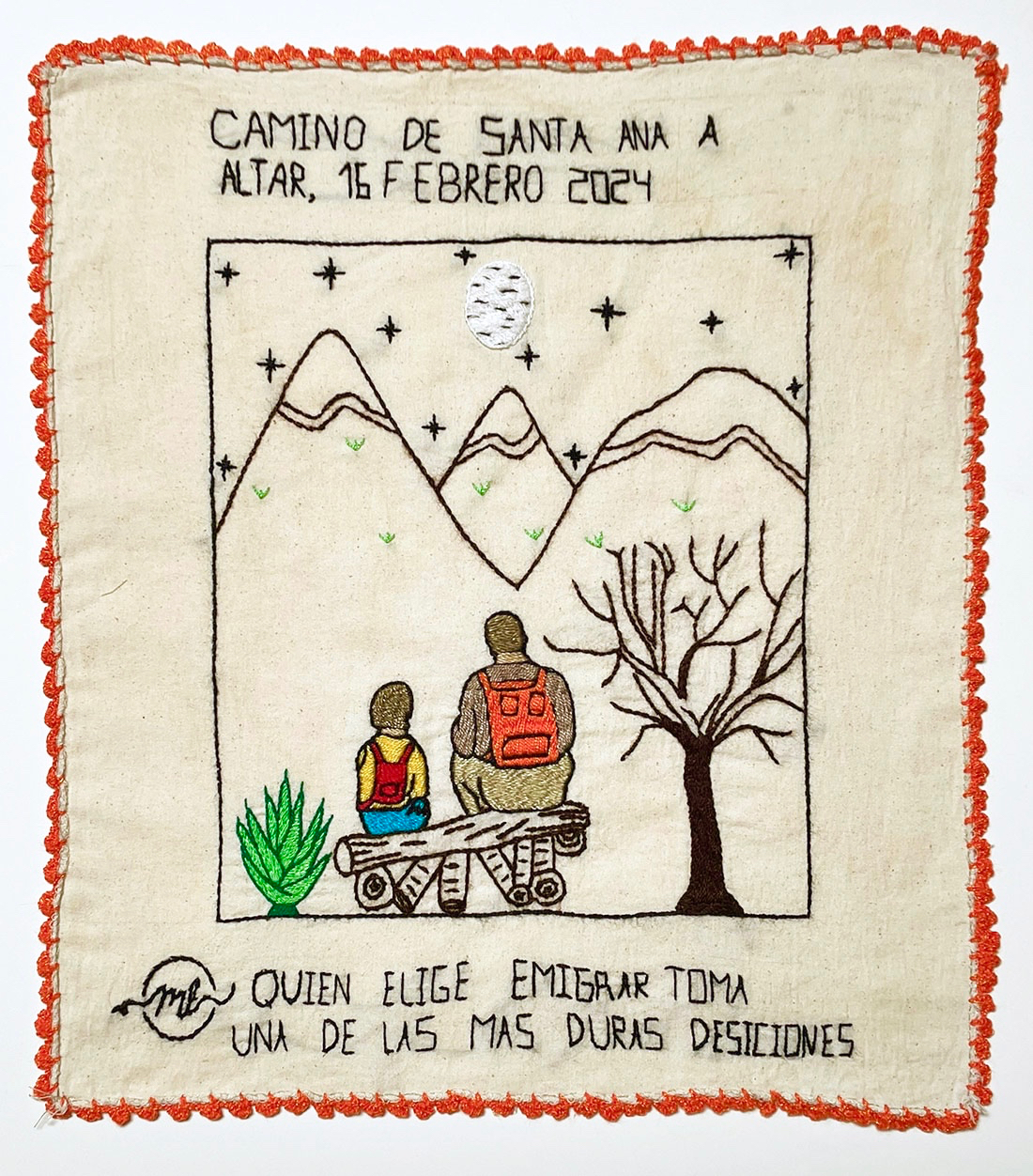
“Whoever chooses to emigrate makes one of the hardest decisions.”

“It is as if it were a photograph, it reflects the last day in the mountains, when my son cried to his father, because he was very thirsty and could not continue.”
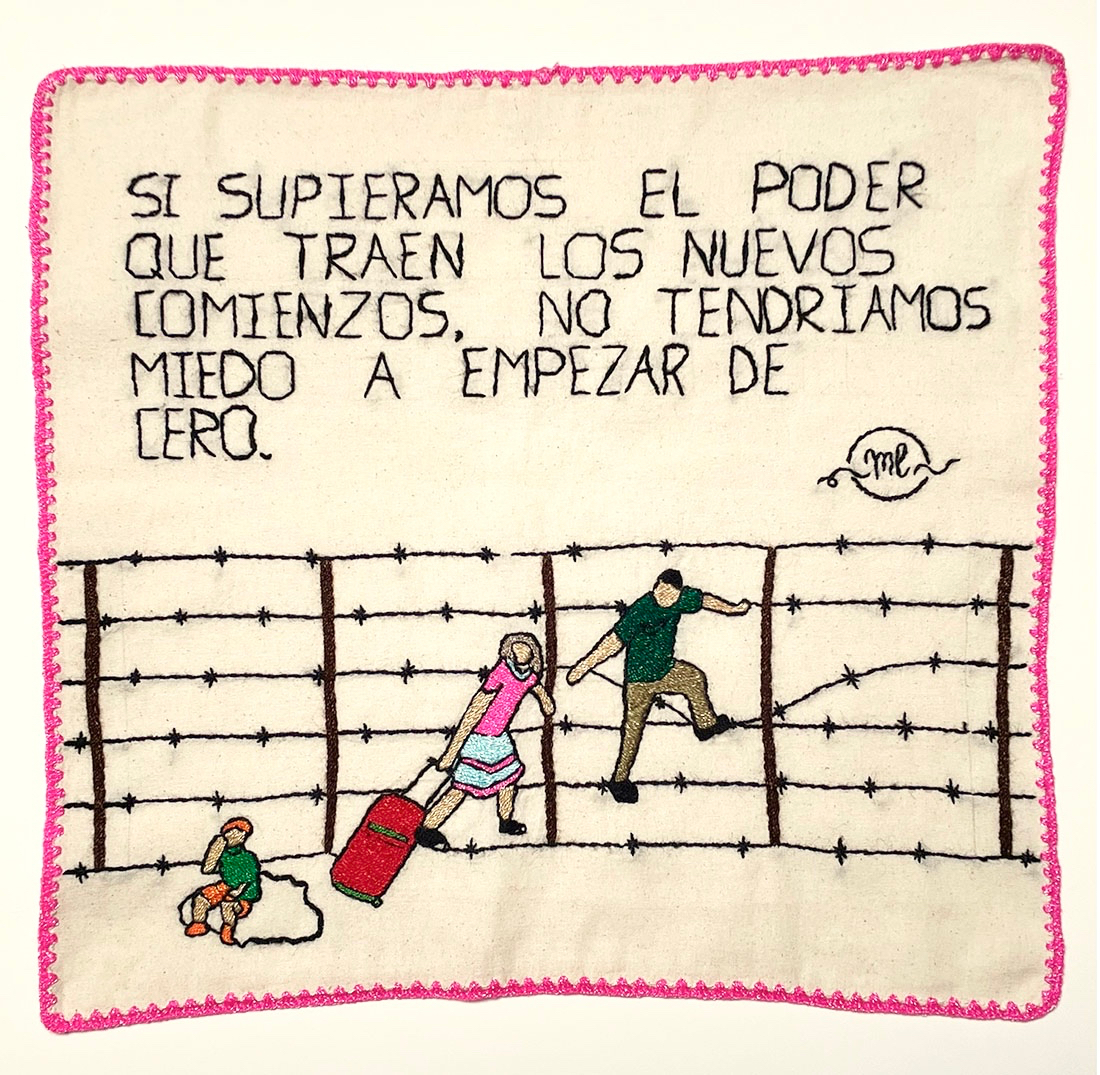
“If we knew the power that new beginnings bring, we wouldn’t be afraid to start from scratch.”

“One of the many wire fences that we passed while fleeing from the kidnappers who had weapons of all calibers, long and short range.”
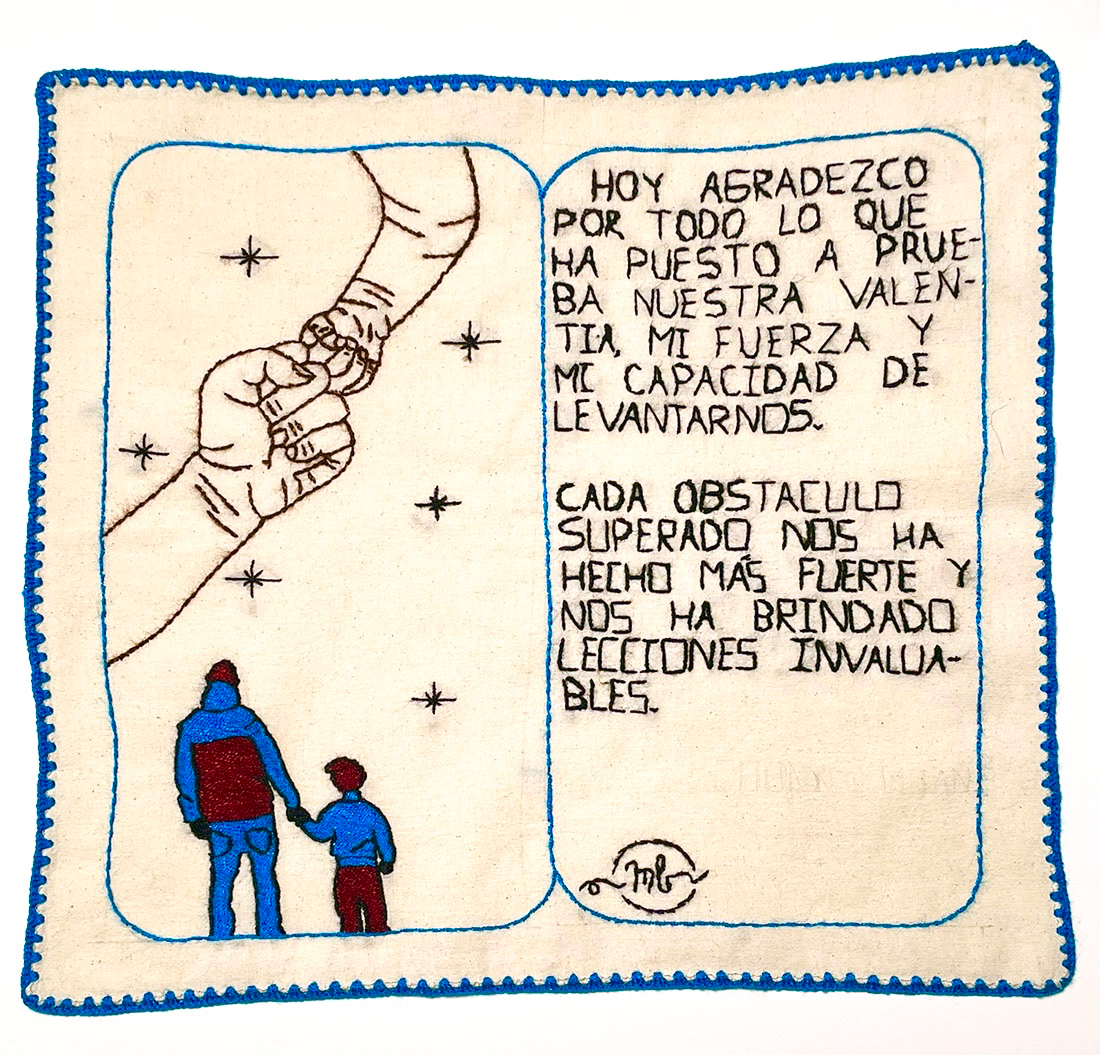
“Today I am grateful for everything that has tested our courage, my strength, and my ability to rise up. Each obstacle overcome has made us stronger and has given us invaluable lessons.”

“This is our gratitude to God and to the people who welcomed us here at the shelter because it was salvation, to feel that here we were no longer in danger like we had been in Altar, Sonora.”
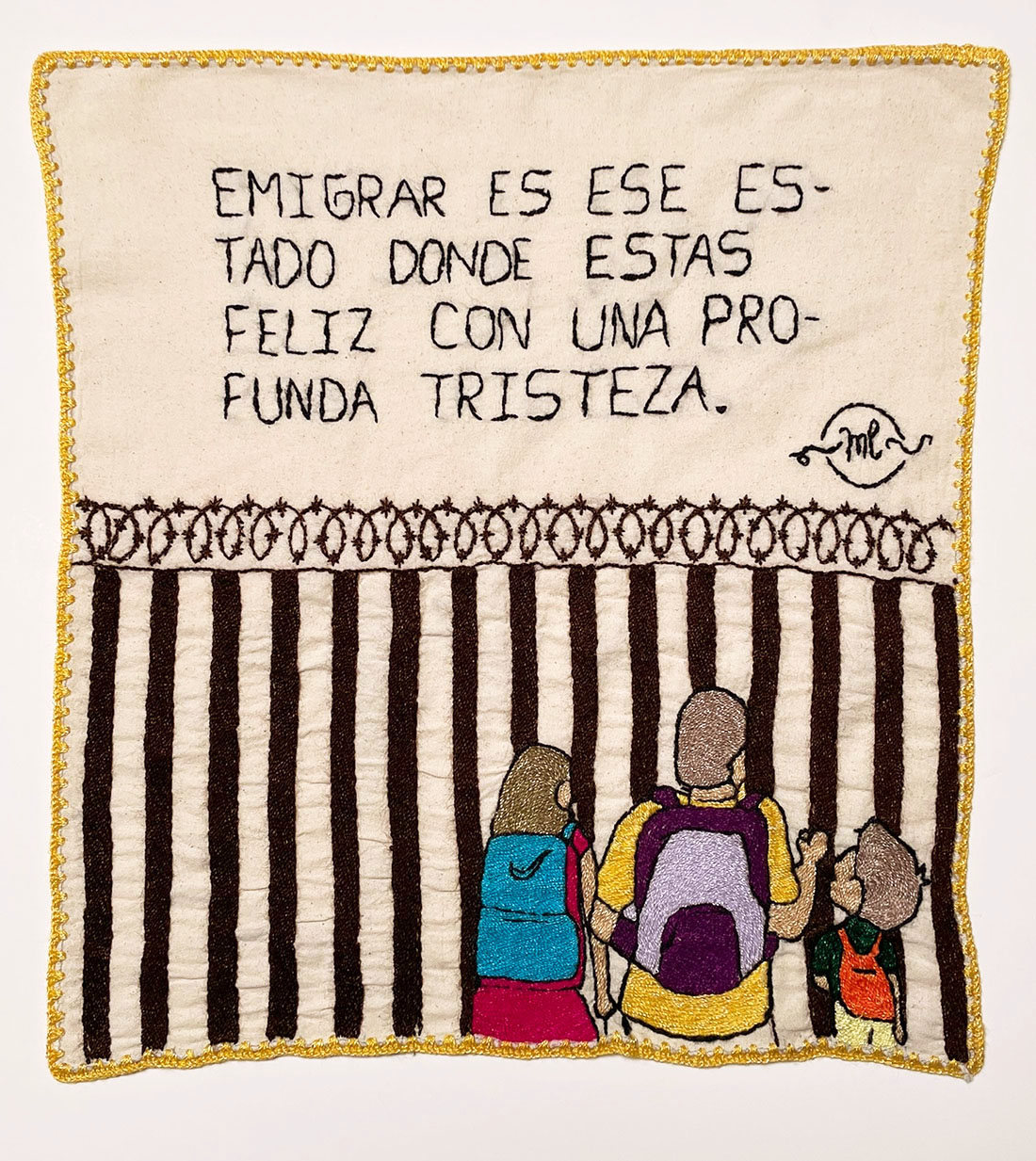
“Emigration is that state where you are happy with a deep sadness.”

“This was a visit we had to the wall and the deep emotion that we are going to fulfill our dreams, but we leave so much behind. I had to leave my mother.”

###

For more writing on the Arts of Migration:

Eye of Witness, Hand of Faith: The Art of Asylum and New Retablos at the Border

For the Eyes of Babes: The Art of Asylum

Migrant Woman Fleeing Violence Find Beauty and Healing in Embroidery

For a recently published story on the power of transgressive Cultural arts in conflict zones:

THE MYSTIC MOTHER’S STAR IN STITCH AND SYMBOL: FROM PALESTINE TO MEXICO, FROM UKRAINE TO THE AMERICAS.

Thanks for reading! Subscribe for free to receive new posts and support my work.
Update: Art and Hope, Asylum and Trump 2.0 at the U.S.-Mexico Border ~ Artisans Beyond Borders 2024

Maya Angelou famously said, “Hope and fear cannot occupy the same space. Invite one to stay.”

Gerhard Richter, the acclaimed and oft-quoted painter who came of age during Nazi Germany said that “Art is the highest form of Hope.” Sister Lika Macias, Mother Lika to countless asylum seekers on the AZ-Mexico border, says simply “Art is food for the spirit.” In these times and on this border, hope and a resilient spirit are more necessary than ever.

I stayed over at the migrant shelter la Casa de las Misericordia y Todas Naciones in Nogales, Sonora for a few weeks in November as the de facto writer in residence. The morning after the election, I woke to find my suspicions confirmed. Trump had won. What would the people that I had become close to at the shelter think about the fact that a man who explicitly targets them, asylum-seeking families, was now the President-elect of the U.S.A?  Families had already been waiting months longer than usual at the shelter to legally petition for asylum.

New and old friends that I met on the grounds were as gracious as always but quiet and subdued. Many residents were frightened and nervous in the days and weeks leading up to the election. Now that the outcome was a reality, people seemed resigned. Families that make it to the shelter are no strangers to extortion, bodily assault, and grinding poverty. What they flee from is much worse than a soon-to-be U.S. president’s threats.

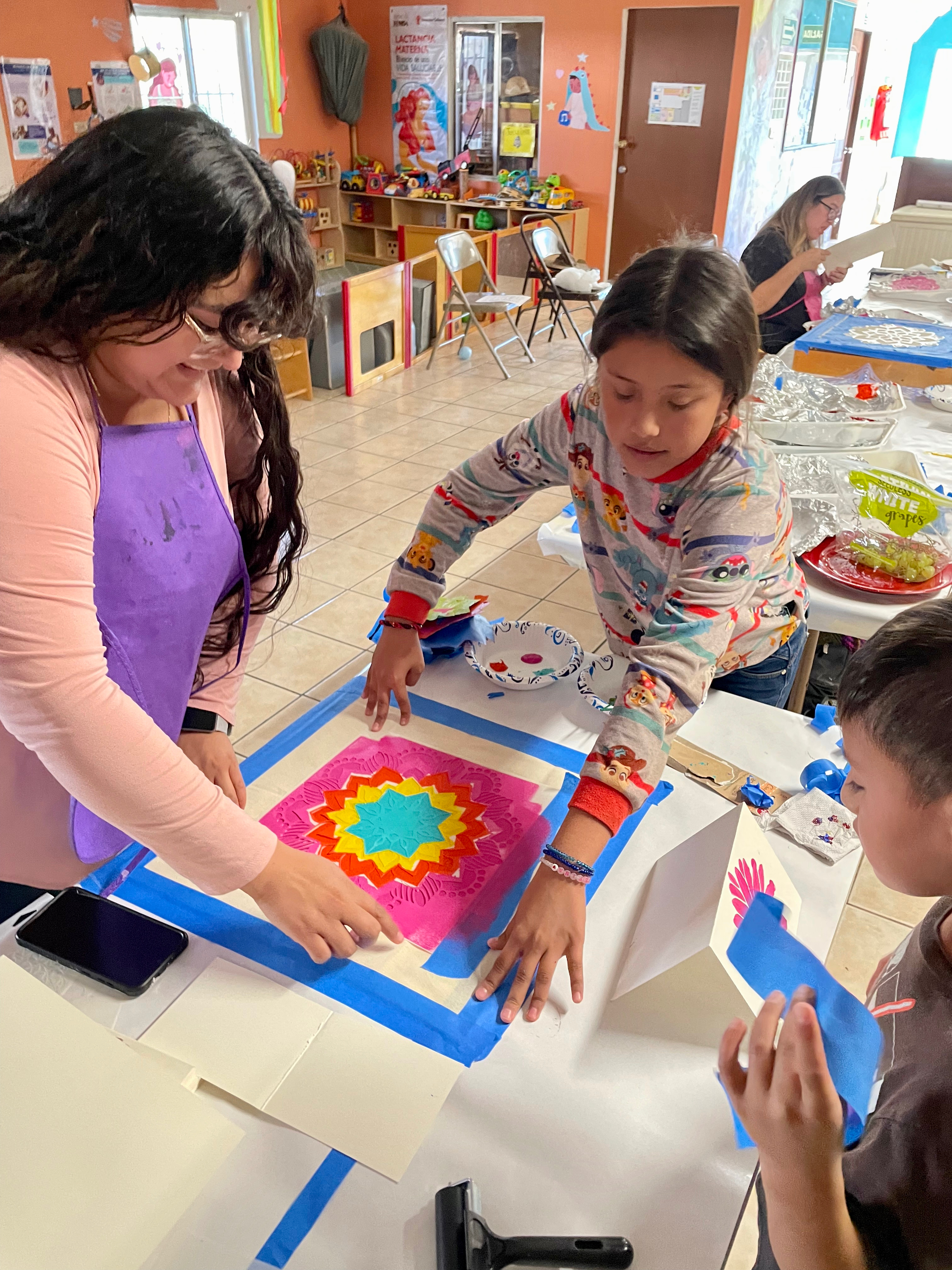
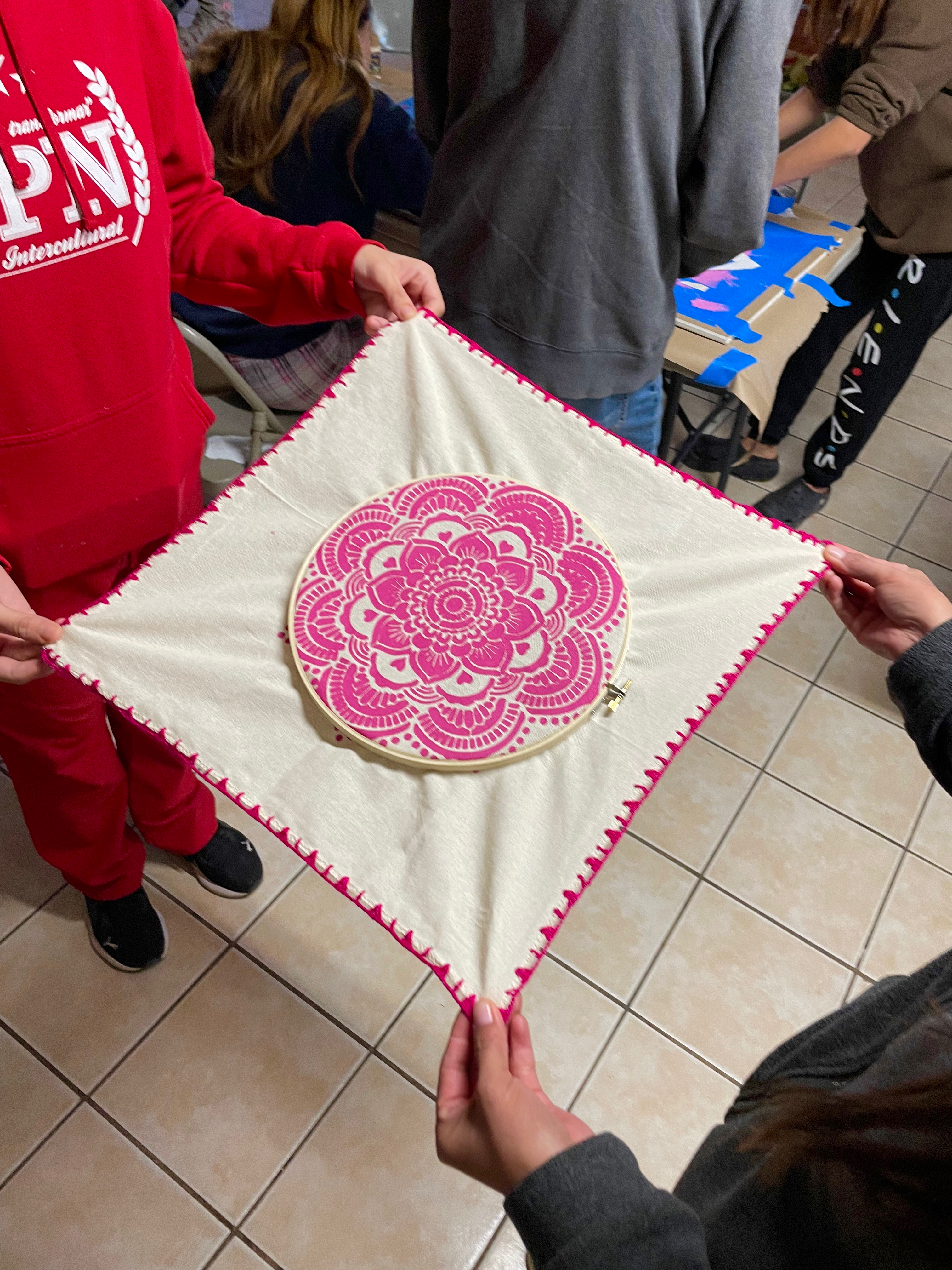
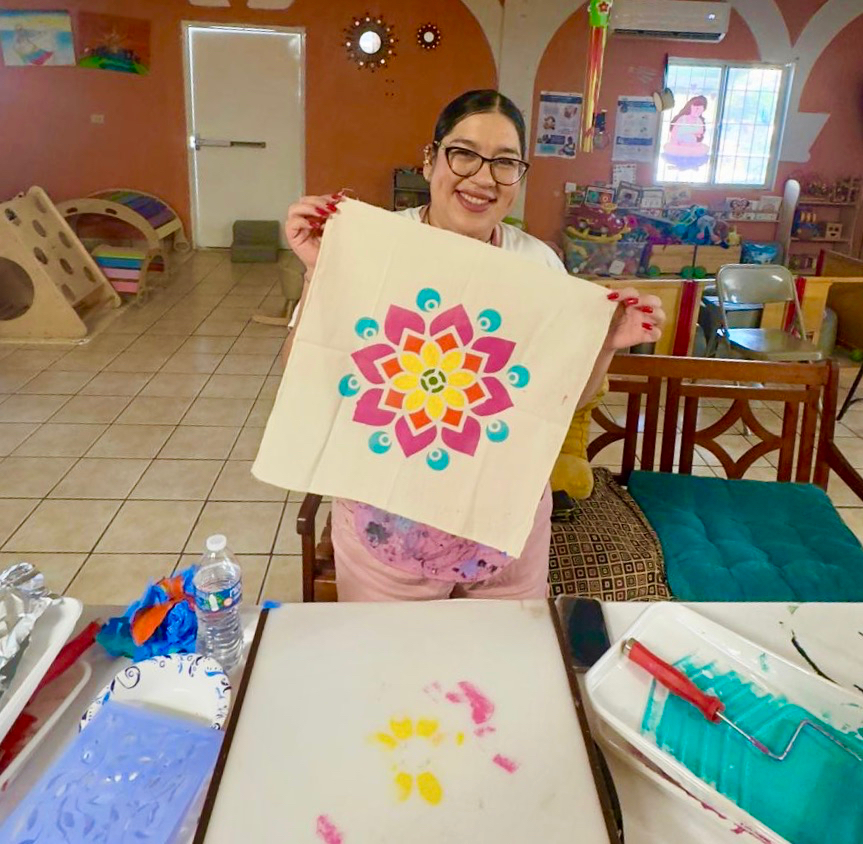
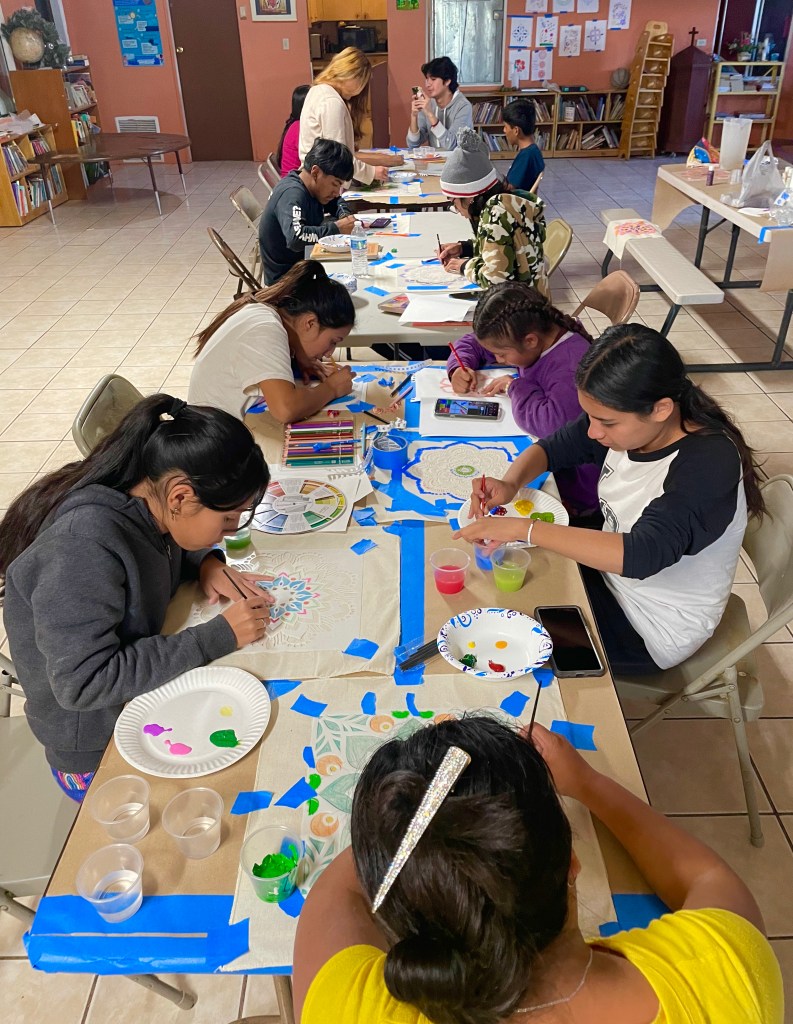
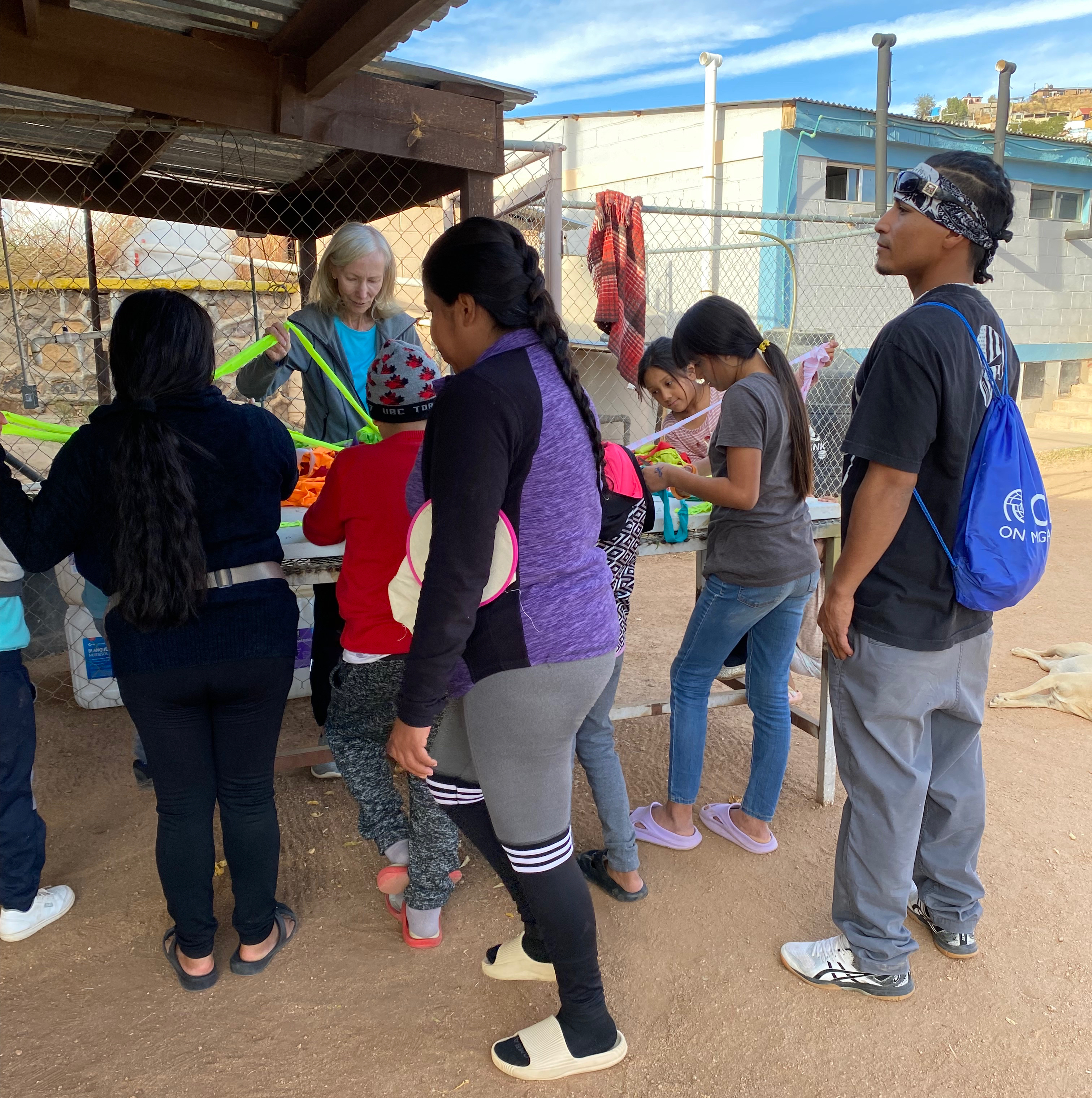
When I wasn’t writing at the computer, I held Mixed-Media Arts workshops for the on-site teachers and older kids at the shelter: designing textiles and cards, drawing and painting, printmaking and embroidery.

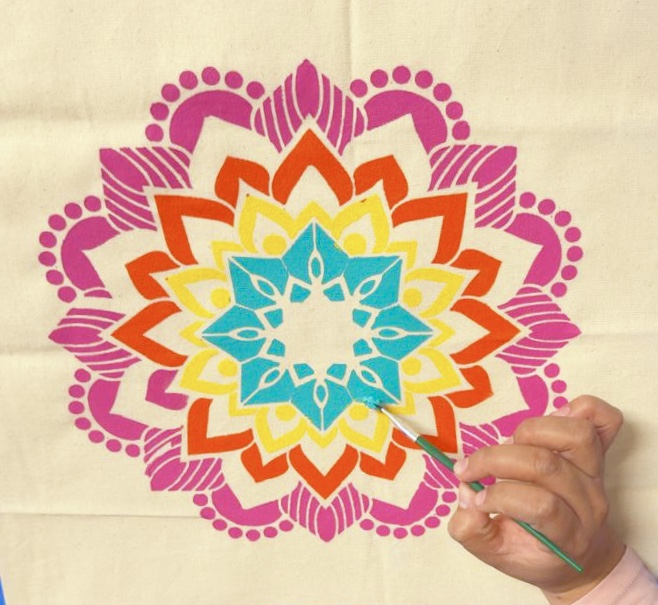
Mandalas

Our starting point in each workshop was the Mandala. Mandalas have the power to transform suffering into joy. Mandalas and other Universal sacred symbols are important touchstones in trauma-informed, healing-centered art practices, granting us a shared symbolic language regardless of cultural or religious backgrounds.

The very act of creating gives rise to anticipatory gladness, the blue sky feeling of expansiveness and wide-open possibilities, in other words, Hope. Hope is actionable. It’s process; choosing colors that delight the heart, rolling paint onto fabric, creating symmetry and balance, and mastering tools and materials.

Later, seeing contemplative mandalas and the mandala form in sunflowers hanging up on a line was deeply satisfying. As to the reality of the political situation, tomorrow would be another day. On days filled with Art, beauty and unity rule. In the future, whenever the maker runs their hands over their cloth, they can remember the freedom of their soul’s exploration that day.

Weaving Prayers

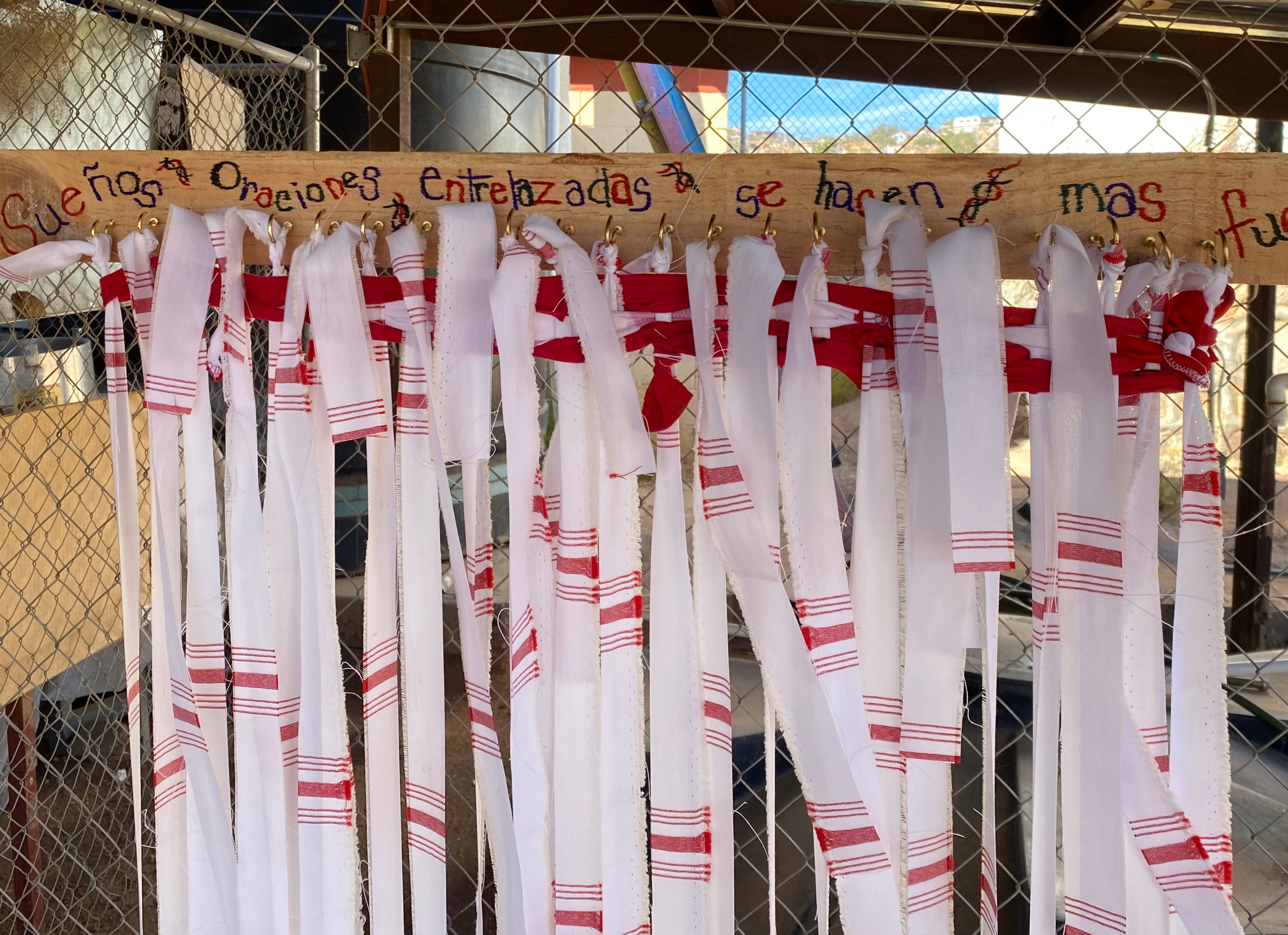
Inspired in part by the shelter’s Bordando Esperanza weaving program, a group of friends visiting from the greater Ohio area built a large vertical loom on the property. They invited residents to write their prayers on strips of cloth torn from donations of unused material, and then weave them into a large tapestry of prayers. Jan Alberti who led the group hopes to do more faith-based weaving projects in the future to help knit people and organizations together.

Chicago

In September, three amigas – Sister Lika Macias, Bordadora-Embroiderer Wendy Lopez Aguilar, and me, representing Artisans Beyond Borders, opened the exhibition Bordando Esperanza ~ Embroidering Hope in Chicago. The University of Illinois with Mellon Funding, sponsored the exhibition, which included a devotional embroidery workshop for students and community members at Casa Cultura near the University. In addition to a wonderful opening, we had a day between events to walk Chicago’s famous waterway and see the National Museum of Mexican Art. Mil gracias to the awesome Profesora Barbara Sostaita, from the Latin American and Latino Studies Dept. for coordinating everything. Thank you, Chicago! 

In October, we were able to disburse modest grants to asylum seekers Wendy, Mayra, Carla, and Yandè, our former teachers at the shelter, now in the U.S., to help them survive while awaiting asylum and work permits.

Granting Asylum

In November, we rallied around Tucson-based artisans as they endured their harrowing asylum adjudications. We were overcome with joy and relief when, in the space of one month, our principal embroiderer’s family, along with one of our first weaving teachers at the shelter and her children were granted asylum.

Wins are few and far between on the border and friends and advocates celebrated into the night. At one such fiesta, which included three other newcomer families, I realized that a wonderful new network of friends and family had been born. Together, we are creating real community across cultures, and real community equals social justice. Separate us from each other, and you separate all.

Weaving and Embroidery at the shelter

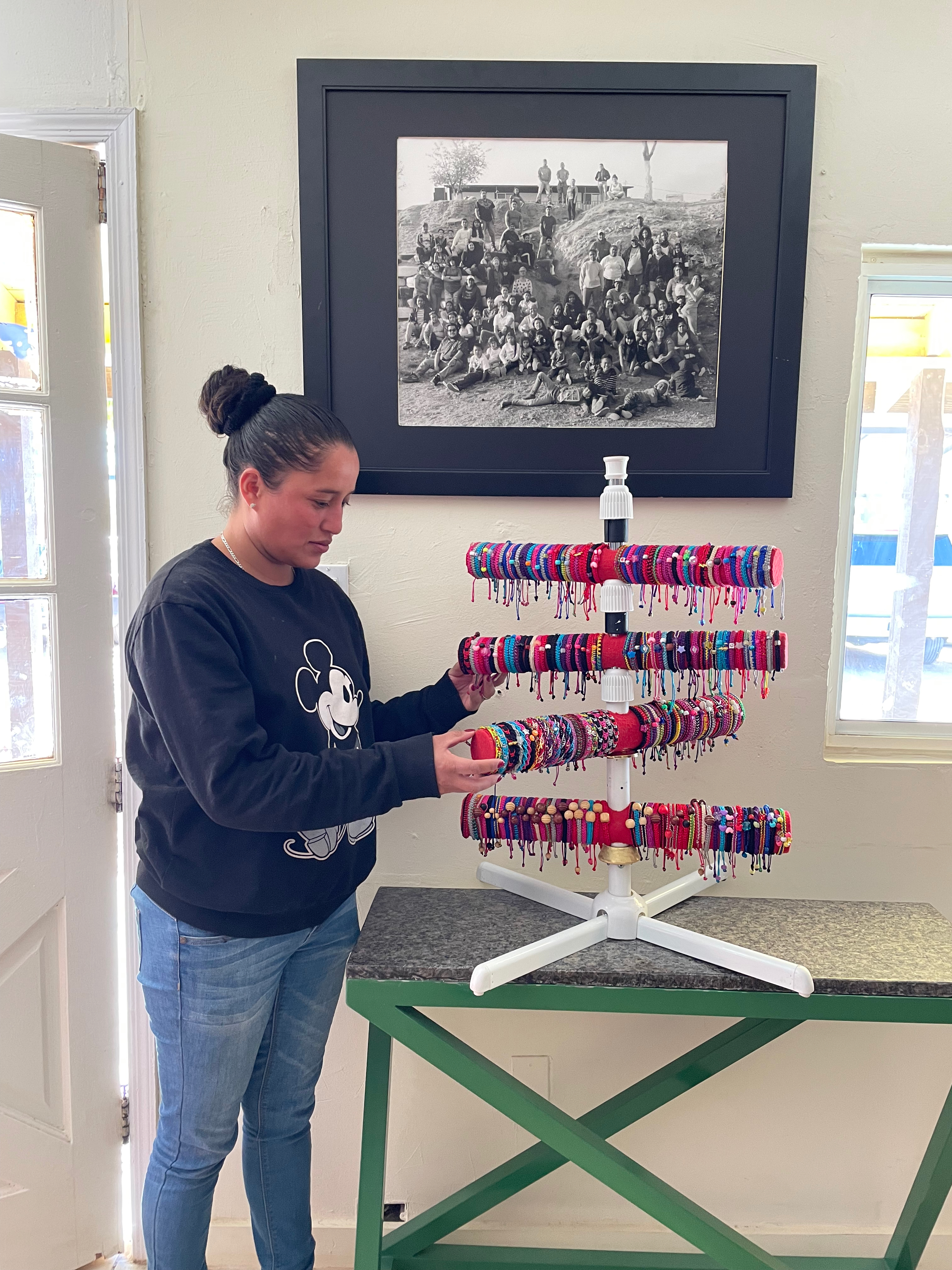
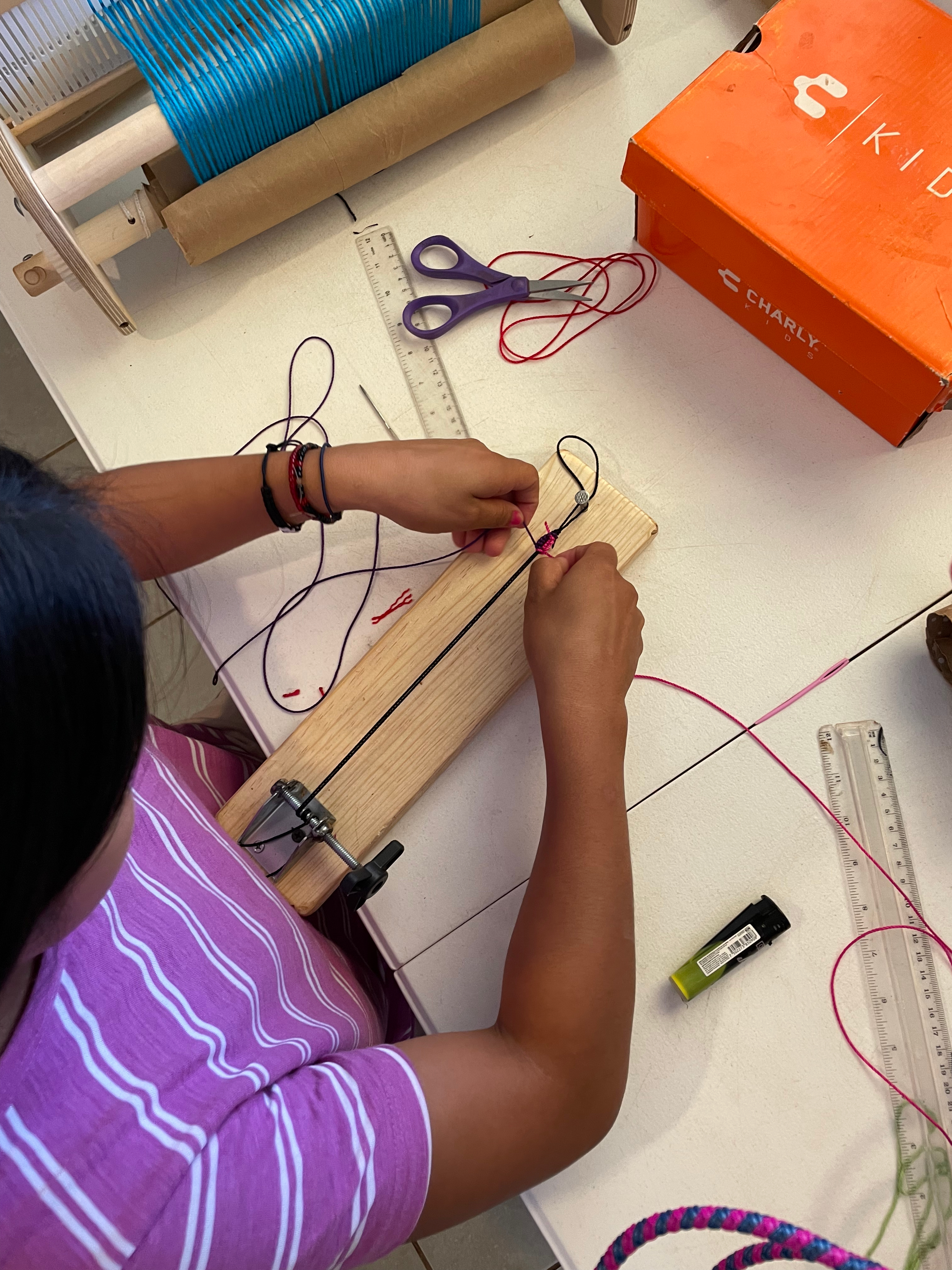
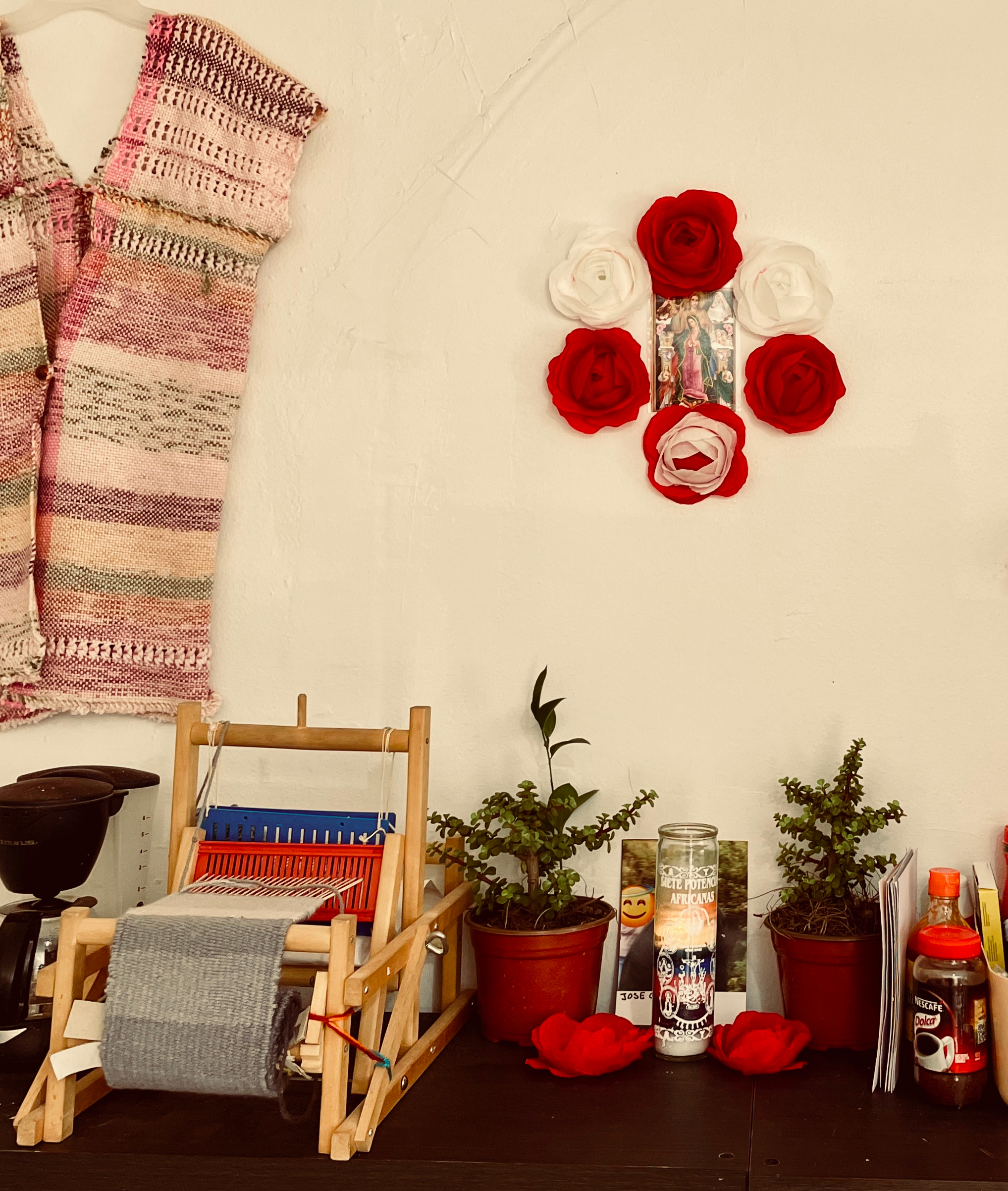
We want to thank supporters Martin Dickenson from Washington D.C. and Mary Sheridan from Tucson for donating funds to Artisans Beyond Borders to cover on-site teacher stipends at the shelter through this Winter and Spring. The Embroidering Hope teachers step forward from the resident population, some with generational weaving skills like Carmen and her Mom from Guatemala, and some with pure can-do like Gabi who coordinates the construction of petite looms for teaching and making woven pulseras-bracelets.

ICE

Now in December, we’ve just learned that ICE has decided to “appeal” the Judge’s decision that granted one of our families asylum last month. So much for building a life in the U.S. without fear. Both parents work all the time since receiving their work permits; cooking, cleaning, and driving cabs while raising two little ones. Our principal embroiderer often works late into the night stitching cloth for extra money and has the calluses on her hands to prove it. In just one year, the family of four has moved from a tiny fifth wheel in a Tucson trailer court to a house, and like so many other young families, immigrant or not, they struggle to pay the $1000/mo rent on the least expensive house they could find. In her “spare” time, our embroiderer takes English classes and goes to business school. I am in awe of her family and many other families like hers throughout the U.S. This is what the American Spirit has always looked like to me. The idea that ICE could rip away this family that we love is beyond reprehensible. It’s a crime against all that is fair and decent in this world.

So, how do we maintain Hope? Networks, faith-based and otherwise, forming across the U.S. to support and protect our neighbors, are key. Our strength is in community. We are all working to raise money for lawyer’s fees and bail funds, which often run into thousands of dollars.

If you read this and want to donate to a Legal Fund for asylum seekers, you can do so directly on the ArtisansBeyondBorders.org website. All future donations will be prioritized to help these families with their legal expenses.

If you send a check, please write the check to Grace St. Paul’s Episcopal Church. On the Memo line at the bottom of your check, write Artisans Beyond Borders (ABB) Migration Fund.

Send your check to:

Grace St. Paul Episcopal Church

2331 E Adams St.

Tucson, AZ 85719

Also, anyone who has donated funds through the ABB website in the last year, or if you decide to donate now to help with legal fees please email Contact@ArtisansBeyondBorders.org with your physical address so we can send you a thank you. We want to thank you in advance for your patience, as we are all volunteers, and sometimes things can get lost in the shuffle.

Volunteers with experience in craft are welcome to join us when we visit the shelter. Email Contact@ArtisansBeyondBorders.org. Spanish is helpful but not mandatory. Art and faith are the Universal languages of choice.

Early on, after the election, writer Annie Lamott wrote, “For now, we show up when we are needed with grit and kindness; we try to help, and we prepare for an end to the despair.”

Make art, stitch, weave, pray and rest. In the years ahead, it will take everything in our creative toolbox to help make it right.

In Border Peace,

V.L. James with Friends of Artisans Beyond Borders, Tucson, AZ 12/24

Gabi keeps the candle lit on the Altar in the craft room ~ en la sala de artesanias where magic happens.