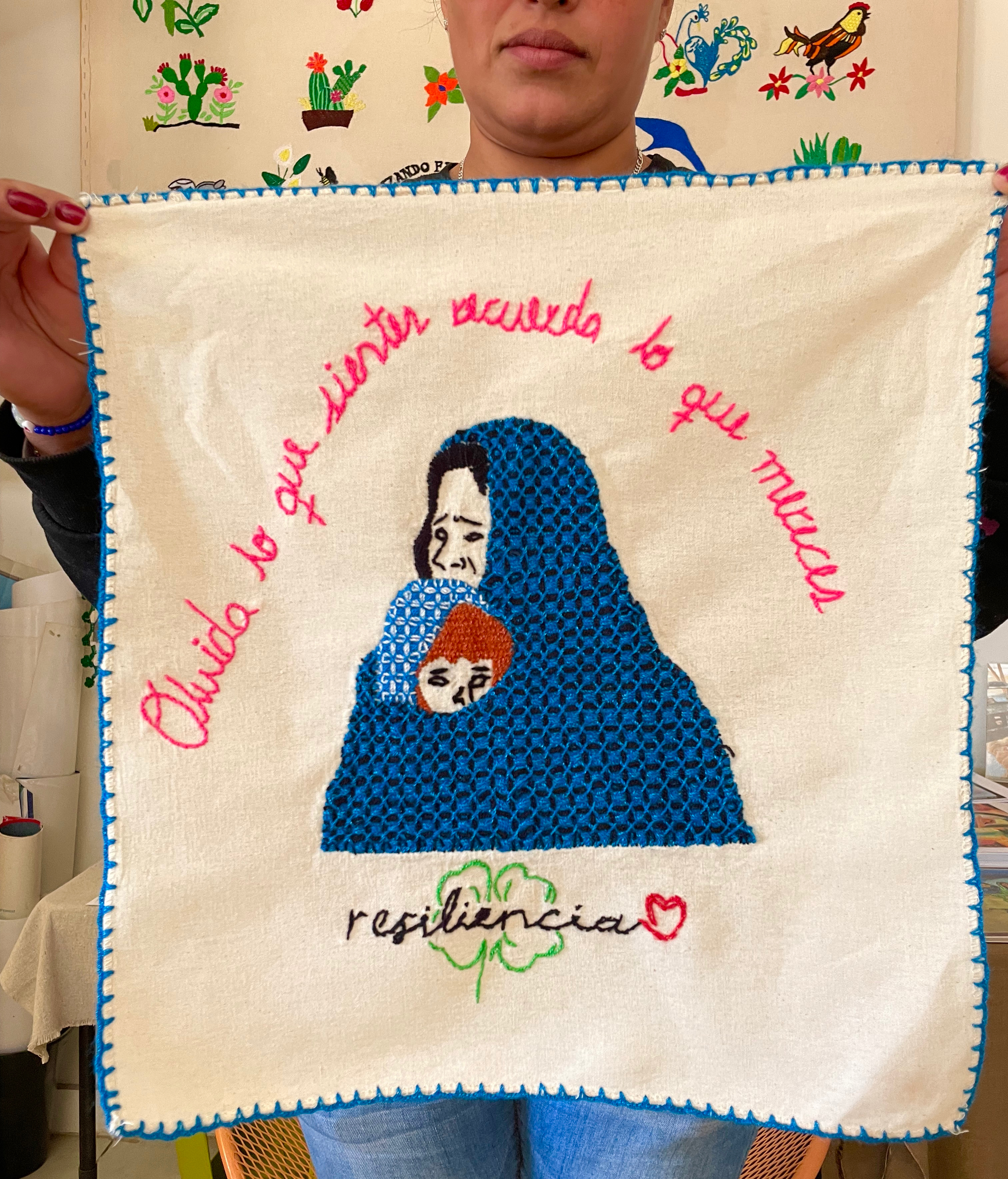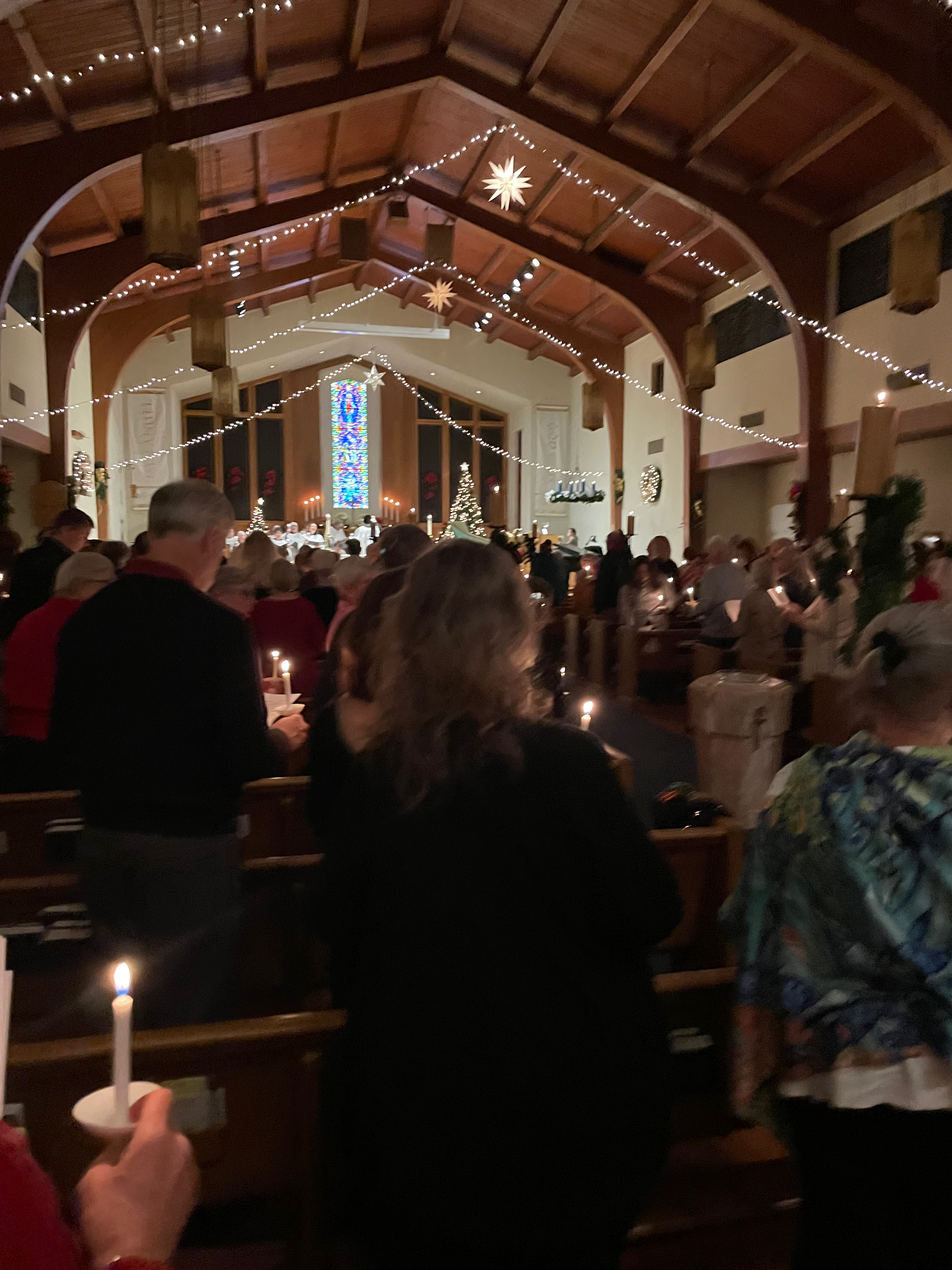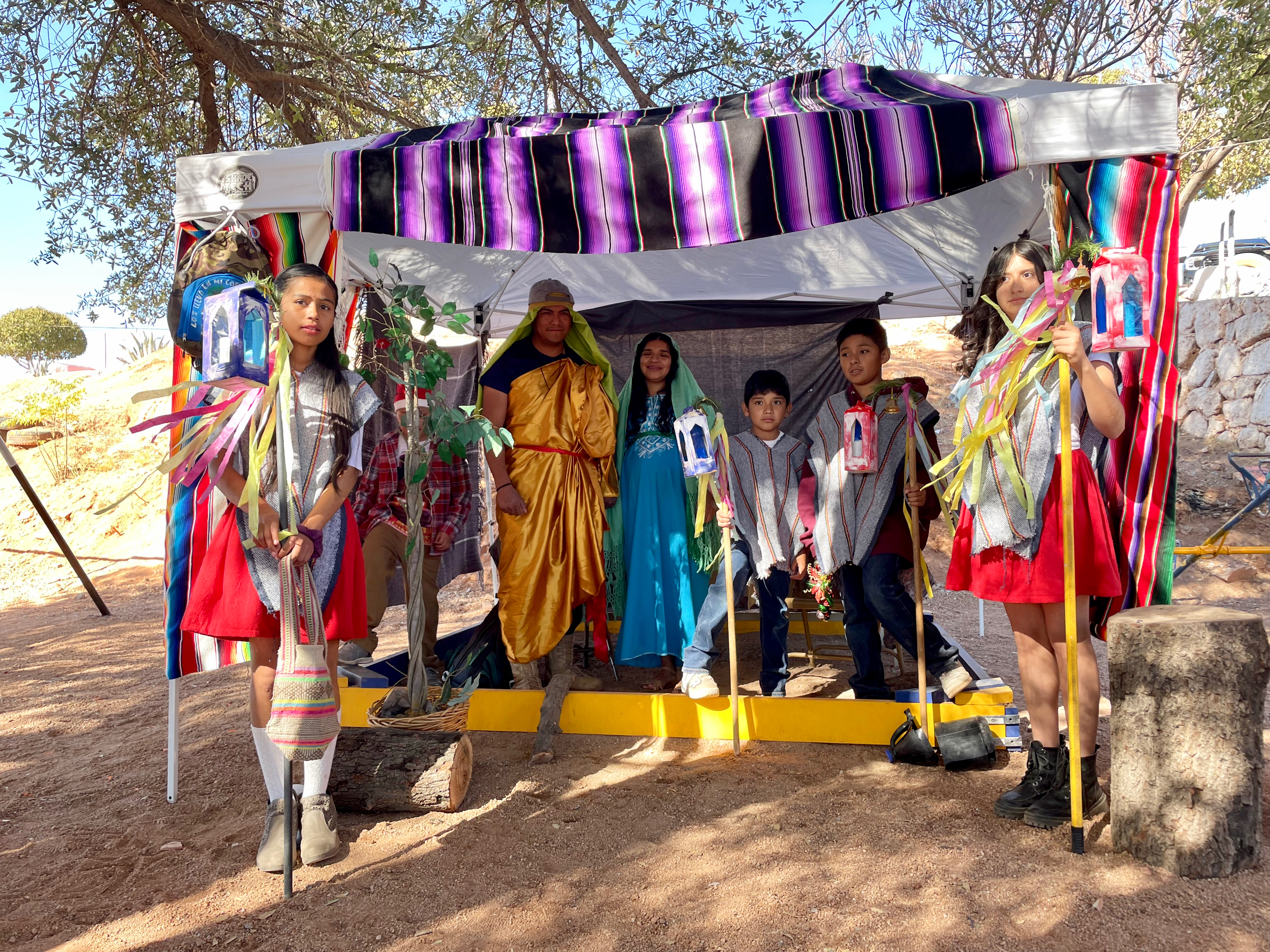
Devotional Arts on the Border; Liturgy of the Streets

***Note: WordPress has hosted (beautifully) this blog for many years but it does not support videos. For sights and sounds, see the video(s) for DEVOTIONAL ARTS & CRAFT, on Substack, join the newsletter for free, and support Devotional Arts on the Border and beyond.

JUN 15, 2026

I still have residual PTSD and probably always will from two decades ago, when Border Patrol invaded my town south of Tucson. With its foul checkpoint and paramilitary-style occupation, it was a training ground for such a world as this. What I experienced there, especially the cruelty I witnessed firsthand, lies just under my skin. Like a child of war, I startle at the slightest sound or sudden movement, and bright lights terrorize me. For countless families locked in detention facilities, PTSD is a daily reality, a nightmare without cease.

It was just this past winter that the world watched Empire’s henchmen invade Minneapolis, break car windows, drag, beat, murder people, and then lie about it. Straight-up lie. No, you did not just see us killing people with your own eyes. Like in my neighborhood long ago, paramilitary thugs acted with utter impunity.

When I saw videos of citizens gathering by the hundreds in below-freezing weather on the streets of Minneapolis, to sing to their neighbors locked inside: “Hold on, hold on, my dear ones, here comes the dawn…” I wept. I played Instagram reels of the singers over and over, and each time, great, bittersweet tears washed over my face like rain, melting the stone in my chest.

“Singing Resistance,” the healing grassroots phenomenon born in the snowy streets of Minneapolis, was medicine we needed then and now. The group’s songs for and about community have spread across the U.S. The local Tucson chapter of Singing Resistance leads us in song at monthly vigils organized by the Good Neighbor Interfaith Coalition (GNIC) as we hold space for our neighbors kidnapped in the streets, in stores, at court, and in their homes in the old Pueblo.
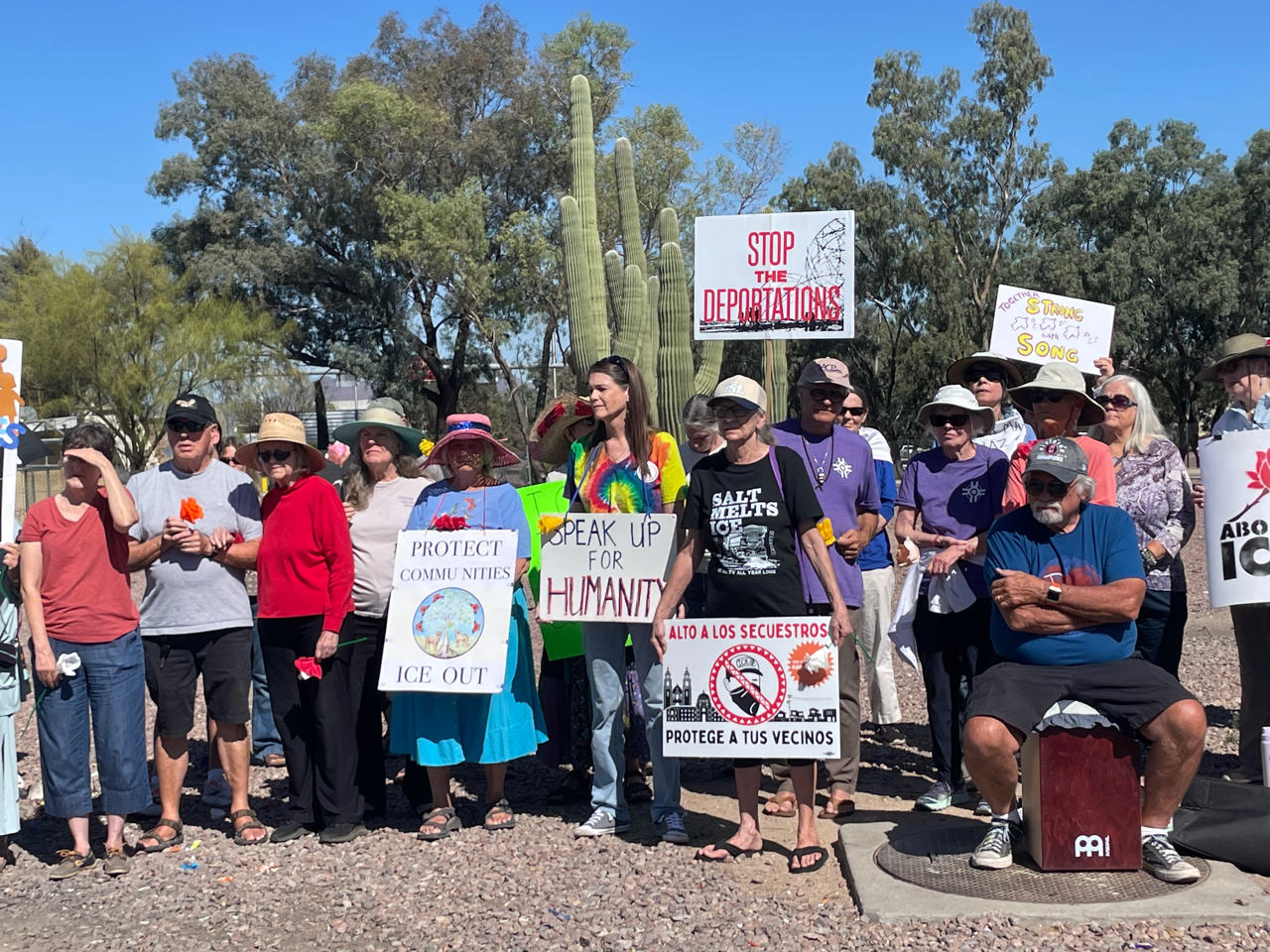
Good Neighbor Interfaith Vigil, May, 2026

On a day-to-day basis, most people in Tucson are not aware that masked officers in unmarked cars stalk our neighborhoods. Hundreds of encounters and multiple kidnappings have been reported in the first half of 2026. We fear that this is only the beginning.

At the June GNIC Vigil, in the blazing sun, students, elders, and clerics gathered on the West side of town outside of a restaurant where 49 people were taken in a raid. As a group, we prayed in silence that felt thick with their absence. Together, we chanted the time-honored Presente. Here, in Tucson, in the vast Sonoran Desert so many have died crossing, paying with their lives for the opportunity to be in the U.S., we never forget.

How do we now, as allies, stand up for our neighbors over the long haul? How do we sustain our own moral hearts and souls?

When I decided to go on retreat to a monastery earlier this year, I had reached a point of overwhelm. Like so many of us, I felt assaulted by the cruelty porn playing out non-stop on screens. My daily contemplative practice, a long-time saving grace, felt distant and unattainable. At random times in the day, I caught myself holding my breath.

The first few days on a silent retreat with no Internet onsite, my tangled thoughts felt like yarn wrapped too tightly around a spindle. I took long walks in the foothills surrounding the high desert monastery, redolent with the scent of juniper and pine. At the gloaming of the day, I joined the Sisters to chant the Liturgy of the Hours. Slowly, the world’s grip on my soul began to soften.

As each day faded into night, the Sisters’ voices, sweet and mournful in equal measure, ushered in a palpable sense of peace and safety. The Sisters singing the Psalms in an ancient call-and-response felt the same as the Instagram reels of community using song to reassure their frightened neighbors.

During GNIC vigils, we harmonize in collective devotion. Video on Substack.We attune to each other’s voices and into agape, the lifting up of our neighbor’s dignity as our own. Resistance as a leaning into Reverence. Reverence is a most powerful antidote to the politics of inhumanity. Reverence ultimately trumps Evil.
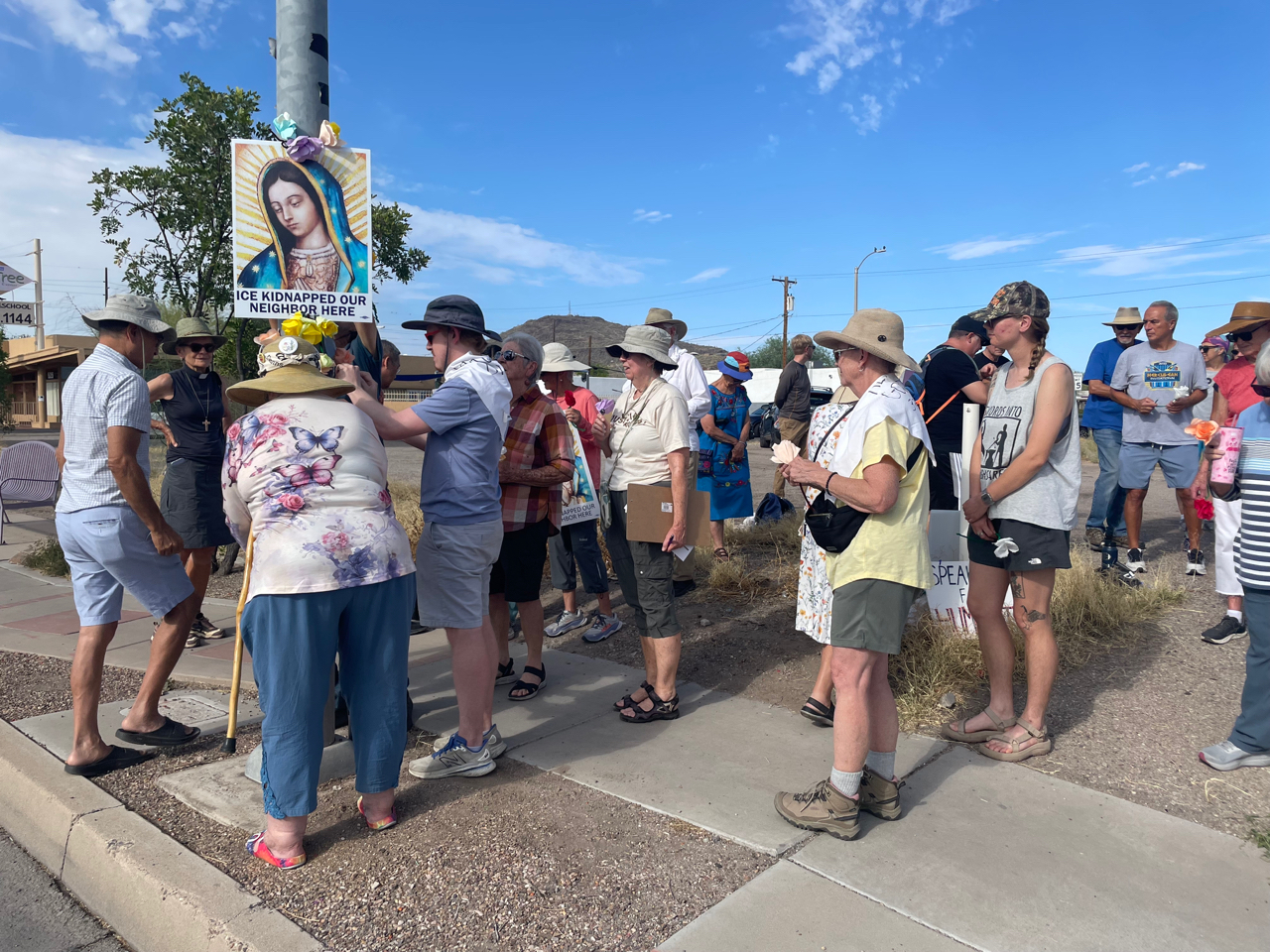
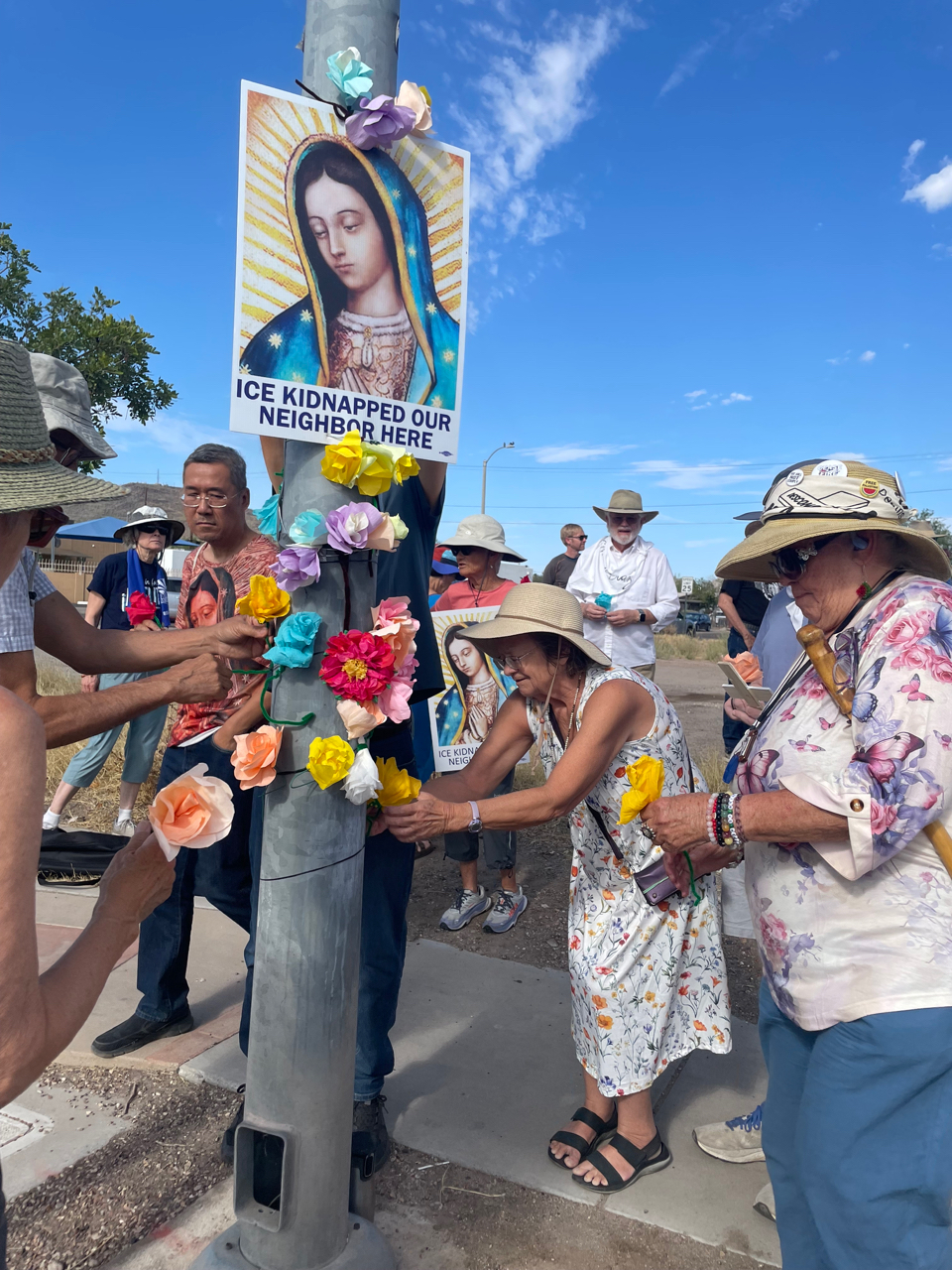
GNIC June Vigil

One of the books I read during my monastery retreat was How to be Brave, by Marian Budde, the Episcopal Bishop of Washington, D.C., who is famous for standing up to President Trump in 2025 and calling on him to show mercy to immigrants. In the book, Budde writes about the necessity of spiritual retreat. Her soft-spoken, steady manner, the Marion way she speaks truth to power, helps steady my resolve. Jesus, Gandhi, Martin Luther King, Oscar Romero, and many others, an ancestral cloud of witnesses, have prepared the way for this era’s non-violent civil disobedience.

At the vigil, the crowd is quiet and thoughtful as we wrap handmade crepe paper flowers around a light pole. Las flores están presentes, but our community members are not. The simple makeshift ofrenda is an ache of beauty. Video on Substack

We close with the lead voices of Singing Resistance singing us out. Just as gospel and folk music have sustained the Civil Rights movement, and liturgy amplifies the ongoing struggle for the soul of humanity, Good Neighbor Vigils transmute our collective heartbreak, revive our spirits, and restore an unbreakable chain of truth and remembrance that cannot be disappeared.
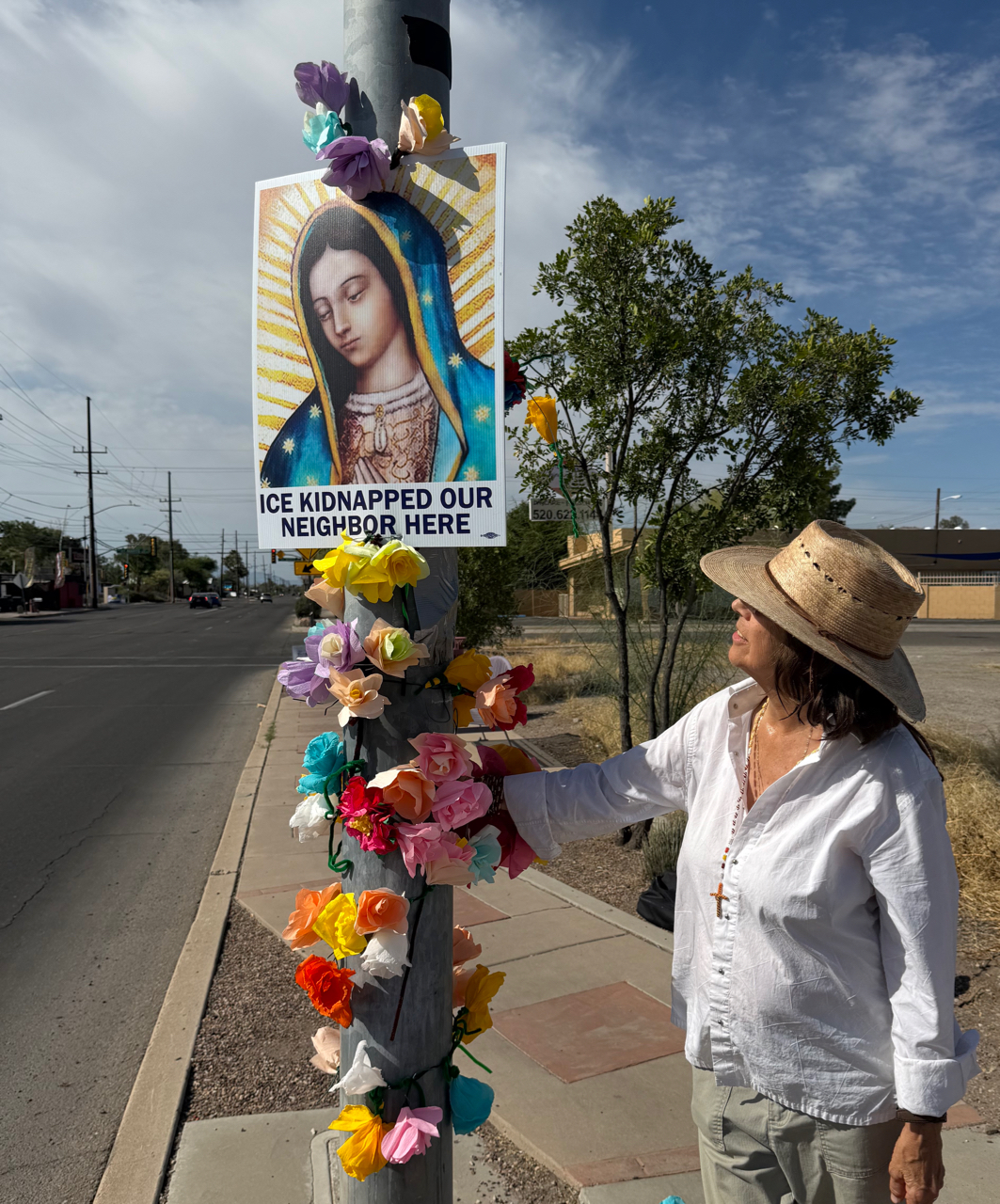
To learn more about GNIC’s monthly Vigils and how to use the Tucson Migra Map – como usar el mapa de la Migra de Tucson to find the spots where people have been taken (private property excepted), to host your own neighborhood vigil, email goodneighbortucson@gmail.com . Find Tucson’s Singing Resistance on Instagram.

DEVOTIONAL ARTS & CRAFT

Substack: home for great culture
Update: Art and Hope, Asylum and Trump 2.0 at the U.S.-Mexico Border ~ Artisans Beyond Borders 2024

Maya Angelou famously said, “Hope and fear cannot occupy the same space. Invite one to stay.”

Gerhard Richter, the acclaimed and oft-quoted painter who came of age during Nazi Germany said that “Art is the highest form of Hope.” Sister Lika Macias, Mother Lika to countless asylum seekers on the AZ-Mexico border, says simply “Art is food for the spirit.” In these times and on this border, hope and a resilient spirit are more necessary than ever.

I stayed over at the migrant shelter la Casa de las Misericordia y Todas Naciones in Nogales, Sonora for a few weeks in November as the de facto writer in residence. The morning after the election, I woke to find my suspicions confirmed. Trump had won. What would the people that I had become close to at the shelter think about the fact that a man who explicitly targets them, asylum-seeking families, was now the President-elect of the U.S.A?  Families had already been waiting months longer than usual at the shelter to legally petition for asylum.

New and old friends that I met on the grounds were as gracious as always but quiet and subdued. Many residents were frightened and nervous in the days and weeks leading up to the election. Now that the outcome was a reality, people seemed resigned. Families that make it to the shelter are no strangers to extortion, bodily assault, and grinding poverty. What they flee from is much worse than a soon-to-be U.S. president’s threats.

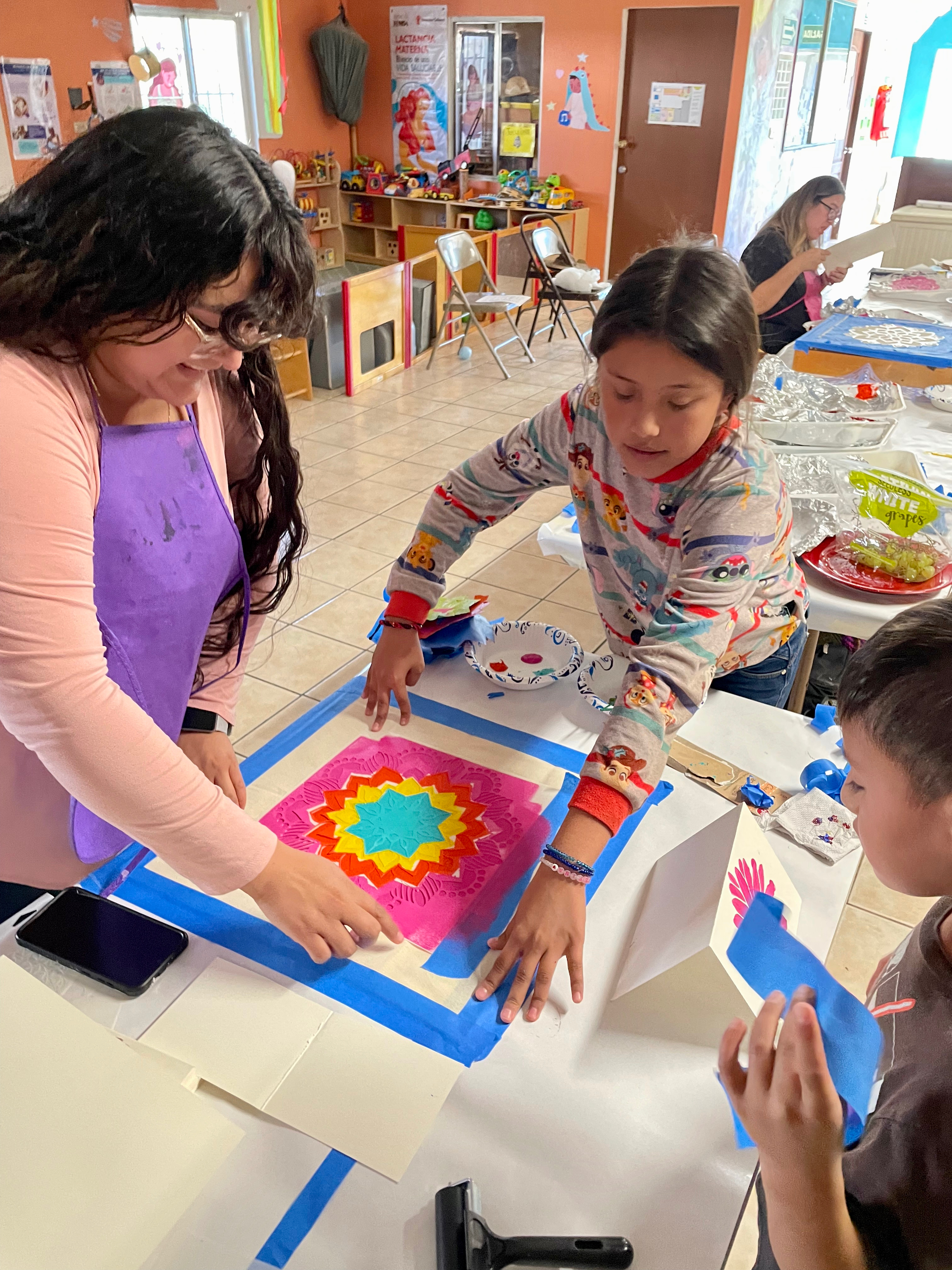
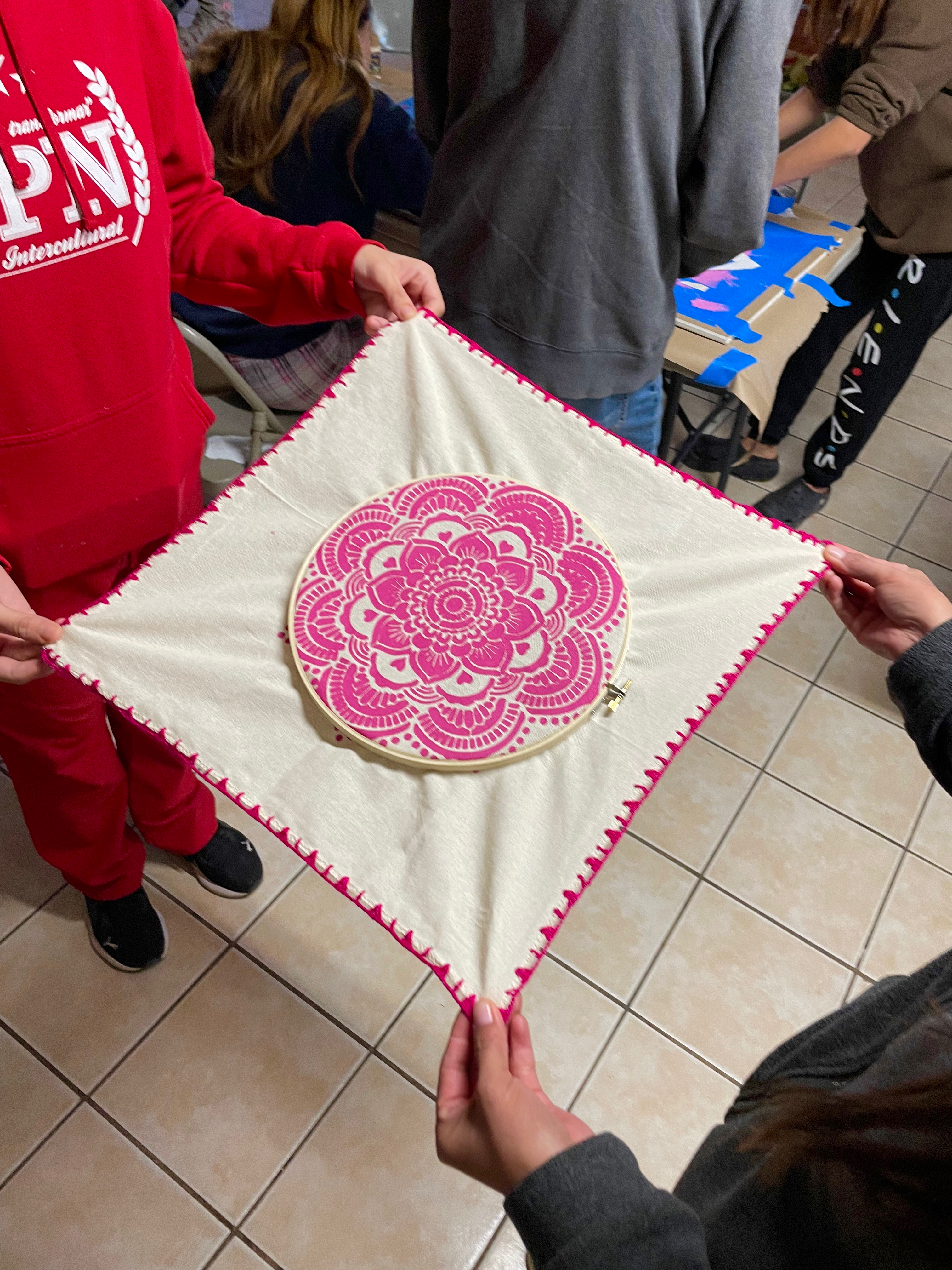
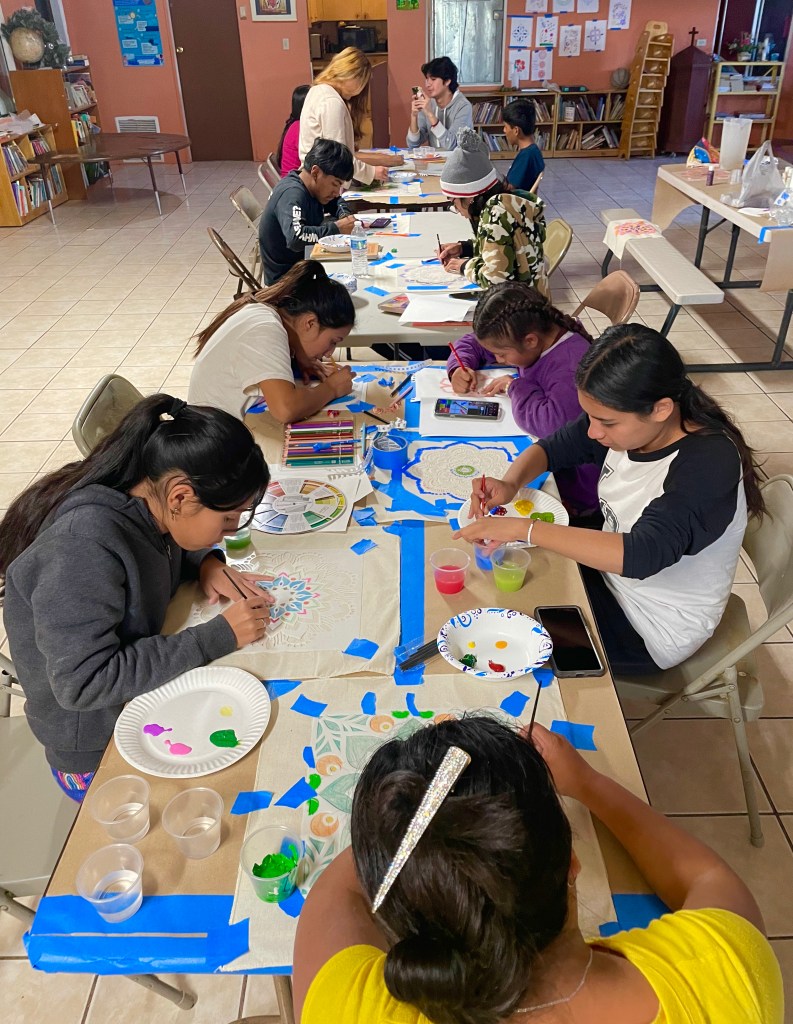
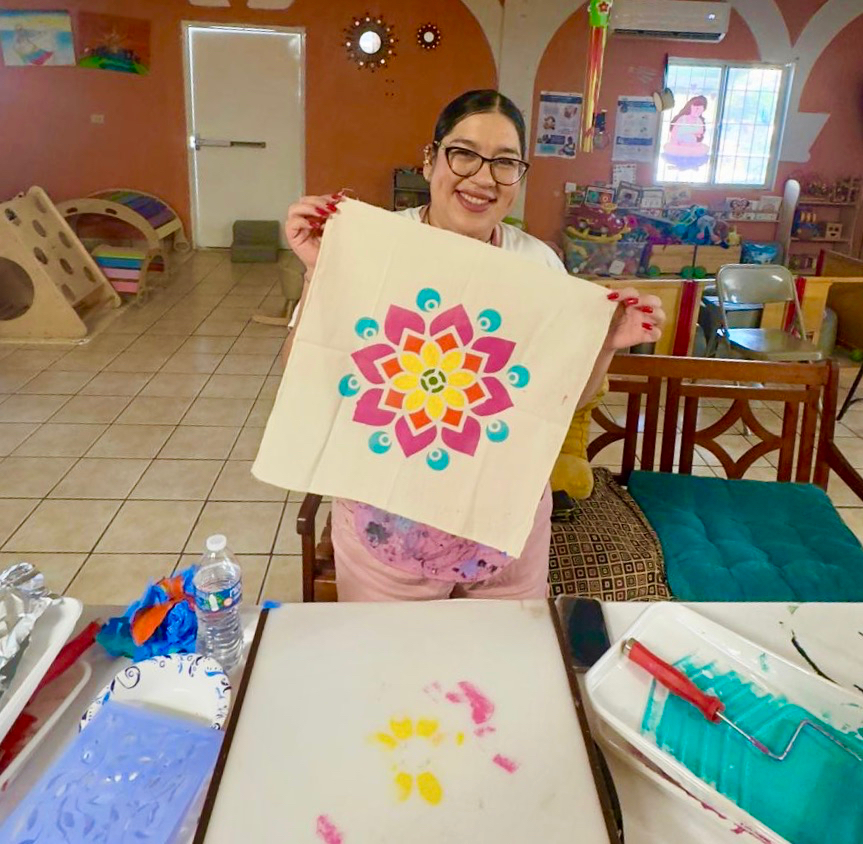
When I wasn’t writing at the computer, I held Mixed-Media Arts workshops for the on-site teachers and older kids at the shelter: designing textiles and cards, drawing and painting, printmaking and embroidery.

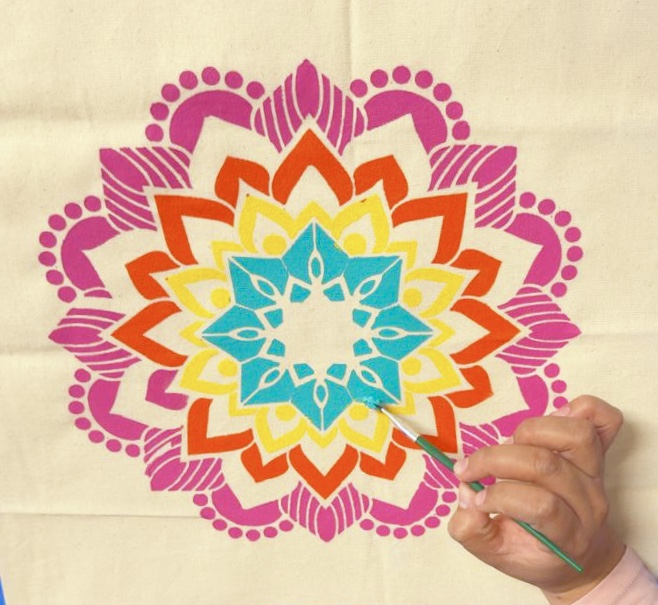
Mandalas

Our starting point in each workshop was the Mandala. Mandalas have the power to transform suffering into joy. Mandalas and other Universal sacred symbols are important touchstones in trauma-informed, healing-centered art practices, granting us a shared symbolic language regardless of cultural or religious backgrounds.

The very act of creating gives rise to anticipatory gladness, the blue sky feeling of expansiveness and wide-open possibilities, in other words, Hope. Hope is actionable. It’s process; choosing colors that delight the heart, rolling paint onto fabric, creating symmetry and balance, and mastering tools and materials.

Later, seeing contemplative mandalas and the mandala form in sunflowers hanging up on a line was deeply satisfying. As to the reality of the political situation, tomorrow would be another day. On days filled with Art, beauty and unity rule. In the future, whenever the maker runs their hands over their cloth, they can remember the freedom of their soul’s exploration that day.

Weaving Prayers

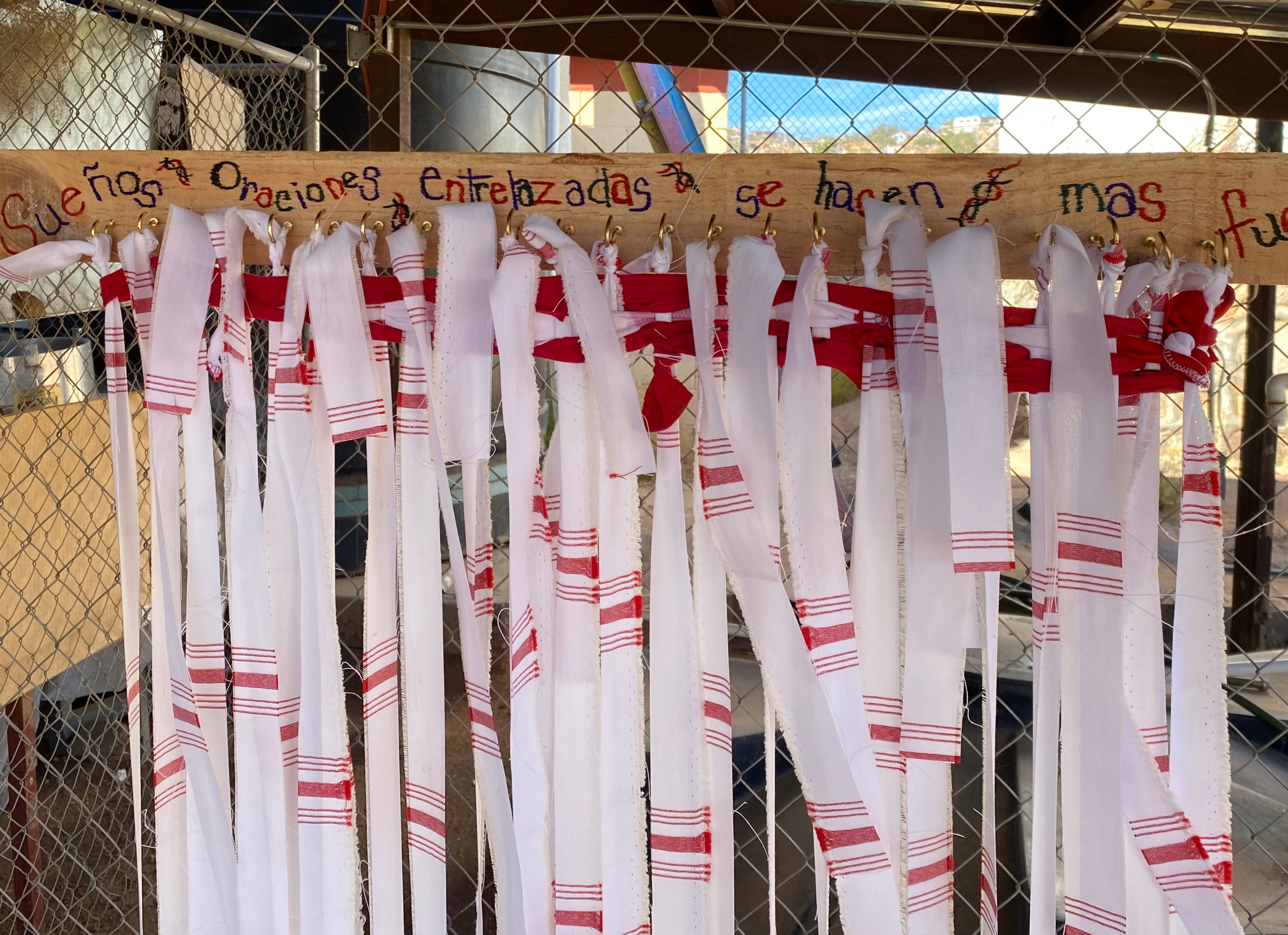
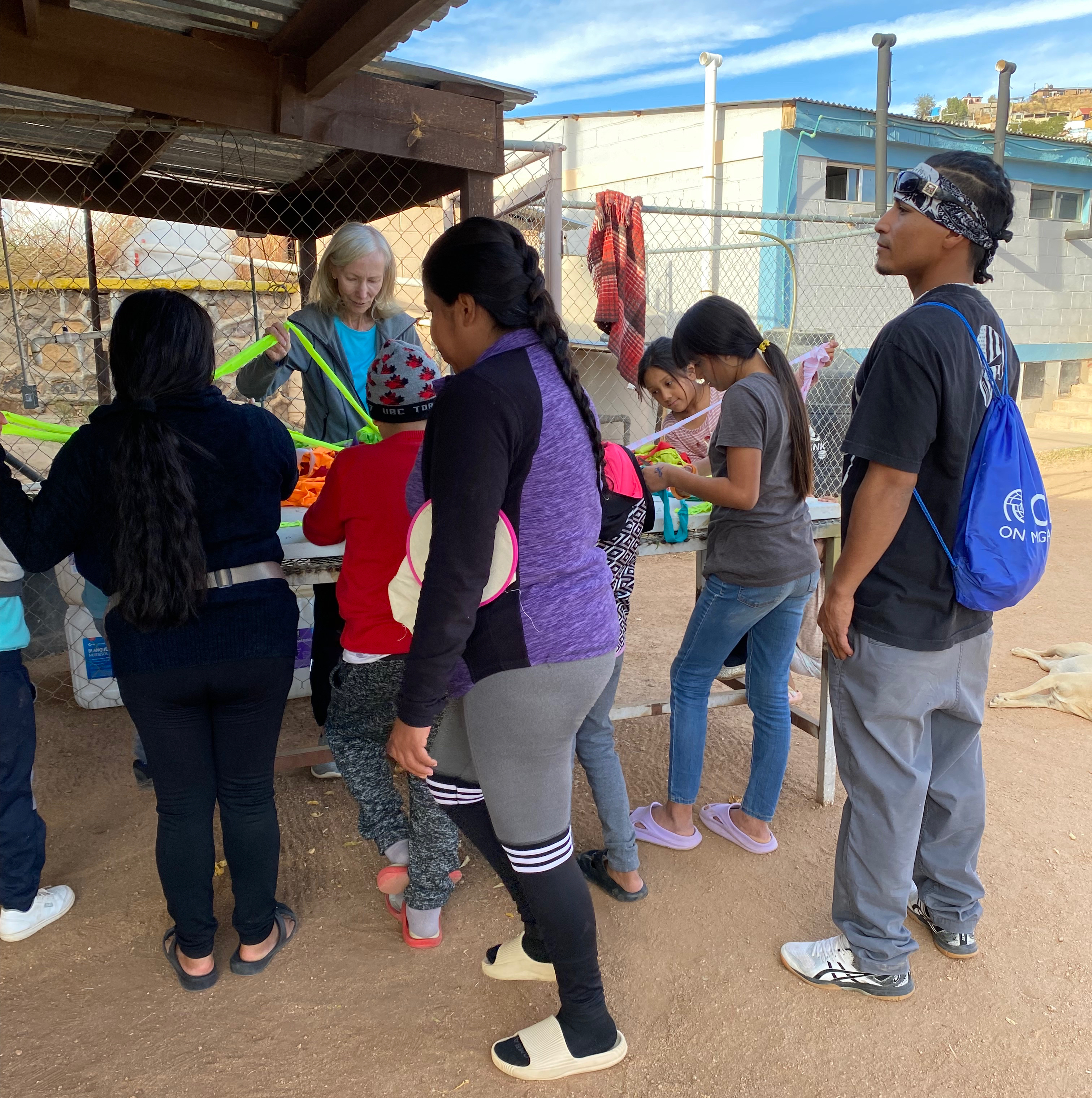
Inspired in part by the shelter’s Bordando Esperanza weaving program, a group of friends visiting from the greater Ohio area built a large vertical loom on the property. They invited residents to write their prayers on strips of cloth torn from donations of unused material, and then weave them into a large tapestry of prayers. Jan Alberti who led the group hopes to do more faith-based weaving projects in the future to help knit people and organizations together.

Chicago

In September, three amigas – Sister Lika Macias, Bordadora-Embroiderer Wendy Lopez Aguilar, and me, representing Artisans Beyond Borders, opened the exhibition Bordando Esperanza ~ Embroidering Hope in Chicago. The University of Illinois with Mellon Funding, sponsored the exhibition, which included a devotional embroidery workshop for students and community members at Casa Cultura near the University. In addition to a wonderful opening, we had a day between events to walk Chicago’s famous waterway and see the National Museum of Mexican Art. Mil gracias to the awesome Profesora Barbara Sostaita, from the Latin American and Latino Studies Dept. for coordinating everything. Thank you, Chicago! 

In October, we were able to disburse modest grants to asylum seekers Wendy, Mayra, Carla, and Yandè, our former teachers at the shelter, now in the U.S., to help them survive while awaiting asylum and work permits.

Granting Asylum

In November, we rallied around Tucson-based artisans as they endured their harrowing asylum adjudications. We were overcome with joy and relief when, in the space of one month, our principal embroiderer’s family, along with one of our first weaving teachers at the shelter and her children were granted asylum.

Wins are few and far between on the border and friends and advocates celebrated into the night. At one such fiesta, which included three other newcomer families, I realized that a wonderful new network of friends and family had been born. Together, we are creating real community across cultures, and real community equals social justice. Separate us from each other, and you separate all.

Weaving and Embroidery at the shelter

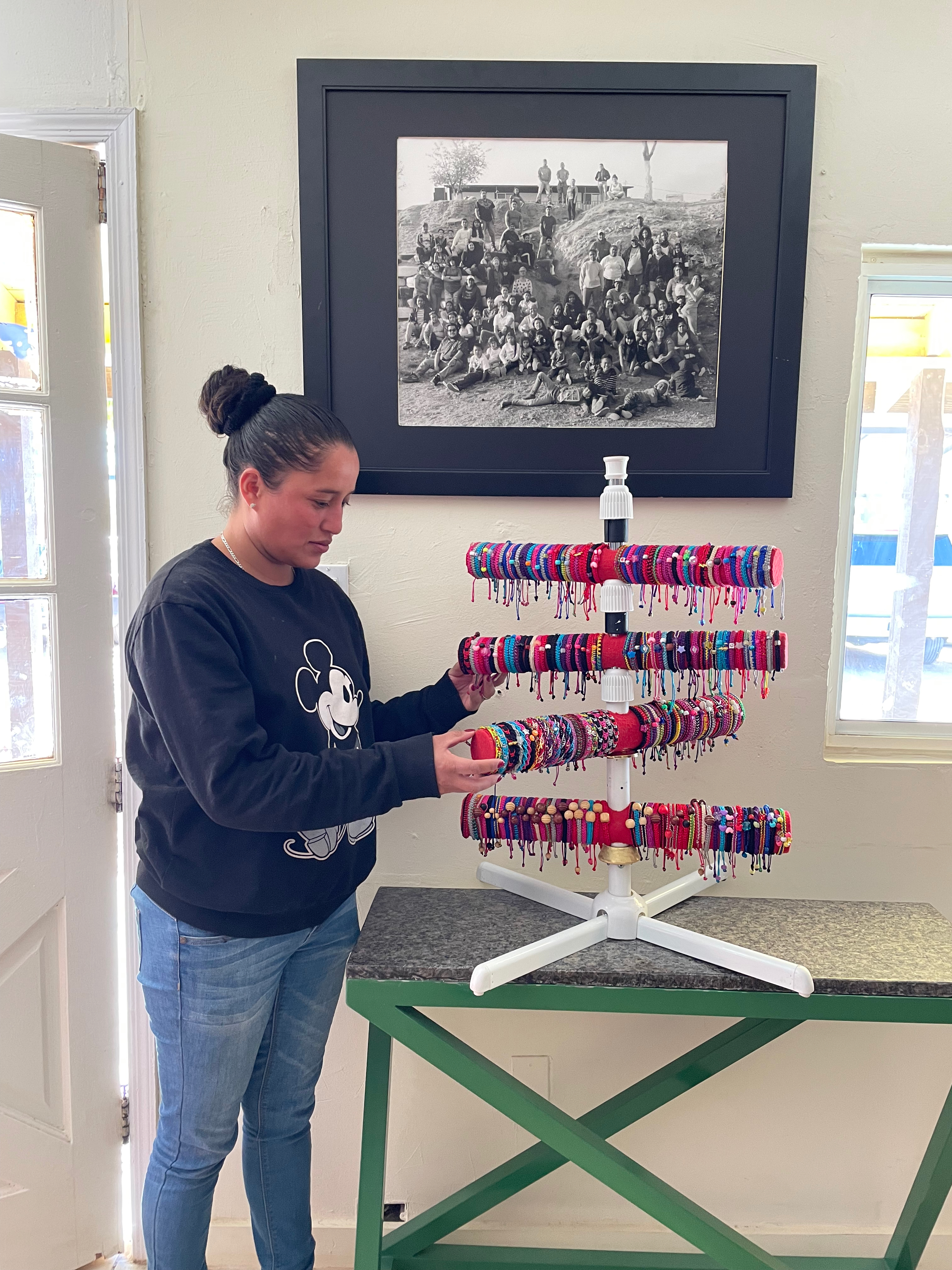
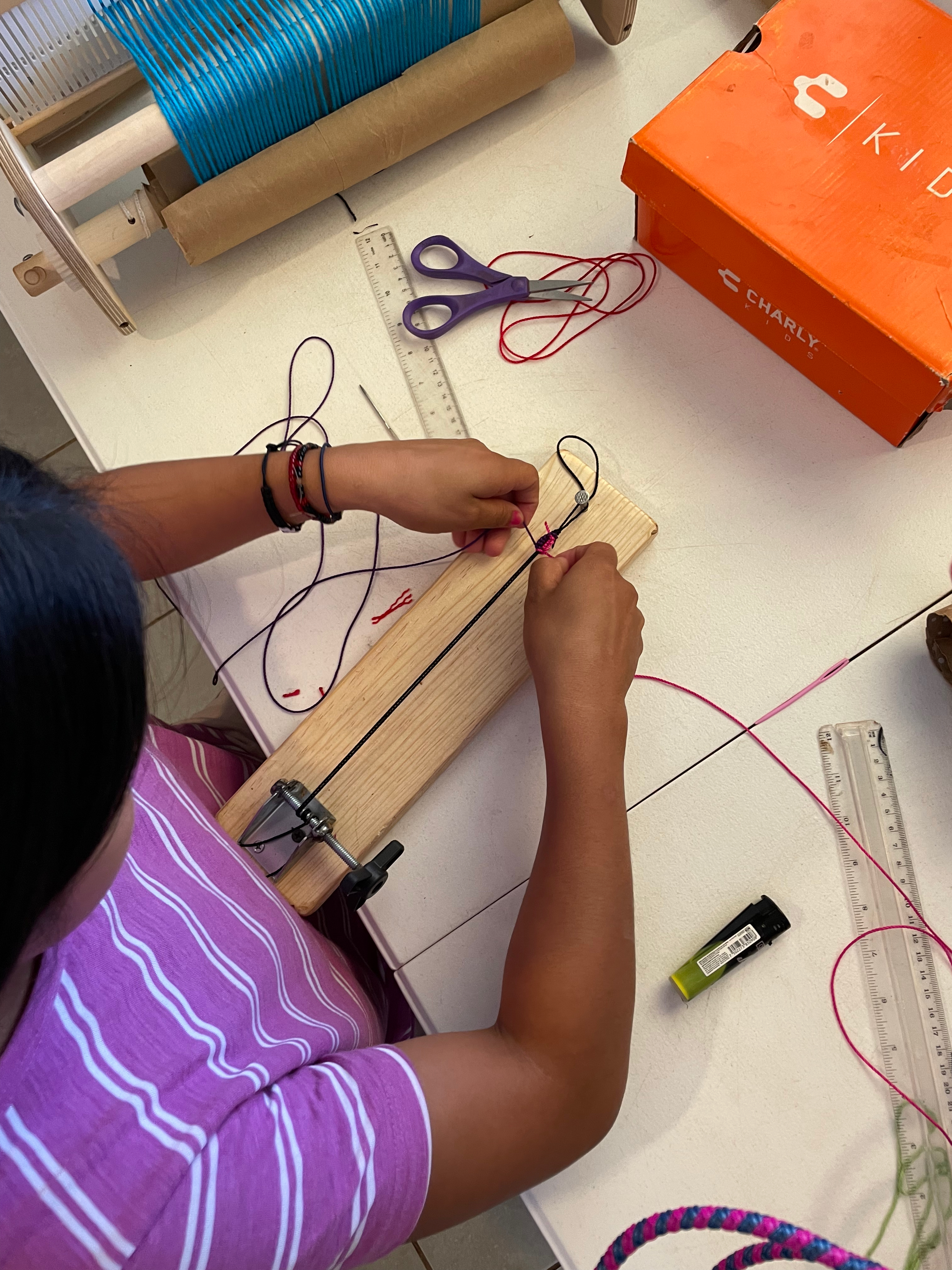
We want to thank supporters Martin Dickenson from Washington D.C. and Mary Sheridan from Tucson for donating funds to Artisans Beyond Borders to cover on-site teacher stipends at the shelter through this Winter and Spring. The Embroidering Hope teachers step forward from the resident population, some with generational weaving skills like Carmen and her Mom from Guatemala, and some with pure can-do like Gabi who coordinates the construction of petite looms for teaching and making woven pulseras-bracelets.

ICE

Now in December, we’ve just learned that ICE has decided to “appeal” the Judge’s decision that granted one of our families asylum last month. So much for building a life in the U.S. without fear. Both parents work all the time since receiving their work permits; cooking, cleaning, and driving cabs while raising two little ones. Our principal embroiderer often works late into the night stitching cloth for extra money and has the calluses on her hands to prove it. In just one year, the family of four has moved from a tiny fifth wheel in a Tucson trailer court to a house, and like so many other young families, immigrant or not, they struggle to pay the $1000/mo rent on the least expensive house they could find. In her “spare” time, our embroiderer takes English classes and goes to business school. I am in awe of her family and many other families like hers throughout the U.S. This is what the American Spirit has always looked like to me. The idea that ICE could rip away this family that we love is beyond reprehensible. It’s a crime against all that is fair and decent in this world.

So, how do we maintain Hope? Networks, faith-based and otherwise, forming across the U.S. to support and protect our neighbors, are key. Our strength is in community. We are all working to raise money for lawyer’s fees and bail funds, which often run into thousands of dollars.

If you read this and want to donate to a Legal Fund for asylum seekers, you can do so directly on the ArtisansBeyondBorders.org website. All future donations will be prioritized to help these families with their legal expenses.

If you send a check, please write the check to Grace St. Paul’s Episcopal Church. On the Memo line at the bottom of your check, write Artisans Beyond Borders (ABB) Migration Fund.

Send your check to:

Grace St. Paul Episcopal Church

2331 E Adams St.

Tucson, AZ 85719

Also, anyone who has donated funds through the ABB website in the last year, or if you decide to donate now to help with legal fees please email Contact@ArtisansBeyondBorders.org with your physical address so we can send you a thank you. We want to thank you in advance for your patience, as we are all volunteers, and sometimes things can get lost in the shuffle.

Volunteers with experience in craft are welcome to join us when we visit the shelter. Email Contact@ArtisansBeyondBorders.org. Spanish is helpful but not mandatory. Art and faith are the Universal languages of choice.

Early on, after the election, writer Annie Lamott wrote, “For now, we show up when we are needed with grit and kindness; we try to help, and we prepare for an end to the despair.”

Make art, stitch, weave, pray and rest. In the years ahead, it will take everything in our creative toolbox to help make it right.

In Border Peace,

V.L. James with Friends of Artisans Beyond Borders, Tucson, AZ 12/24

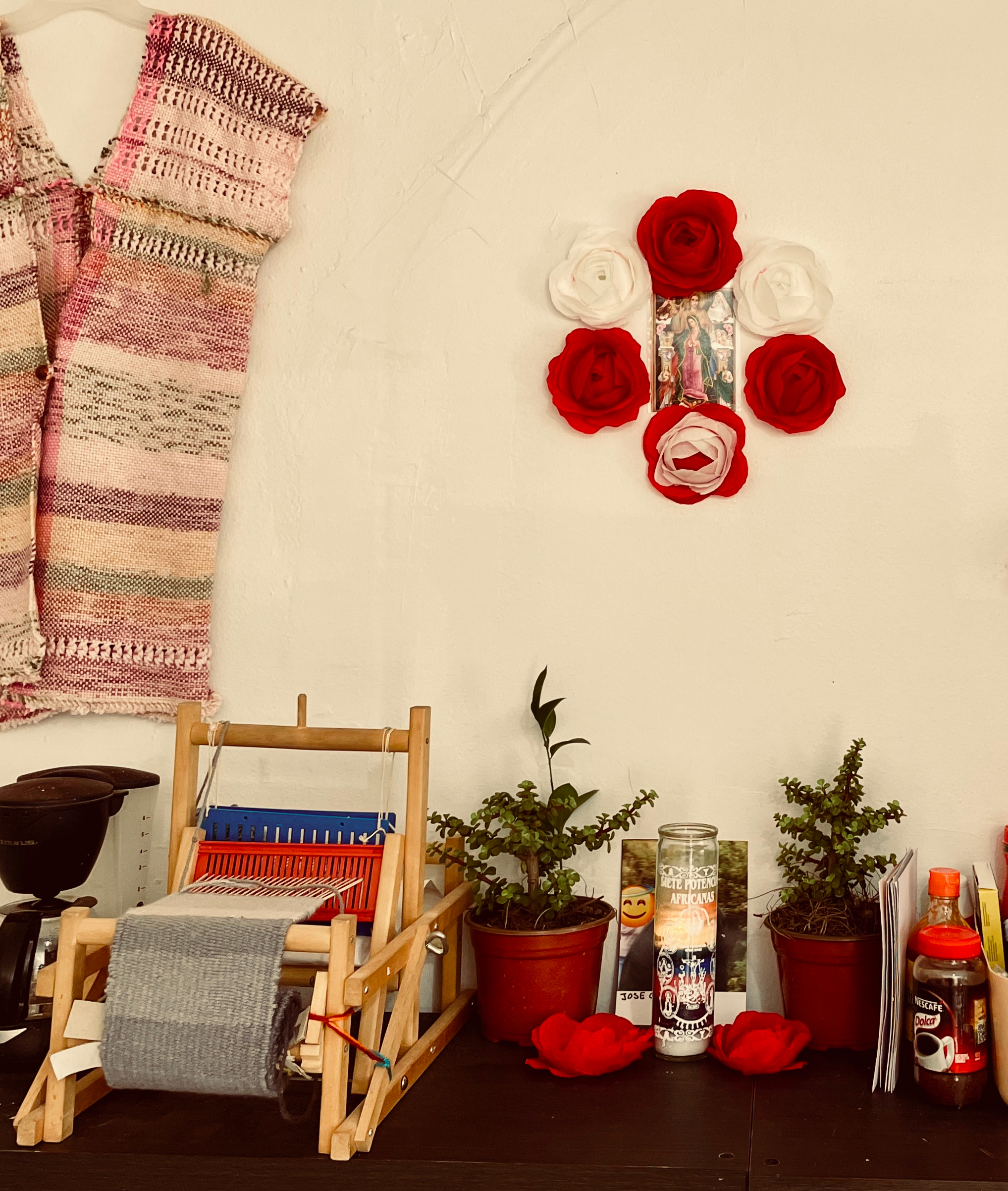
Gabi keeps the candle lit on the Altar in the craft room ~ en la sala de artesanias where magic happens.

Blessed are the Makers: Devotional Art on the Border

In this time of shocking family separation and violence against the most vulnerable among us, we are often paralyzed by sorrow and a loss of faith. Creativity and the Acts of Devotion offer us a path to healing the rift, individually and collectively.

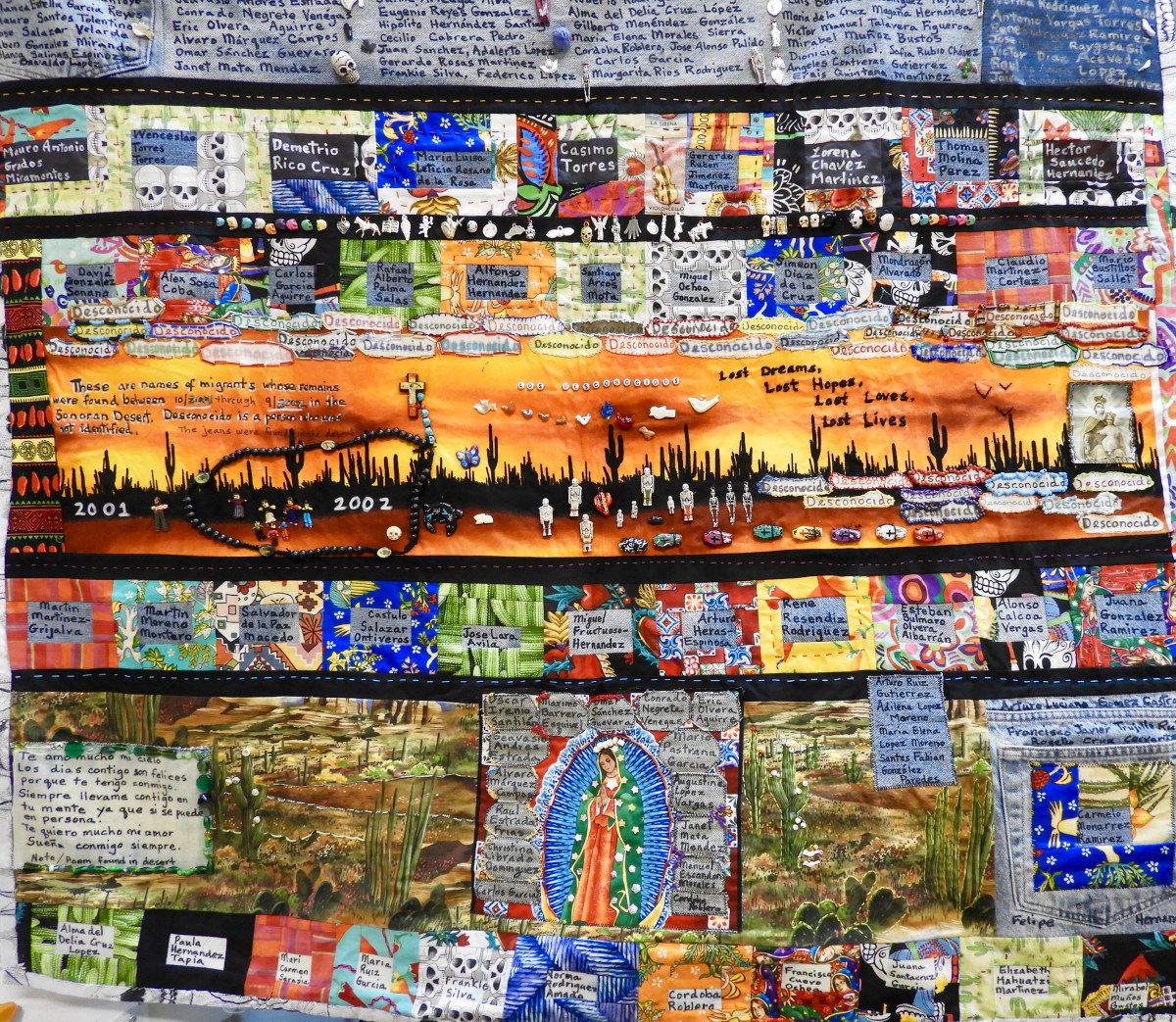
Published by Kosmos International, picked up by OpenDemocracy.org., then licensed under Creative Commons: The Migrant quilt is the story of how women on the U.S./MX border are taking the matter into their own hands…

https://www.kosmosjournal.org/kj_article/the-migrant-quilt/