Update: Art and Hope, Asylum and Trump 2.0 at the U.S.-Mexico Border ~ Artisans Beyond Borders 2024

Maya Angelou famously said, “Hope and fear cannot occupy the same space. Invite one to stay.”

Gerhard Richter, the acclaimed and oft-quoted painter who came of age during Nazi Germany said that “Art is the highest form of Hope.” Sister Lika Macias, Mother Lika to countless asylum seekers on the AZ-Mexico border, says simply “Art is food for the spirit.” In these times and on this border, hope and a resilient spirit are more necessary than ever.

I stayed over at the migrant shelter la Casa de las Misericordia y Todas Naciones in Nogales, Sonora for a few weeks in November as the de facto writer in residence. The morning after the election, I woke to find my suspicions confirmed. Trump had won. What would the people that I had become close to at the shelter think about the fact that a man who explicitly targets them, asylum-seeking families, was now the President-elect of the U.S.A?  Families had already been waiting months longer than usual at the shelter to legally petition for asylum.

New and old friends that I met on the grounds were as gracious as always but quiet and subdued. Many residents were frightened and nervous in the days and weeks leading up to the election. Now that the outcome was a reality, people seemed resigned. Families that make it to the shelter are no strangers to extortion, bodily assault, and grinding poverty. What they flee from is much worse than a soon-to-be U.S. president’s threats.

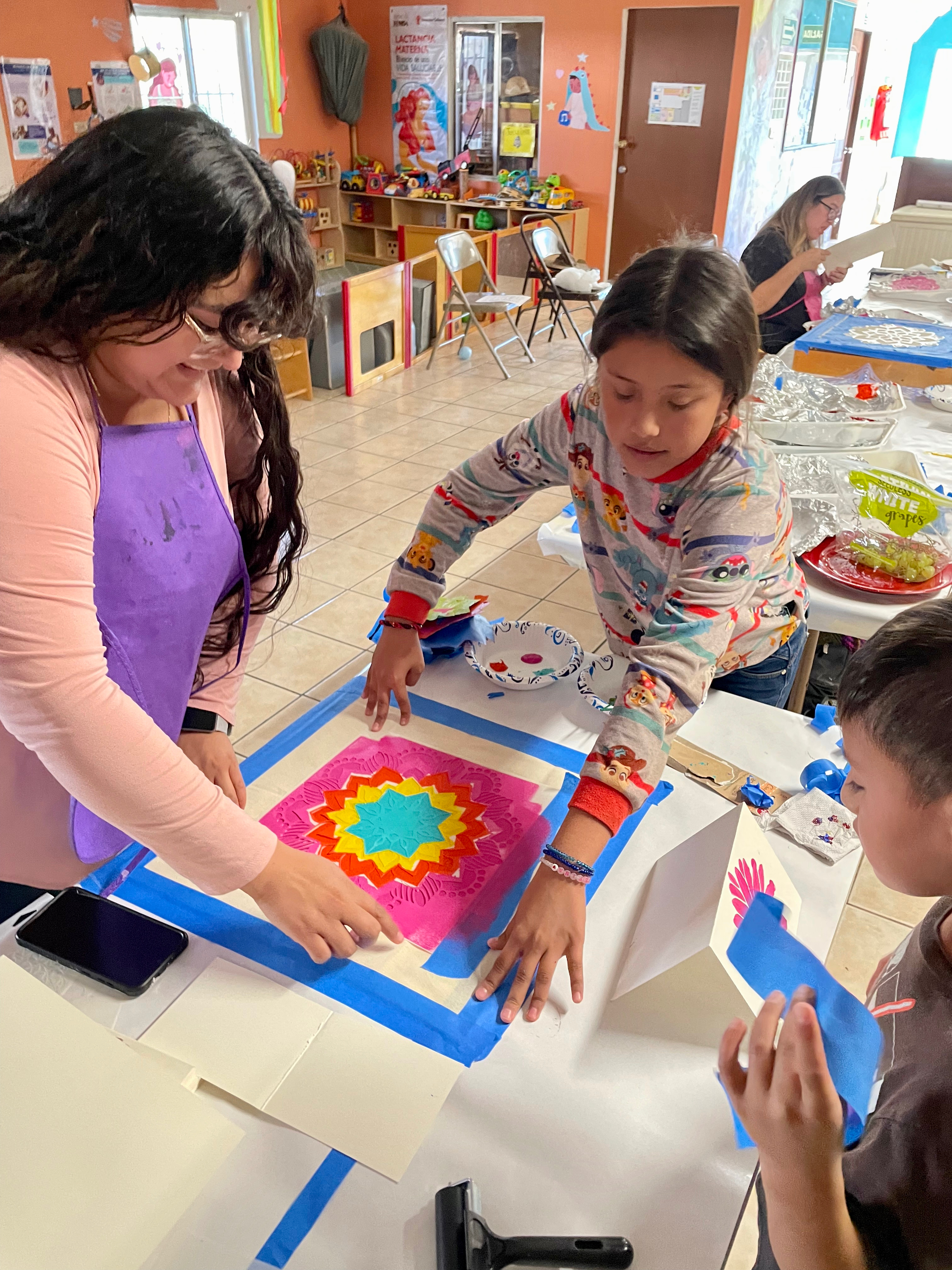
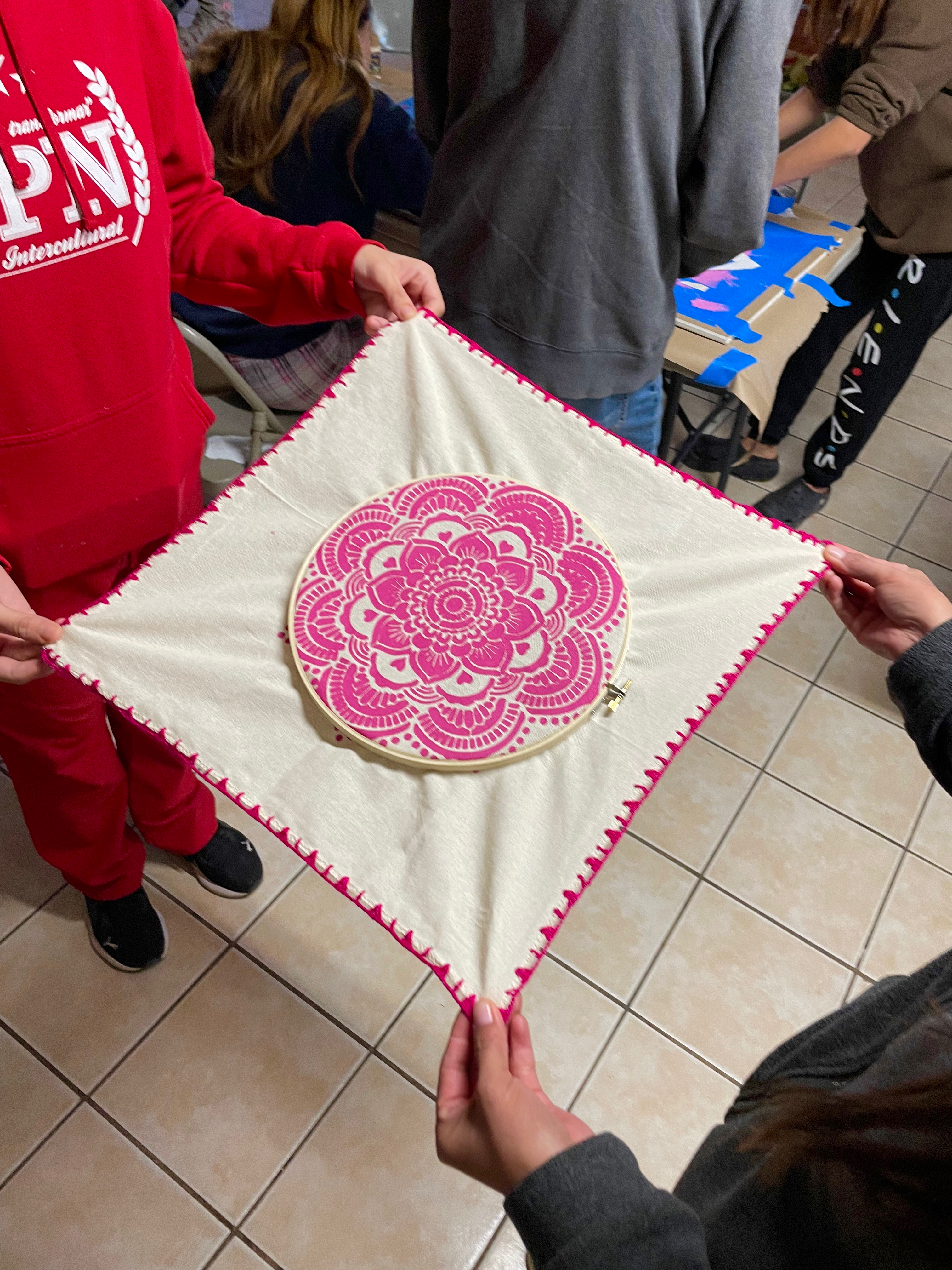
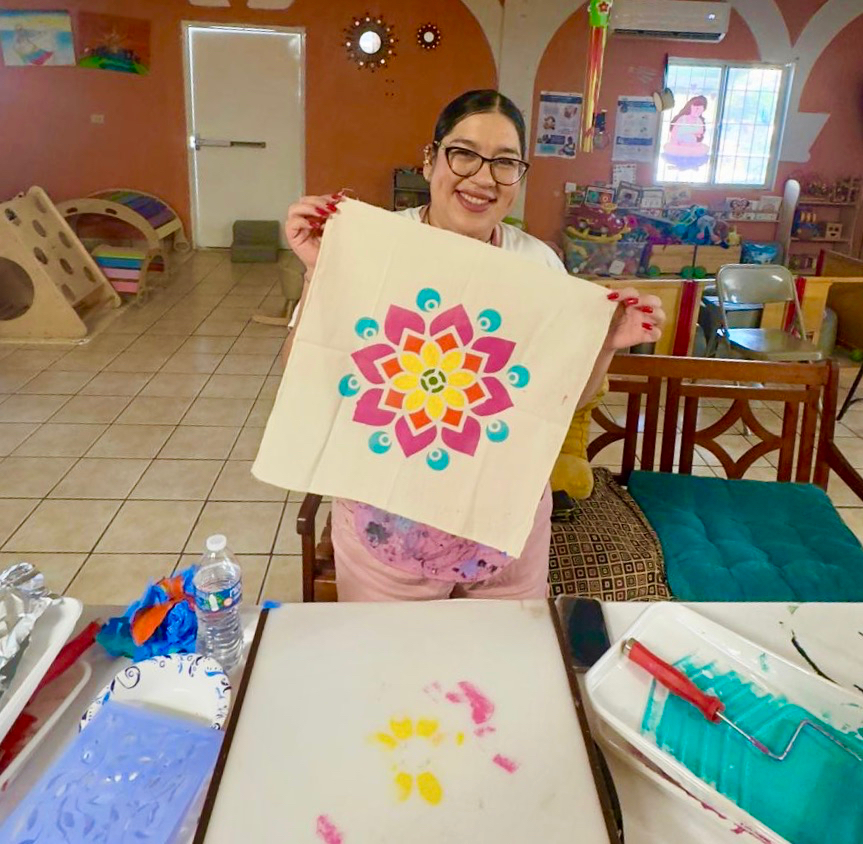
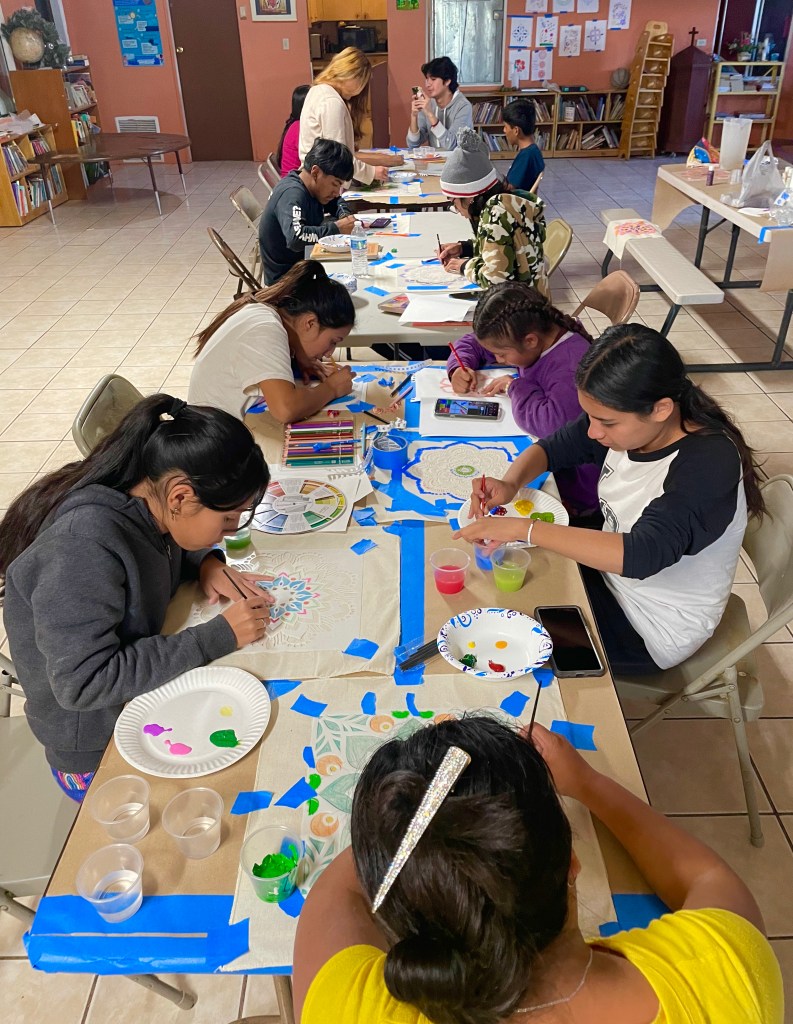
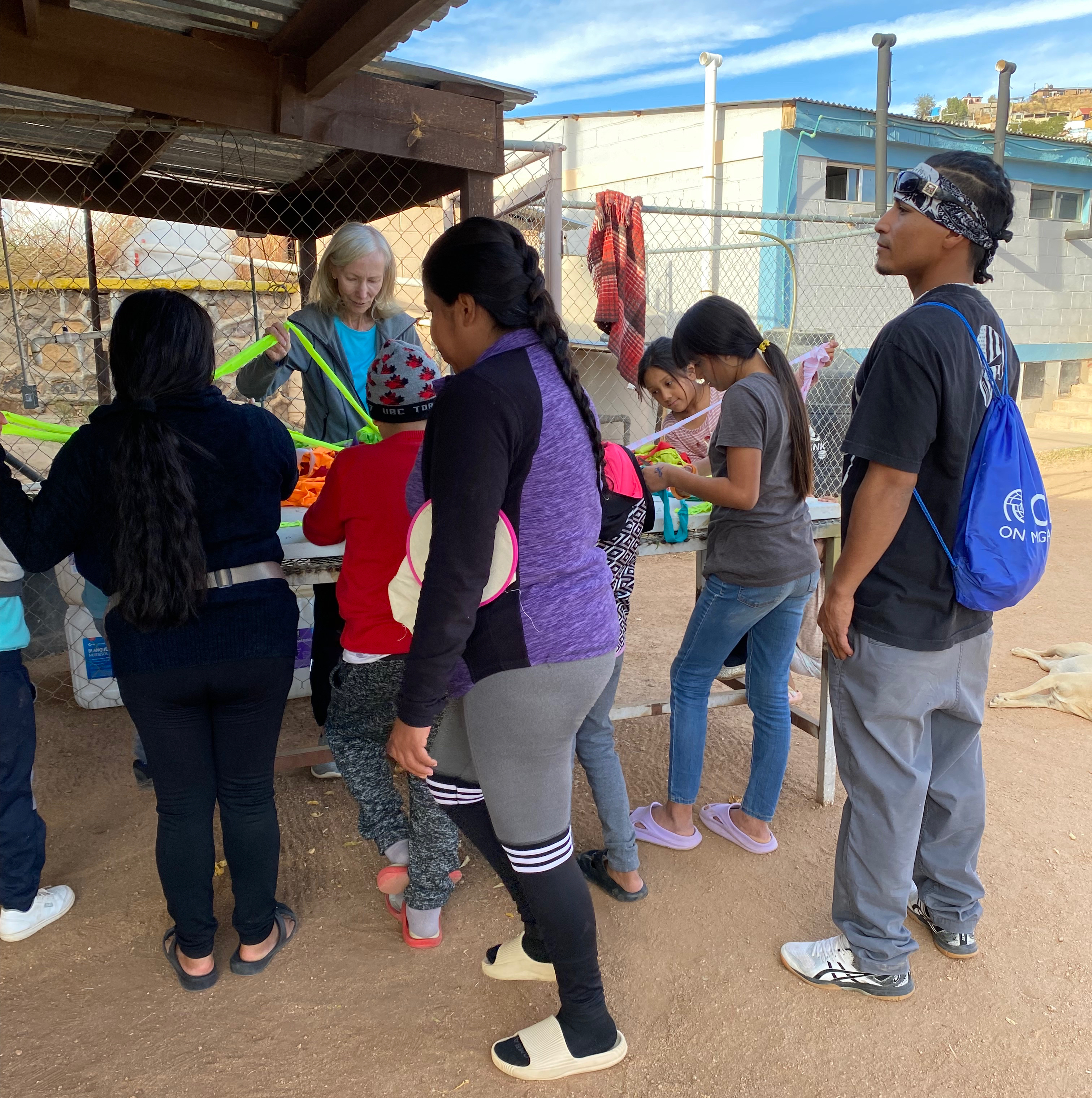
When I wasn’t writing at the computer, I held Mixed-Media Arts workshops for the on-site teachers and older kids at the shelter: designing textiles and cards, drawing and painting, printmaking and embroidery.

Mandalas

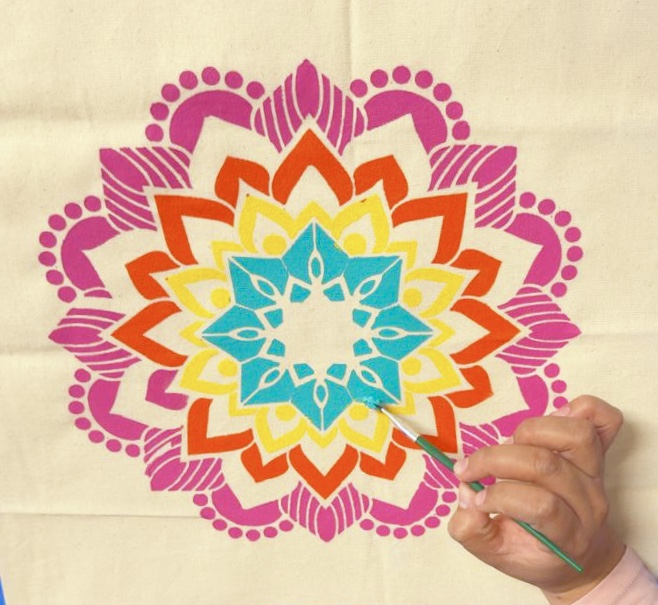
Our starting point in each workshop was the Mandala. Mandalas have the power to transform suffering into joy. Mandalas and other Universal sacred symbols are important touchstones in trauma-informed, healing-centered art practices, granting us a shared symbolic language regardless of cultural or religious backgrounds.

The very act of creating gives rise to anticipatory gladness, the blue sky feeling of expansiveness and wide-open possibilities, in other words, Hope. Hope is actionable. It’s process; choosing colors that delight the heart, rolling paint onto fabric, creating symmetry and balance, and mastering tools and materials.

Later, seeing contemplative mandalas and the mandala form in sunflowers hanging up on a line was deeply satisfying. As to the reality of the political situation, tomorrow would be another day. On days filled with Art, beauty and unity rule. In the future, whenever the maker runs their hands over their cloth, they can remember the freedom of their soul’s exploration that day.

Weaving Prayers

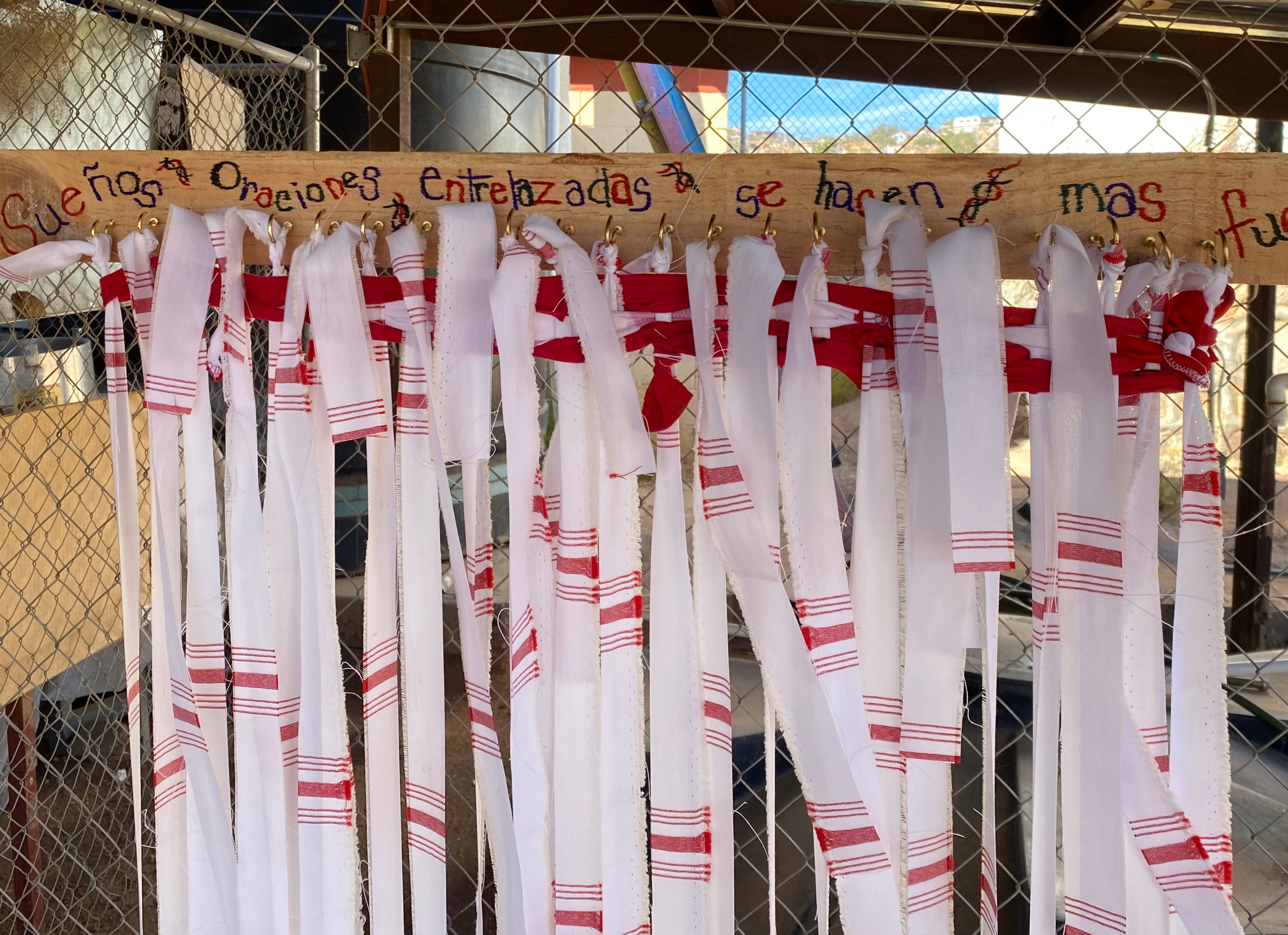
Inspired in part by the shelter’s Bordando Esperanza weaving program, a group of friends visiting from the greater Ohio area built a large vertical loom on the property. They invited residents to write their prayers on strips of cloth torn from donations of unused material, and then weave them into a large tapestry of prayers. Jan Alberti who led the group hopes to do more faith-based weaving projects in the future to help knit people and organizations together.

Chicago

In September, three amigas – Sister Lika Macias, Bordadora-Embroiderer Wendy Lopez Aguilar, and me, representing Artisans Beyond Borders, opened the exhibition Bordando Esperanza ~ Embroidering Hope in Chicago. The University of Illinois with Mellon Funding, sponsored the exhibition, which included a devotional embroidery workshop for students and community members at Casa Cultura near the University. In addition to a wonderful opening, we had a day between events to walk Chicago’s famous waterway and see the National Museum of Mexican Art. Mil gracias to the awesome Profesora Barbara Sostaita, from the Latin American and Latino Studies Dept. for coordinating everything. Thank you, Chicago! 

In October, we were able to disburse modest grants to asylum seekers Wendy, Mayra, Carla, and Yandè, our former teachers at the shelter, now in the U.S., to help them survive while awaiting asylum and work permits.

Granting Asylum

In November, we rallied around Tucson-based artisans as they endured their harrowing asylum adjudications. We were overcome with joy and relief when, in the space of one month, our principal embroiderer’s family, along with one of our first weaving teachers at the shelter and her children were granted asylum.

Wins are few and far between on the border and friends and advocates celebrated into the night. At one such fiesta, which included three other newcomer families, I realized that a wonderful new network of friends and family had been born. Together, we are creating real community across cultures, and real community equals social justice. Separate us from each other, and you separate all.

Weaving and Embroidery at the shelter

We want to thank supporters Martin Dickenson from Washington D.C. and Mary Sheridan from Tucson for donating funds to Artisans Beyond Borders to cover on-site teacher stipends at the shelter through this Winter and Spring. The Embroidering Hope teachers step forward from the resident population, some with generational weaving skills like Carmen and her Mom from Guatemala, and some with pure can-do like Gabi who coordinates the construction of petite looms for teaching and making woven pulseras-bracelets.

ICE

Now in December, we’ve just learned that ICE has decided to “appeal” the Judge’s decision that granted one of our families asylum last month. So much for building a life in the U.S. without fear. Both parents work all the time since receiving their work permits; cooking, cleaning, and driving cabs while raising two little ones. Our principal embroiderer often works late into the night stitching cloth for extra money and has the calluses on her hands to prove it. In just one year, the family of four has moved from a tiny fifth wheel in a Tucson trailer court to a house, and like so many other young families, immigrant or not, they struggle to pay the $1000/mo rent on the least expensive house they could find. In her “spare” time, our embroiderer takes English classes and goes to business school. I am in awe of her family and many other families like hers throughout the U.S. This is what the American Spirit has always looked like to me. The idea that ICE could rip away this family that we love is beyond reprehensible. It’s a crime against all that is fair and decent in this world.

So, how do we maintain Hope? Networks, faith-based and otherwise, forming across the U.S. to support and protect our neighbors, are key. Our strength is in community. We are all working to raise money for lawyer’s fees and bail funds, which often run into thousands of dollars.

If you read this and want to donate to a Legal Fund for asylum seekers, you can do so directly on the ArtisansBeyondBorders.org website. All future donations will be prioritized to help these families with their legal expenses.

If you send a check, please write the check to Grace St. Paul’s Episcopal Church. On the Memo line at the bottom of your check, write Artisans Beyond Borders (ABB) Migration Fund.

Send your check to:

Grace St. Paul Episcopal Church

2331 E Adams St.

Tucson, AZ 85719

Also, anyone who has donated funds through the ABB website in the last year, or if you decide to donate now to help with legal fees please email Contact@ArtisansBeyondBorders.org with your physical address so we can send you a thank you. We want to thank you in advance for your patience, as we are all volunteers, and sometimes things can get lost in the shuffle.

Volunteers with experience in craft are welcome to join us when we visit the shelter. Email Contact@ArtisansBeyondBorders.org. Spanish is helpful but not mandatory. Art and faith are the Universal languages of choice.

Early on, after the election, writer Annie Lamott wrote, “For now, we show up when we are needed with grit and kindness; we try to help, and we prepare for an end to the despair.”

Make art, stitch, weave, pray and rest. In the years ahead, it will take everything in our creative toolbox to help make it right.

In Border Peace,

V.L. James with Friends of Artisans Beyond Borders, Tucson, AZ 12/24

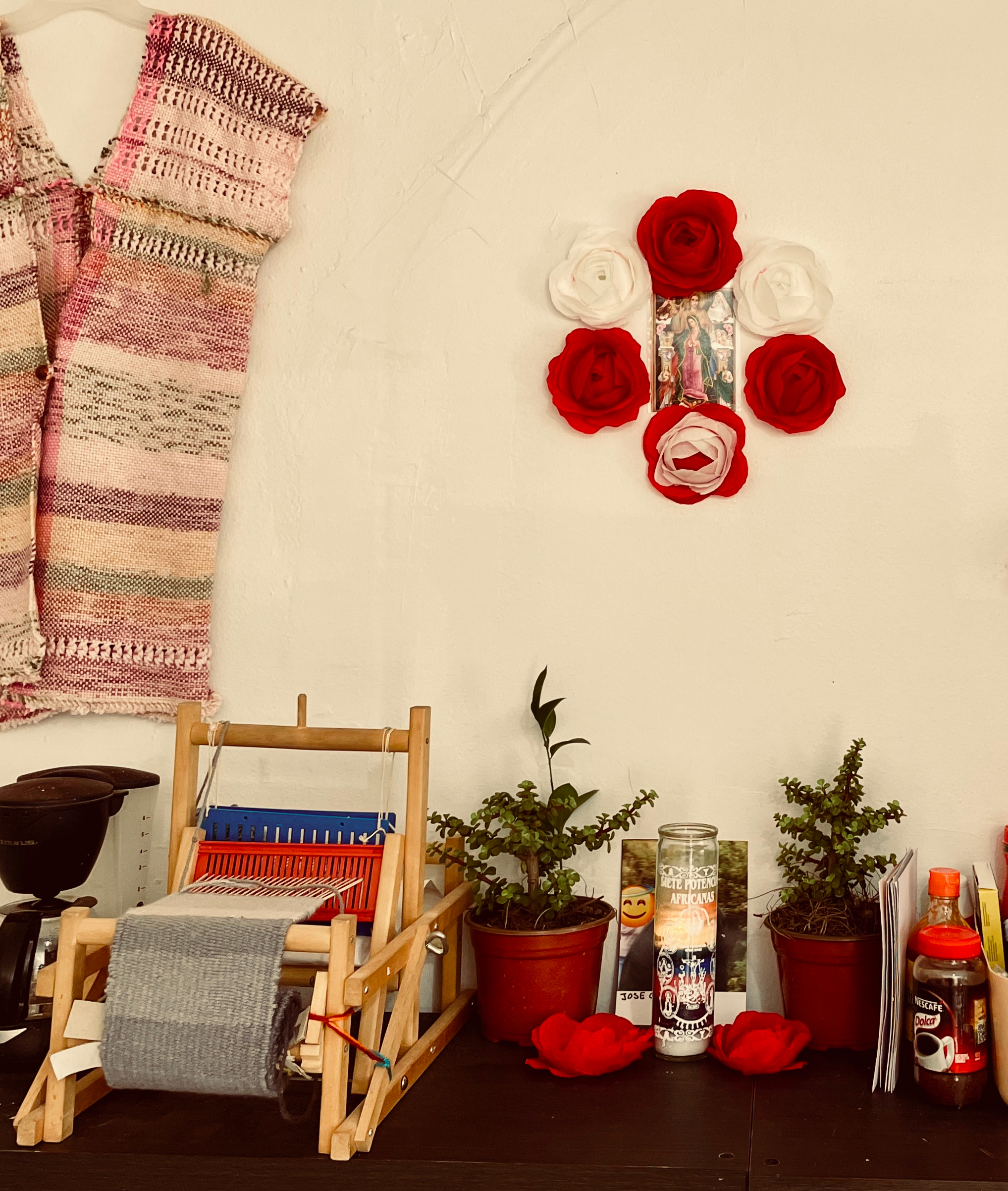
Gabi keeps the candle lit on the Altar in the craft room ~ en la sala de artesanias where magic happens.

New Year 2024 – Un Regalo para Ti ~ A Gift for You

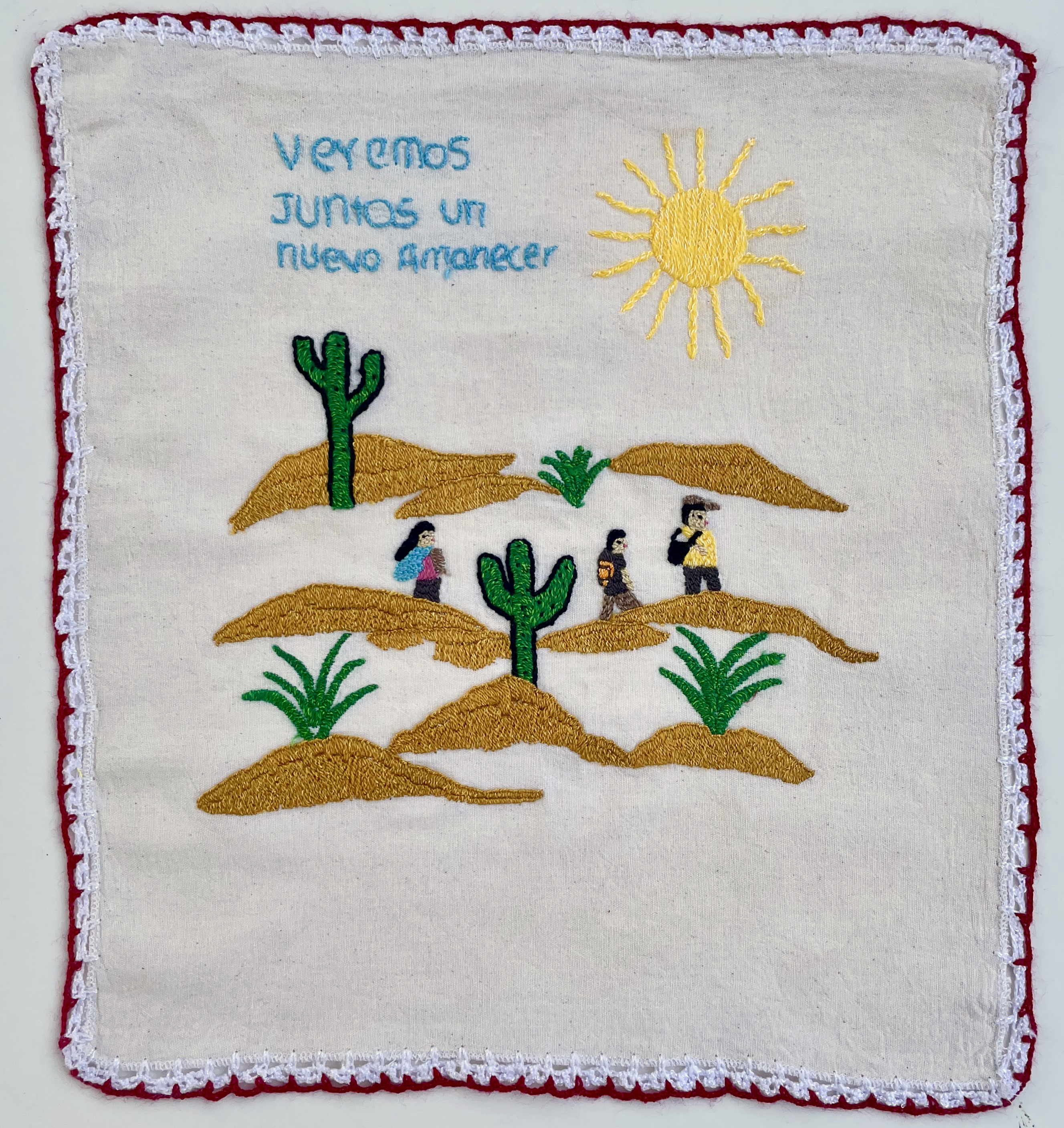
“We will see together a new Dawn,” embroidered by Carla

2023 was a dark time for displaced families around the world, yet against all odds, hope endures. As we move forward into 2024, let’s amplify these quiet voices of hope.

Magical Mariposas

When I think about hope, it’s Jhony’s face I see, a child from El Salvador, in a newcomer family, staring in awe at a mariposa alive in his hand. That day, at Tucson’s recent Migrant Memorial Service at Southside Presbyterian, Jhony tiptoed up to me, spellbound with enchantment, and opened his hand. Holding his breath so as not to disturb the fragile butterfly, he looked up and met my eye in silent wonder.

Each year, the Migrant Memorial service remembers and honors the hundreds of people who die each year migrating across our desert. Stones gathered from the desert, marked with the names of the dead are placed, one by one, at the base of the Migrant Shrine in the church’s courtyard. Most of the stones are marked desconocido, to represent the incredible number of unknown Jane and John Doe’s. After every stone was put into place, the Reverend Allison J. Harrington called all the children to her and presented them with a box. When the children opened the box, a kaleidoscope of monarch-colored butterflies swarmed the courtyard, and a collective Oh! rippled through the crowd.

In many cultures, Monarchs represent the souls of our deceased loved ones. For Mexicans, the monarch’s historically large migrations symbolize family unity reminding us that we are all family in the afterlife. According to Wikipedia, the same is true for Egyptian, Indian, Russian, and Irish cultures as well. Above all, Monarchs symbolize Hope, a gift for us all. I won’t soon forget this day and I doubt that Jhony will either.

Transform your fear into strength and you will live, Embroidered by Mayeli

Make and Give

In a world dead-set on destruction, the most radical response is to create and then create more.  Wonder-fully. Fearlessly. Individually and together in solidarity. To create is generative, life-affirming, and naturally healing. To create is to hope.

Recently, Tucson’s Friends of Artisans Beyond Borders teamed up with high school youth to create Maker bags stuffed with healing-centered art supplies and activities for families legally waiting in line for asylum at the port of entry in Nogales, Sonora, Mexico. The youth, here from Bainbridge Island in Washington State with their teachers to learn about the U.S.-Mexico Border, were guided by educators at Globalroutes.org.

At the recently renovated Ward 6 conference building in Tucson, the students bagged supplies and materials for 160 comfort projects ranging from culturally aligned Bordado-embroidery Maker Bags & Mandala designs for adults, to Ojos de Dios – God’s Eyes and pulseras de Amistad – friendship bracelets kits, to backpack journals for school-age kids, and coloring packets for pre-schoolers. Students labeled each bag Un regalo para ti – A Gift for you and then added bows. The students were dedicated and organized.

Completing Maker Bags

These well-thought-out Arte y actividades projects (Craftways) were put together based on experience with families in trauma at Casa Alitas, Tucson’s main shelter for asylum seekers. As volunteers, we all agreed that it was time for the Craftway kits, good medicine for the heart, hands, and soul, to go directly to families waiting at the border entrance.  With enough donations secured, we hope that our colleagues at Voices from the Border can carry the practice forward.

At the Port of Entry

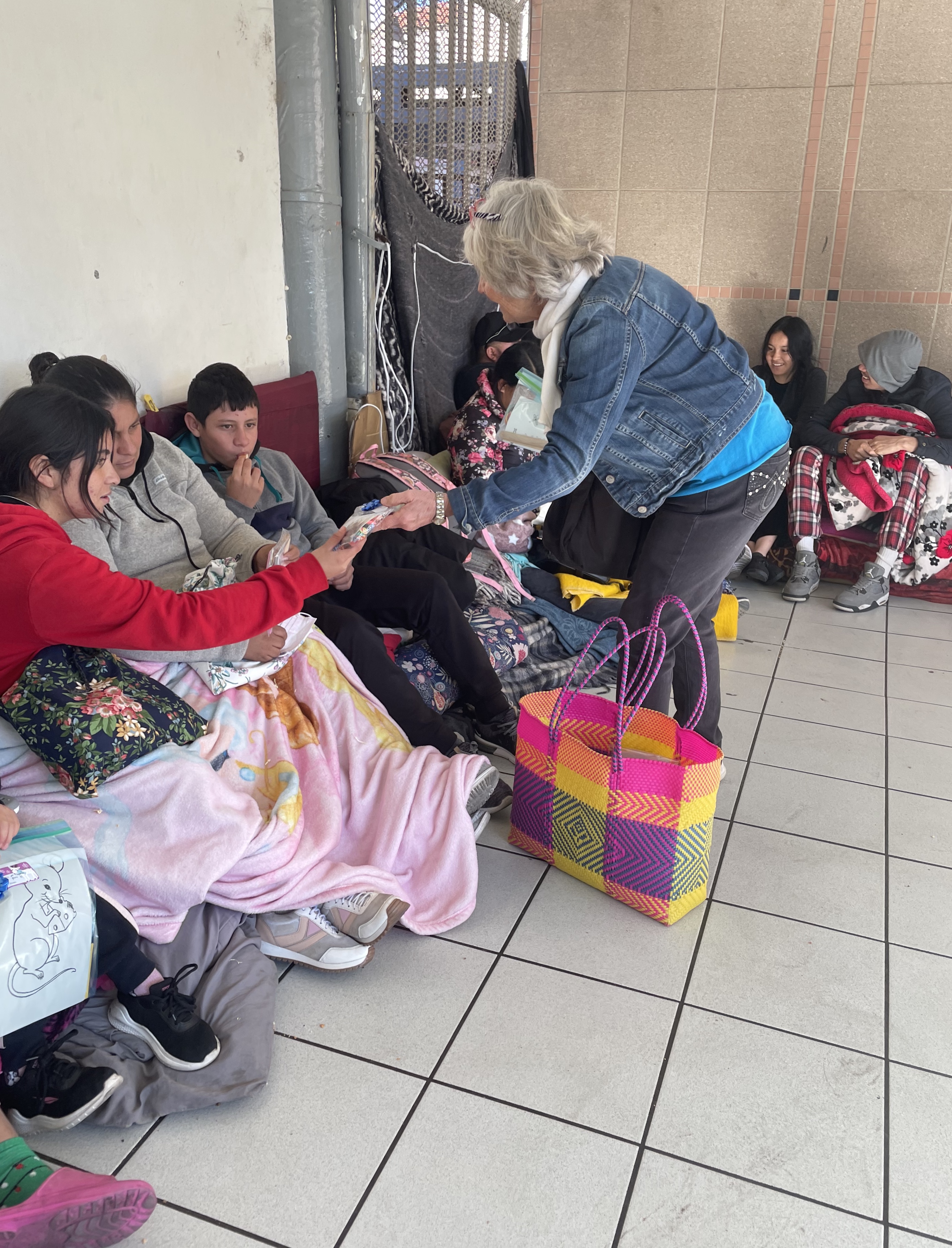
At the De Concini port of entry in Nogales, tense families packed in shoulder to shoulder against one wall. At first, people seemed a bit unsure, but the more projects we gave out with no expectations, the more relaxed the crowd became, and the more smiles ensued. Families were surprised and delighted to be offered a choice of projects.

Linda, volunteering with Voices from the Border hands out Maker’s bags to families waiting for an appointment to legally cross the border, Nogales, Sonora, MX

Volunteers from Artisans Beyond Borders (ABB), Tucson’s Grace St. Paul’s Episcopal Migration Ministries, Tubac’s Border Community Alliance, and as far away as Marana teamed up with volunteers Pancho and Linda from Voices from the Border.

A woman waiting, seeking asylum, begins immediately embroidering with the new materials.

It was a special day for this writer. Separated by the wall and the pandemic, it had been forever since I’d seen Pancho, our first partner in Mexico. From the start of ABB, in 2019 when we volunteers first began to do arts outreach in the streets, Pancho, a frontline nurse at the border and a great friend to the people, was the first to jump in and help us organize, translate, and build trust.  Whenever we felt like we couldn’t do enough, Pancho reminded us: “Poco a poco” – you do what you can.

Pancho and Me

Speaking of doing enough, the families that we served that day were under a roof and had blankets to ward against the cold while they waited at the port of entry. By contrast, families with little or nothing are being dropped off now by the cartels at remote areas along the wall. They are desperate. Every day, local helpers try to bring enough blankets, warm clothing, food, and water to families stranded at the wall. We all do whatever we can. Please consider donating directly to our helpers on the front lines:

The Green Valley – Sahuarita Samaritans

No More Deaths – No Mas Muertos

Tucson Samaritans

Humane Borders

Creative Community at the Shelter

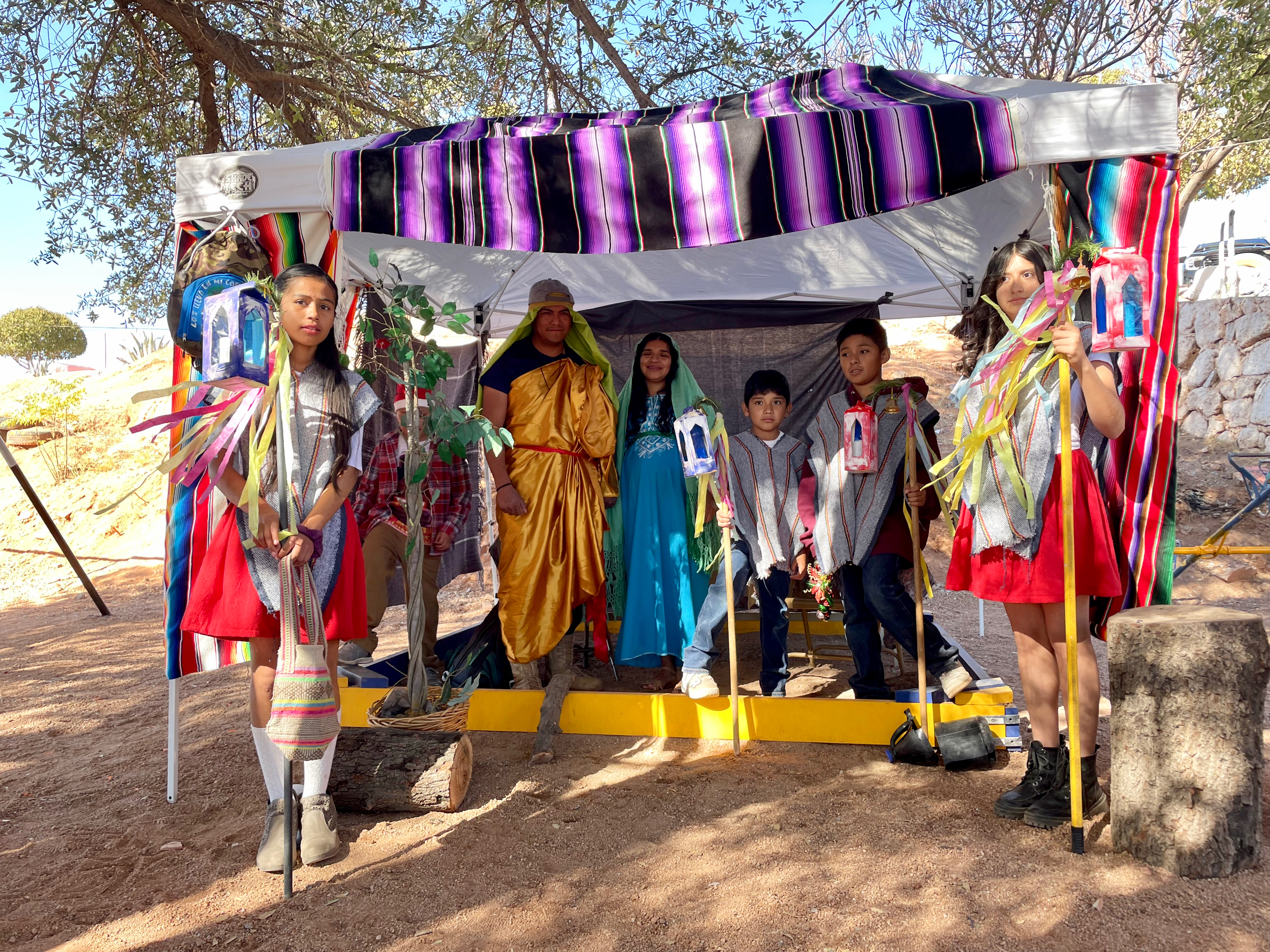
After all of the Arte y actividades were passed out, we went to the posada celebration at the shelter La Casa de las Misericordia y Todas Naciones. Las Posadas is a traditional Mexican religious festival commemorating Mary and Joseph’s migration from Nazareth to Bethlehem in search of a safe place for Mary to give birth to Jesus. In addition to tamales and traditional drinks, shelter youth gifted all the visitors with sweet performances and dancing. Whenever I visit this shelter, I always leave feeling invigorated and spiritually replenished. It’s like drinking the purest water from a deep well of friendship and family.

The littles and their teachers for Las Posadas at la Casa de las Misericordia y Todas Naciones. Their costumes, including the girl’s skirts, were created from brown wrapping paper.

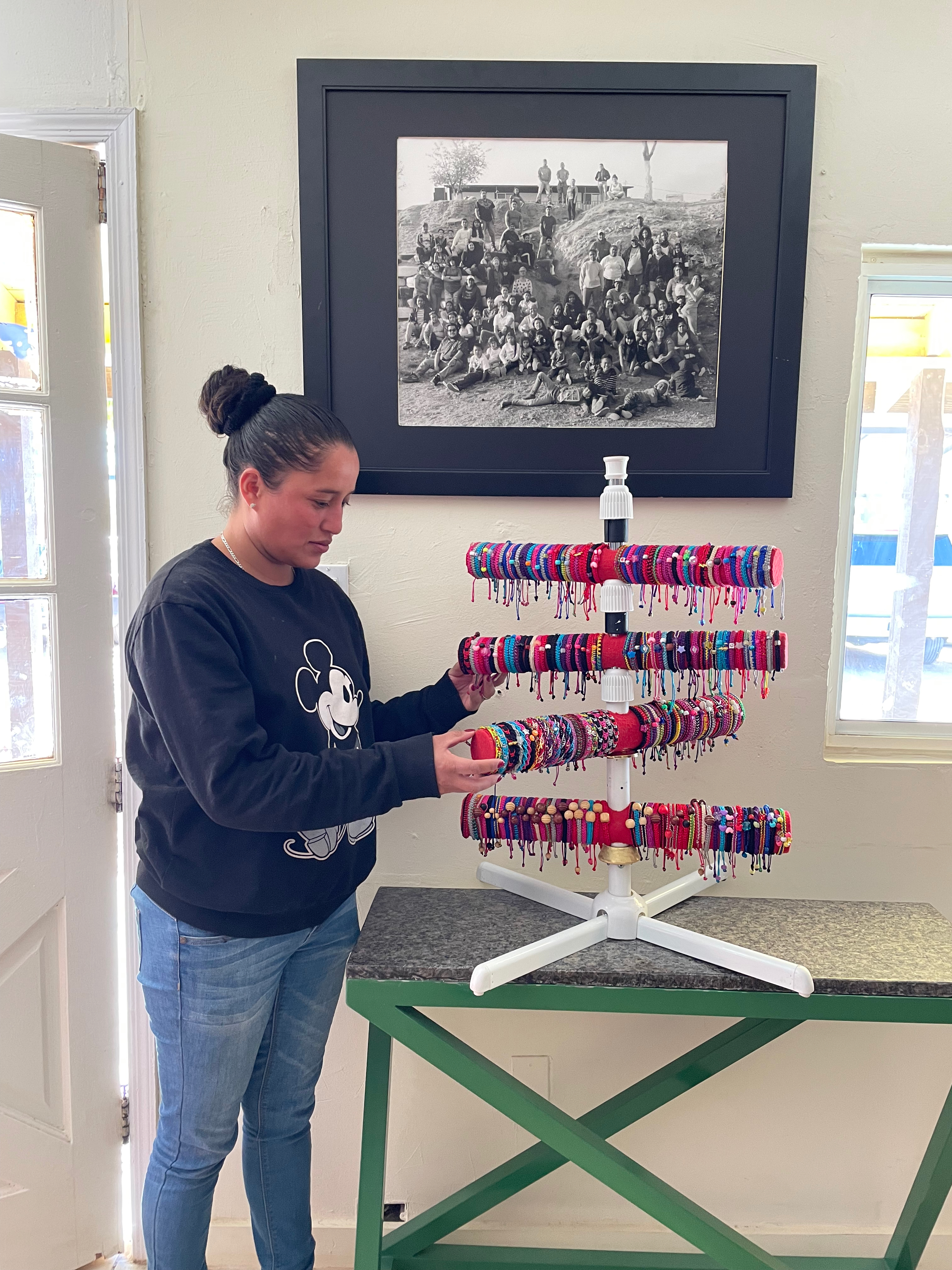
The shelter’s weaving studio Artisans Beyond Borders established in the summer of 2023 in collaboration with shelter staff, allows guests quiet respite, focus, and flow. Guests have learned the basic techniques and best practices for handlooming patterned mug rugs (coasters), Diamond Twill bookmarks, and more. One-of-a-kind and limited, some can be found for sale in the office at the shelter. They are also offered for donation while supplies last at ArtisansBeyondBorders.org website.

Hand-loomed Mug Rugs woven by guests at the shelter

Diamond Twill Bookmarks handwoven by guests

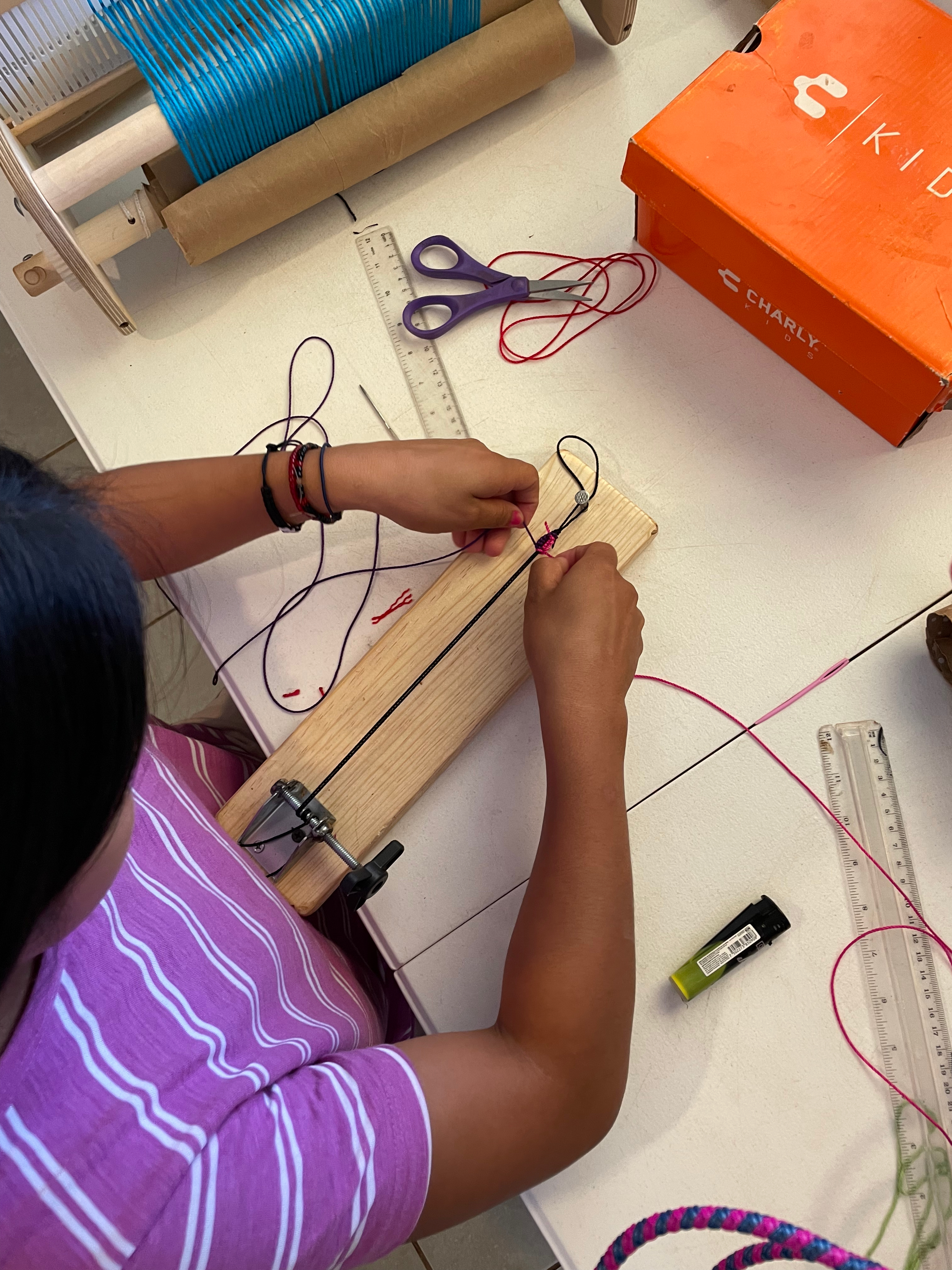
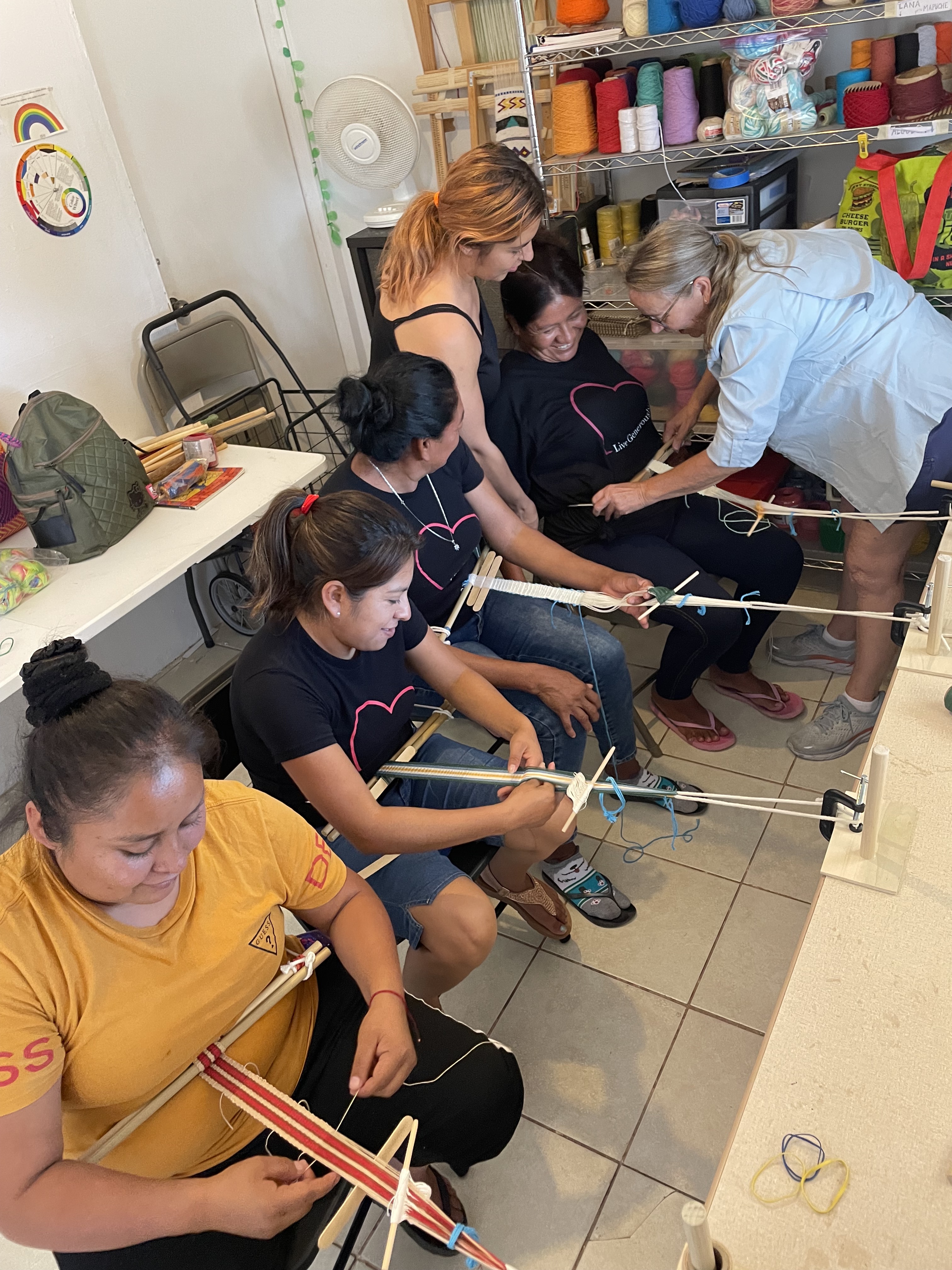
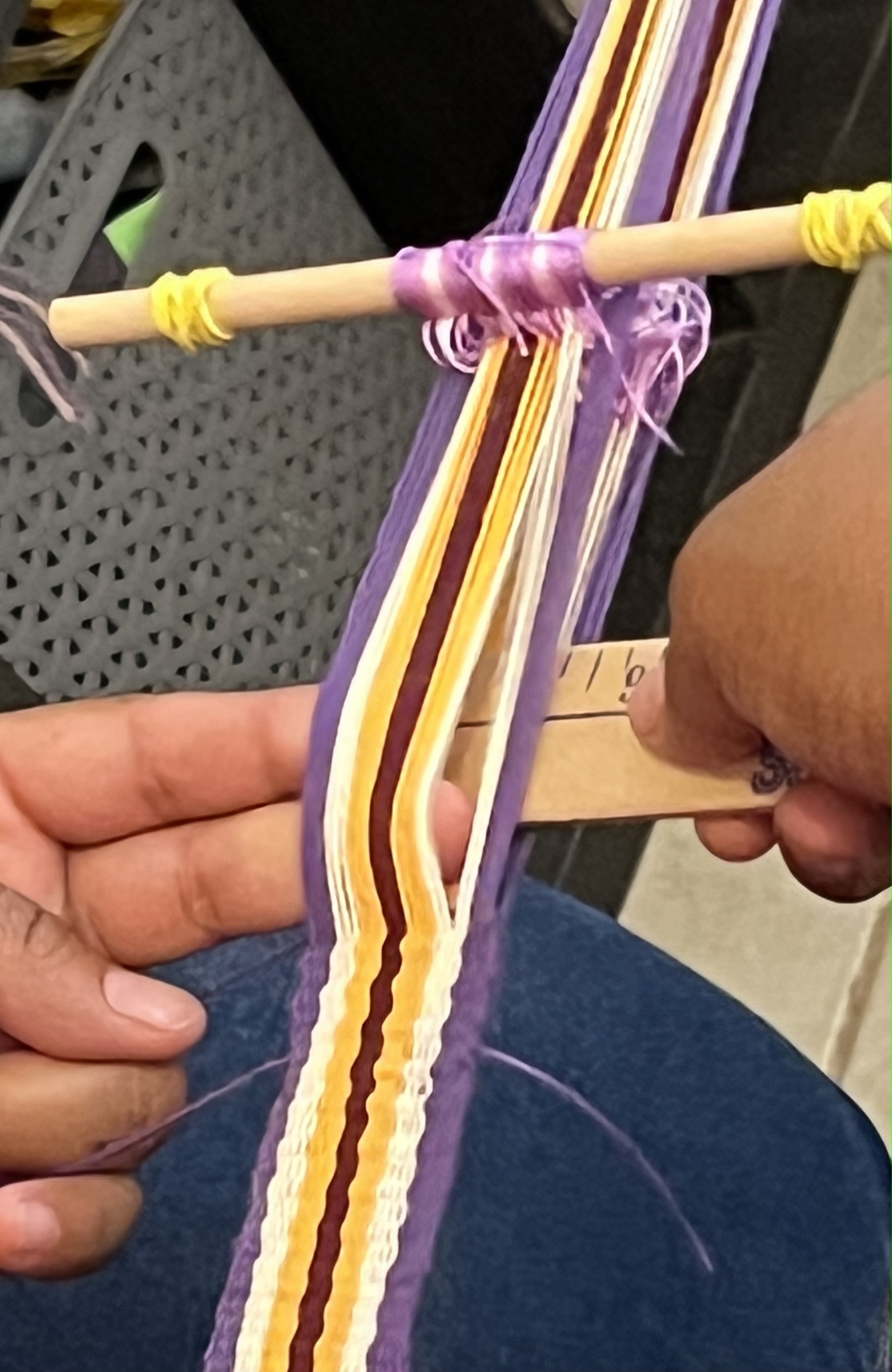
One of the coolest skills that guests picked up this year was backstrap weaving taught by Karen, an ABB volunteer from Marana who has studied with master weavers around the world.

Backstrap weaving at la Casa de las Misericordia y Todos Naciones Shelter, Nogales, Sonora, MX

We visitors from the U.S. come as guest teachers. As long as donations to ABB hold out, we can pay a small stipend to keep an on-site teacher at the community. Early on, after our first teacher rotated out, Mayra became the next weaving teacher. Mayra quickly surpassed basic skills and went on to teach guests to weave on handlooms and now backstrap weaving.  Her patient and loving presence will be dearly missed when it comes time for her to leave for the U.S. The tradition “each one, teach one,” we’ve instilled at the shelter helps Mayra pass the baton to the next teacher.

Mayra’s classes

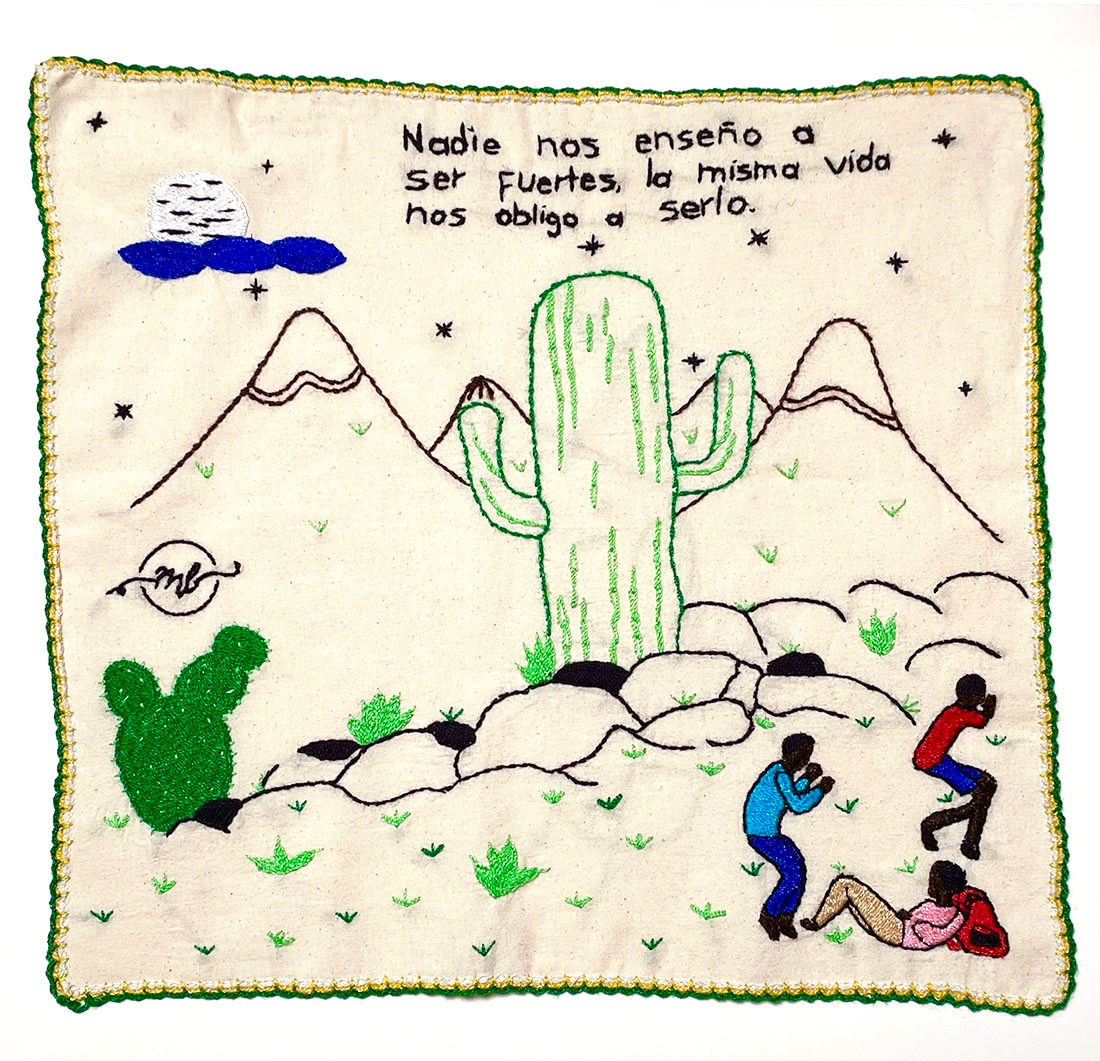
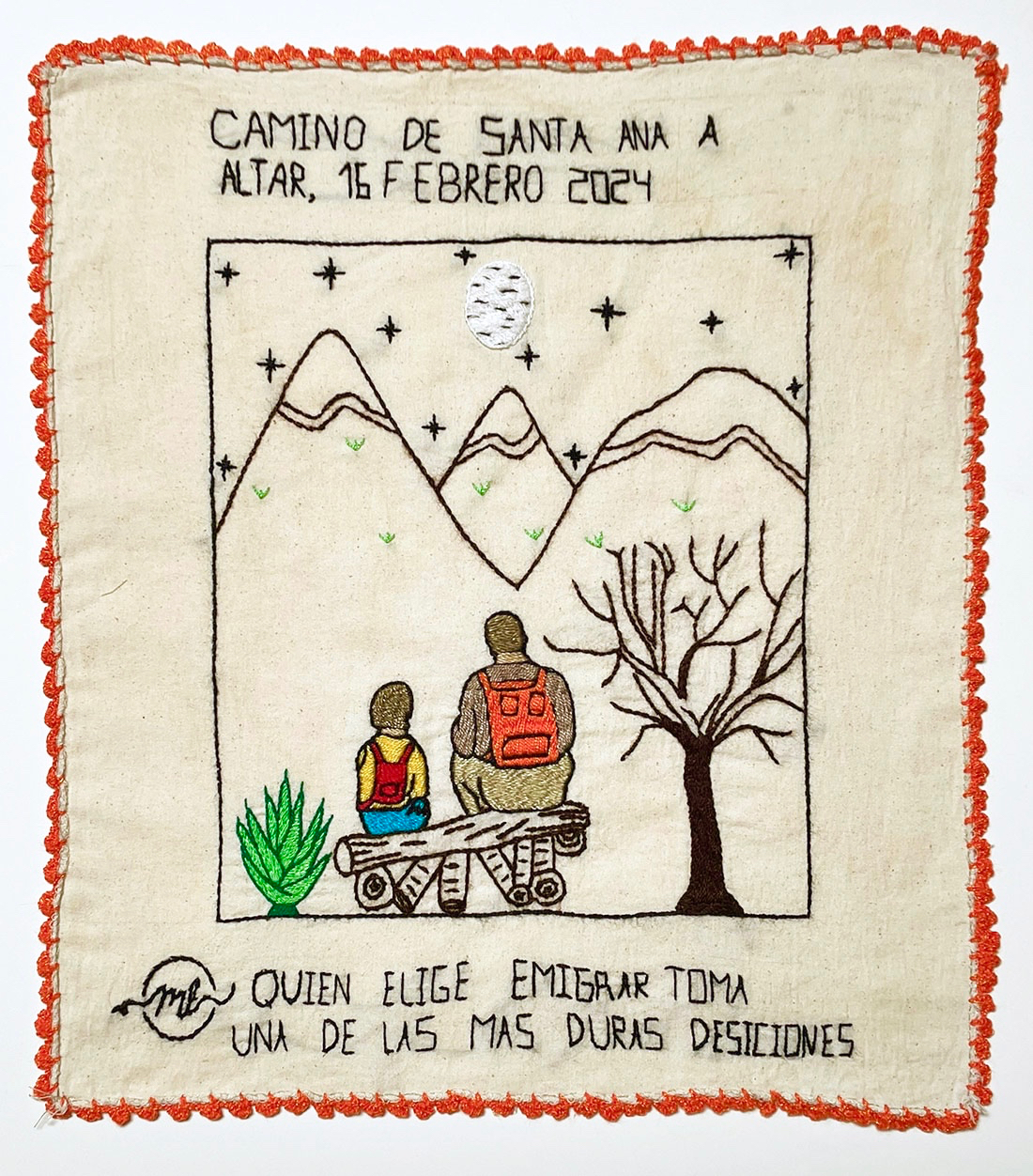
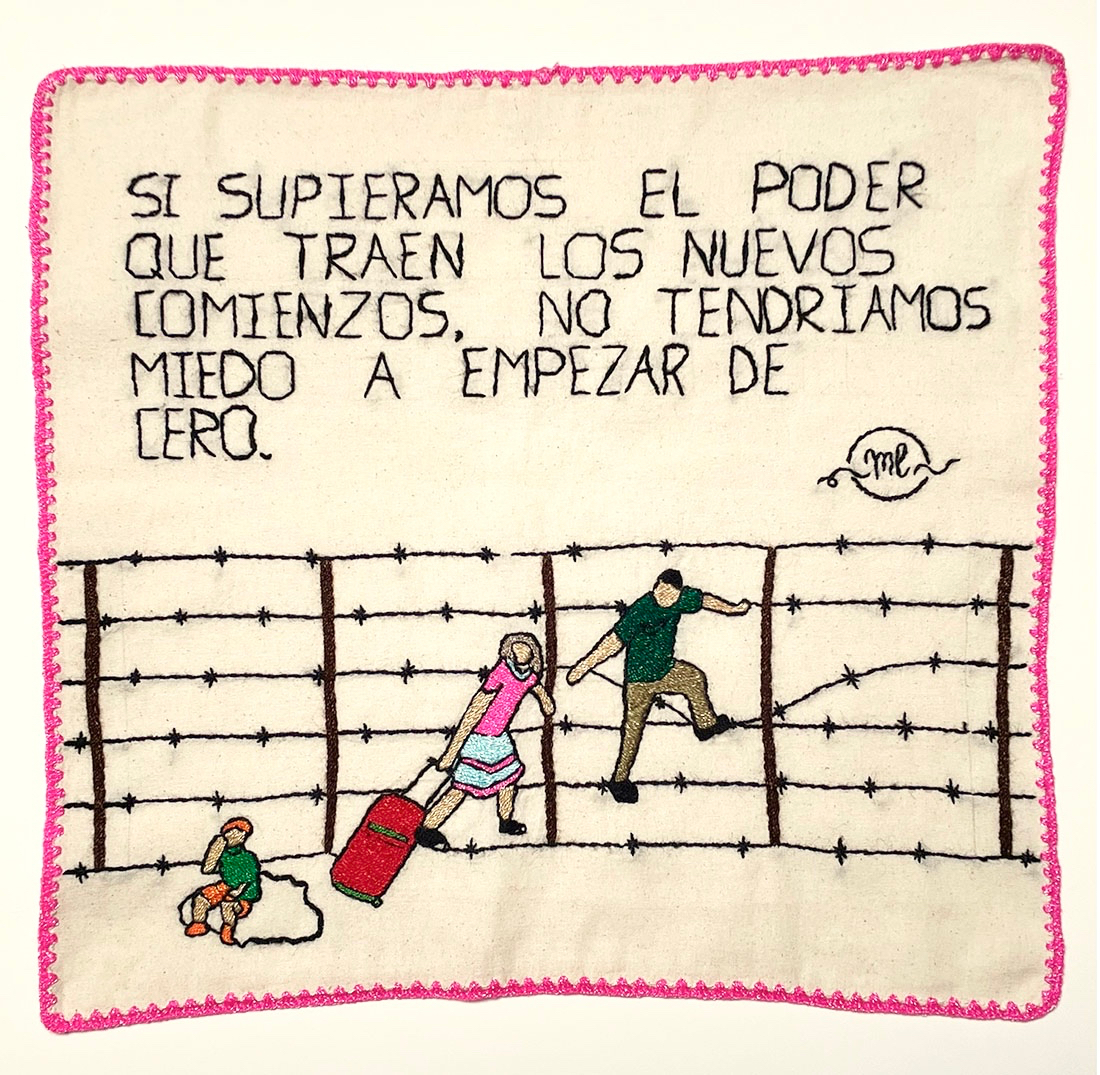
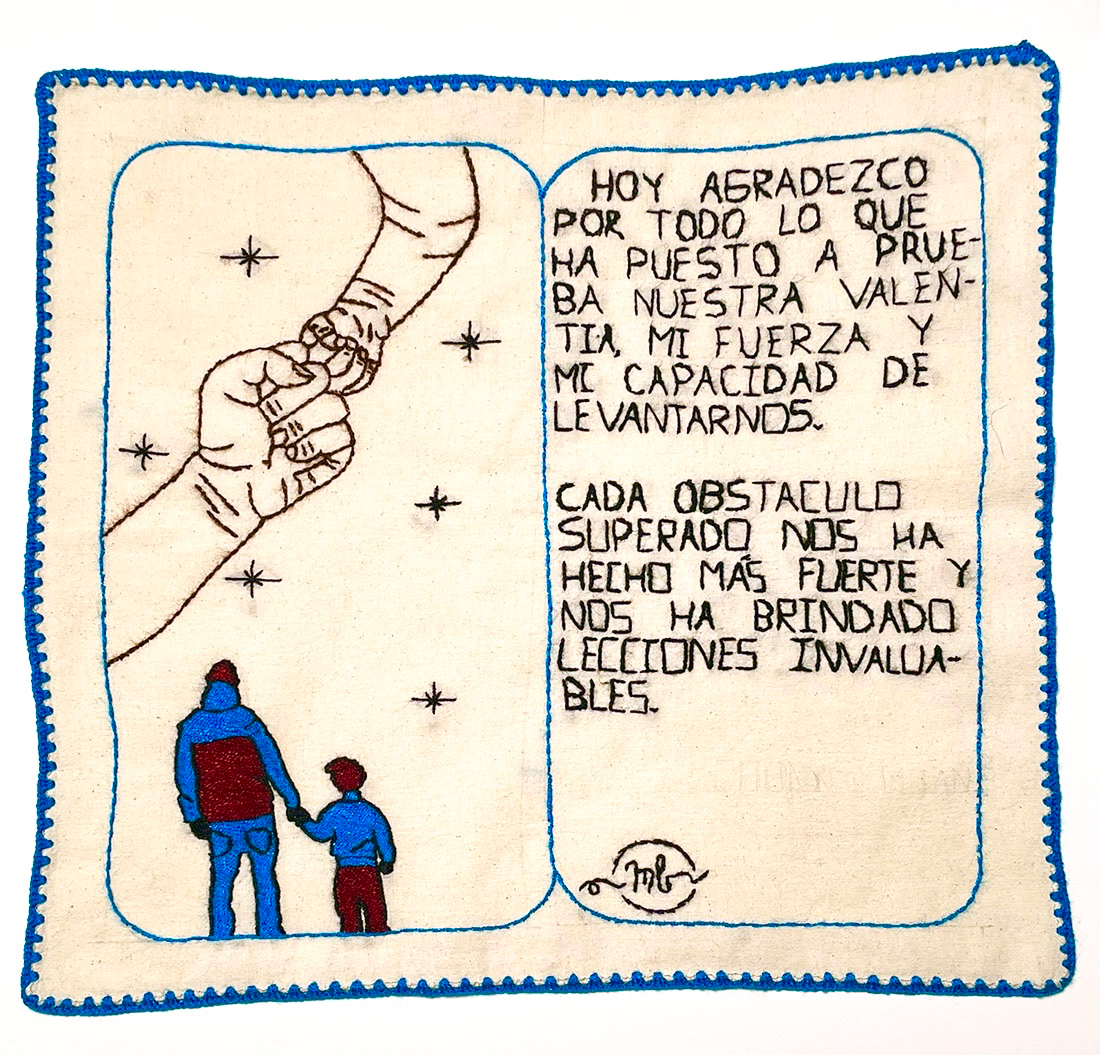
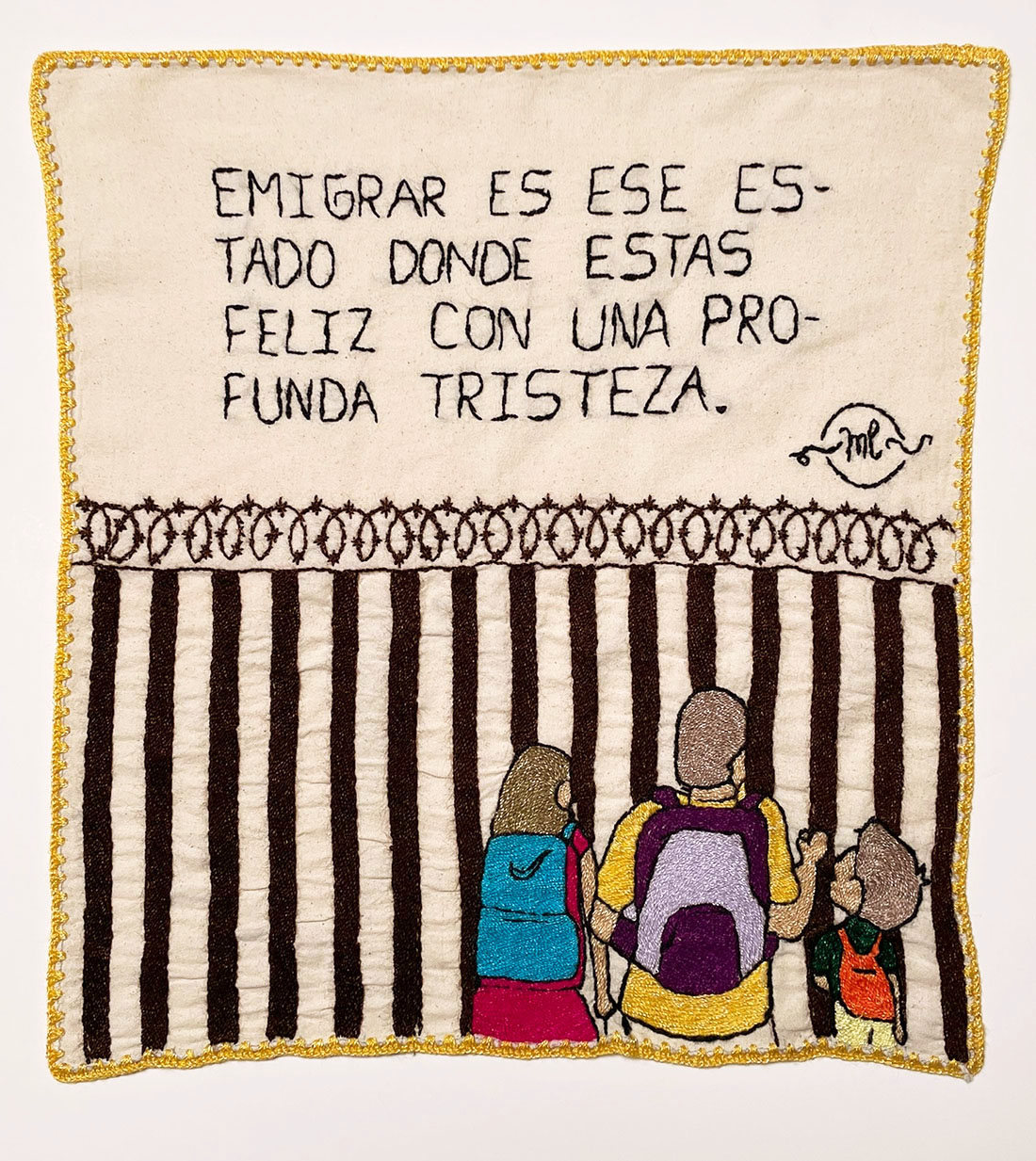
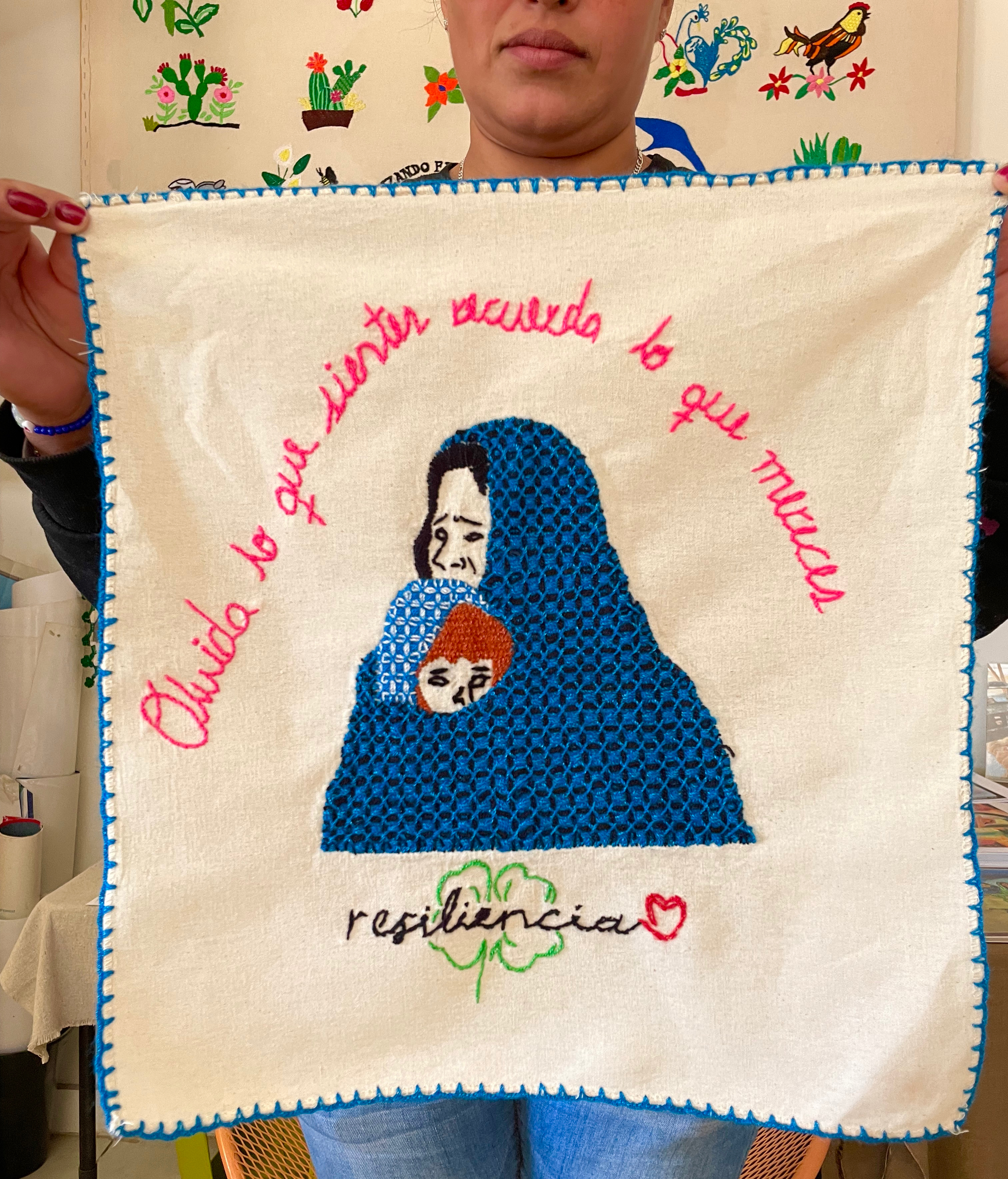
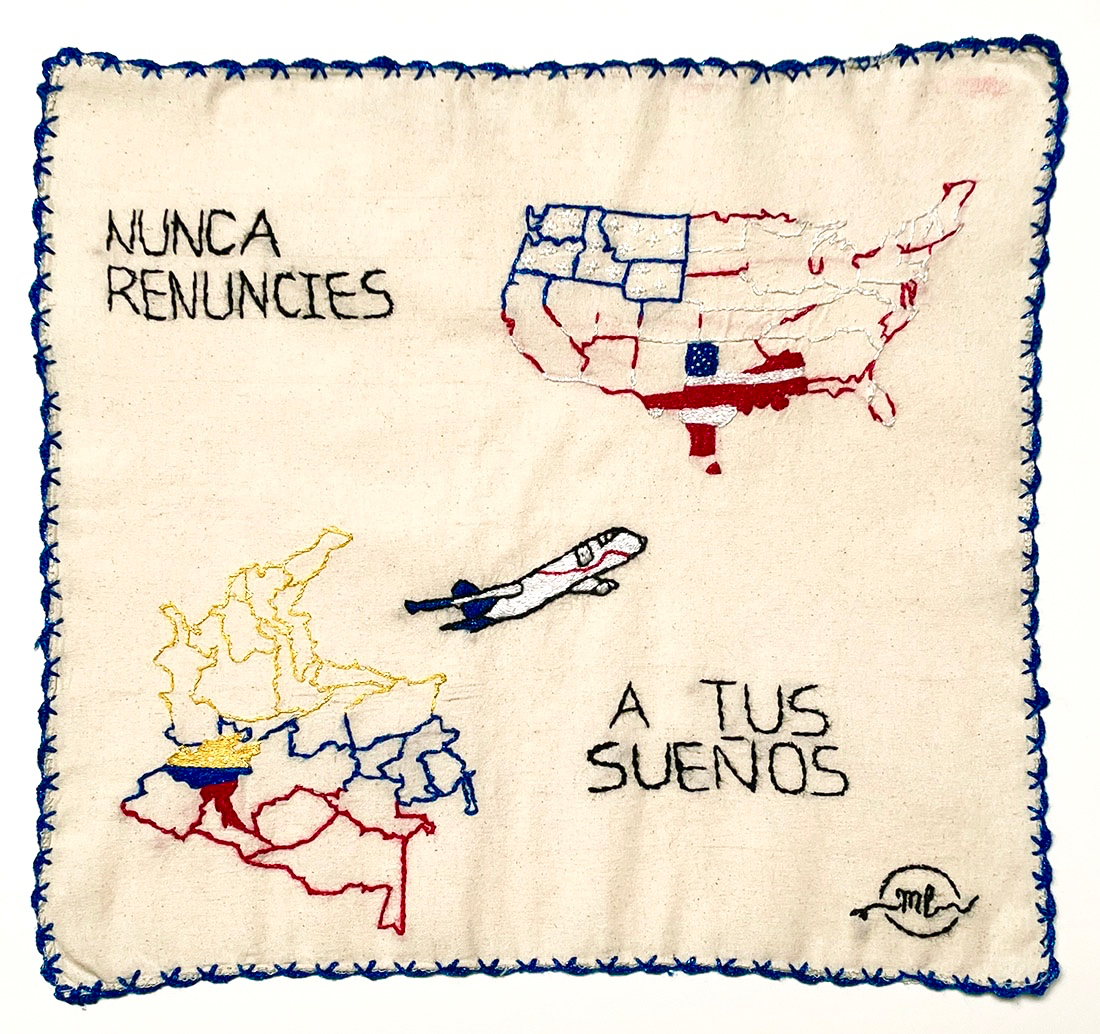
Embroidering continues to flourish at la Casa de las Misericordia y Todas Naciones, and we are seeing more story cloths as time goes on. I believe we see more now because the makers feel truly safe at this gated shelter. They finally have the space to breathe and the support to have their feelings. 

If they don’t feel confident enough to draw what they see in their imaginations, they feel comfortable asking for assistance from Director Sister Lika Macias, a painter, who can help them realize their vision. Similar to story cloths found in other conflict areas around the world, the embroiderer stitches her or his story of migration and loss, memory, and prayer. Deeply personal and true, the maker can begin to heal in the process.

We will see together a new Dawn, embroidered by Carla

Bordando Esperanza – Embroidering Hope Exhibition

If you are in the Tucson area and you are interested in story cloths, especially as they relate to the cultural history of our borderlands, faith, and migration, there’s still time to view the exhibition “Bordando Esperanza- Embroidering Hope, 75 individual mantas embroidered by asylum seekers, at Border Community Alliance in Tubac where the exhibition has been extended through January 2024. This Winter, the Exhibition will be at Suffolk University in Boston. We are planning for Miami University in the Spring and are reserved for the University of Chicago in the Fall of 2024. 

If you’d like to help support Wendy Lopez and her family, our embroiderer from El Salvador (now in Tucson) who created the central story cloth of the exhibition, visit our Direct-to-Artisan sales page:  Her contemporary feminine work is super popular and she takes commissions. This is a wonderful opportunity to support artisan families to survive in the U.S.

To everyone who has supported the Friends of Artisans Beyond Borders throughout 2023, mil gracias – thank you! None of this would have been possible without your support.

May Peace prevail in the year to come.

V. James and Friends of Artisans Beyond Borders

1/1/2024