If you are interested in exploring more about humanity’s Devotional Arts and the Arts of Immigration, subscribe for FREE to Ancestors Walking on Substack.
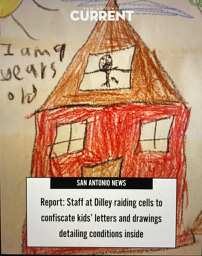
Since I published this brief but revealing testimony last week on my first Substack, emigrant children’s drawings and letters are now being confiscated in detention facilities, so that the truth does not get out. As a former art therapist, I learned a long time ago that nothing reveals the truth like ART, especially the artwork of children, followed by their mother’s handwork.
Emigrants: Empire can try to deny your humanity, but no one can deny your story, your dignity, your incomparable truth. To migrate from peril to promise is a human instinct following in the footsteps of our ancestors.
Readers: This Substack explores humanity’s devotional arts through the arts of the marginalized, from art produced by women religious to emigrants in detention and citizens in prison, to art of the streets, all informed by historical references e.g, retablos & ex-votos from the U.S.-Mexico border, Art from the Holocaust, visual stories of refugees and survivors of war.
In this current regime hostile to anyone deemed the other, I post less digitally largely to protect the artisan families that we lift up, but the stories of the people will not be disappeared. In the midst of mass distractions and glittering screens, the still silent image; contemplative visual art allows us to stop, look, and feel. This work demands our attention and commands our presence, deepening our understanding and telling us what we need to know. Please seize the time to see.
In the following piece about emigrant stories in stitch, we cherish these slow-stitch depictions of family migration, lest we ever lose our neighbors and, God forbid, forget what they go through to reach safety and freedom. After what went down in Minnesota and what’s happening now in communities, big and small, across the country, people are mobilizing, doing what they can behind the scenes to safeguard the families in their midst.
This series of embroideries was created by a woman we will call Ana to protect her identity. It pains me to be forced to use an alias for a woman who committed no crime. And not being able to publicly credit her as the fine artisan she is infuriates me. In the latter part of 2024, I discovered the remarkable embroideries at the bottom of a stack offered for donation by residents at the House of Mercy and All Nations shelter – la Casa de la Misericordia de Todas Naciones, in Nogales, Sonora. Shortly after our visit to the shelter, Ana and her family finally crossed the border legally, petitioned for asylum, and are now in a city somewhere in the U.S., trying to hold on.
Ana stitched the story of the violence her family experienced migrating through Mexico, where they were robbed of all they had, kidnapped at gunpoint, hurt, and desperate for food and water. Still, she said she never lost faith. Many Strangers helped them along the way.
Ana had never embroidered before coming to the shelter. She learned from other bordadoras at the shelter’s Bordadoras de Esperanza – Embroiderers of Hope program. Ana’s ability to convey, with her hands, so beautifully what she and her family experienced to make it to the shelter is extraordinary.
“It (the embroidery) healed me,” she said. I know this because I no longer cry when I tell my story.”
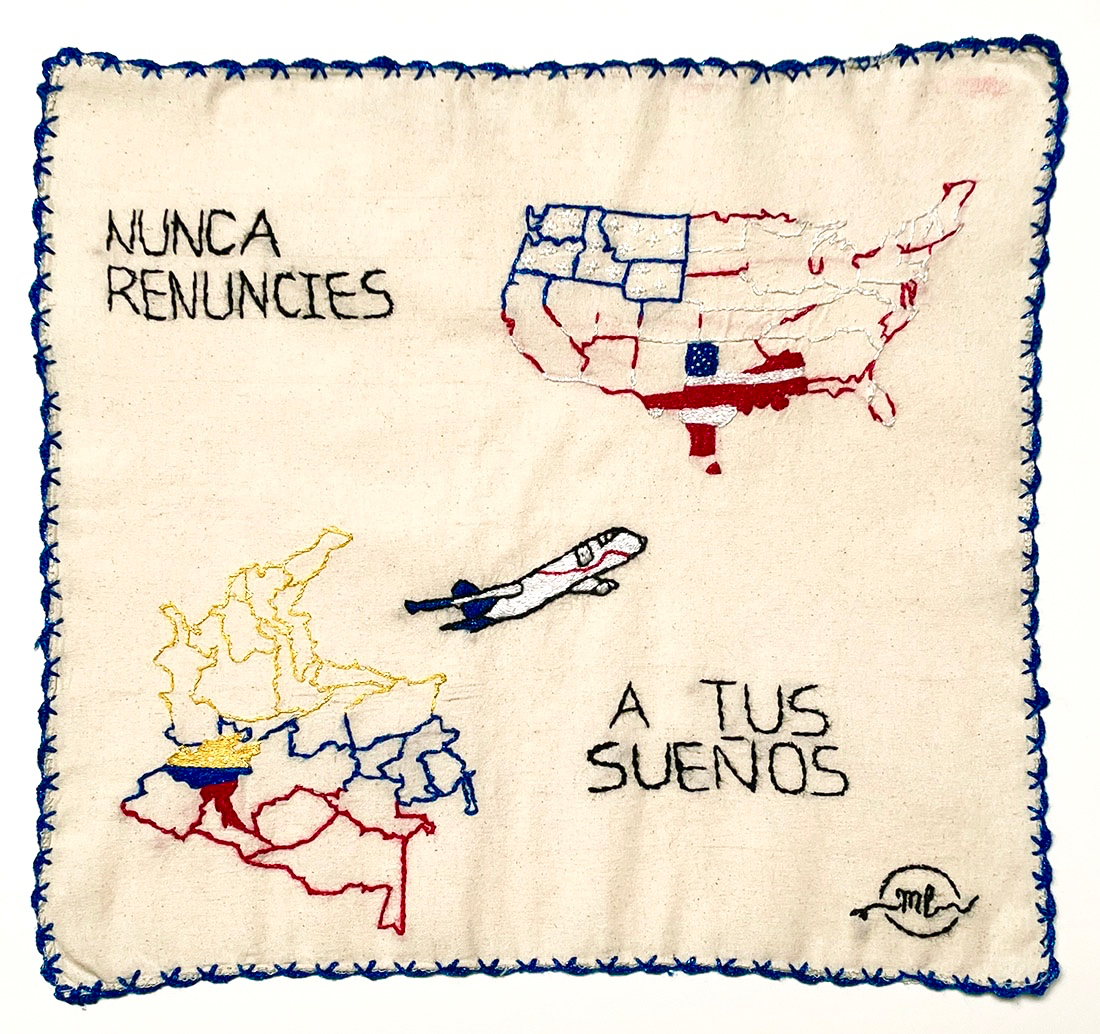
“Never give up your dream.”
“Our trip from Colombia to the United States, Ana explains. We disembarked in Mexico and then had to find our way to shelter.”
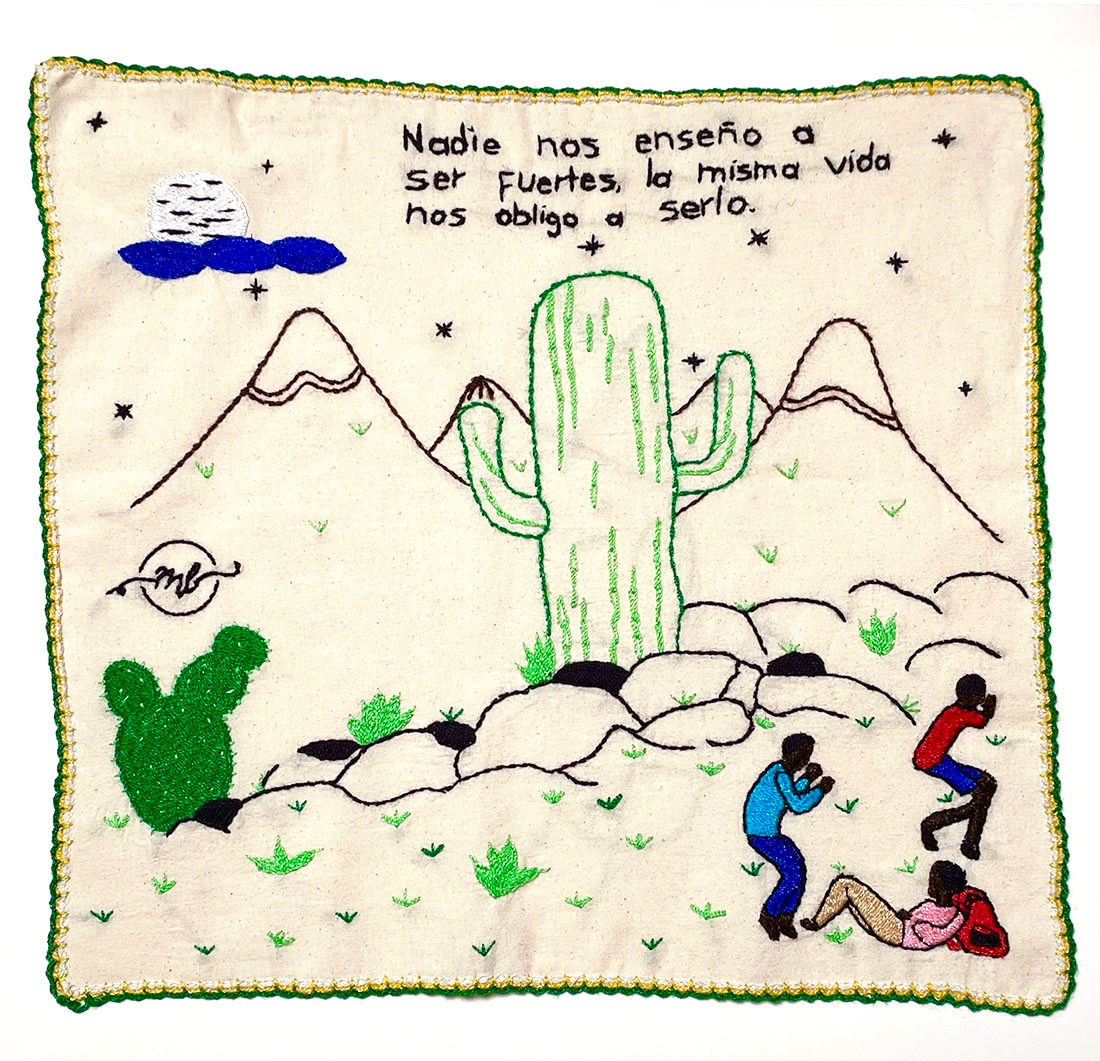
“No one teaches us to be strong; life itself forces us to be”
“When we ran from the men who kidnapped us, we fled in an unknown direction through the mountains full of cacti, thorns, bones, and animals.
“We spent three nights sleeping on open ground. Tired, devastated, with wounds on our arms, thorns in our shoes and jackets, and torn bags, without a drop of water. With mixed feelings, we decided to go out on the road to look for water. Thank God, travelers showed up and helped us with water, food, and hydration drinks for the children.”
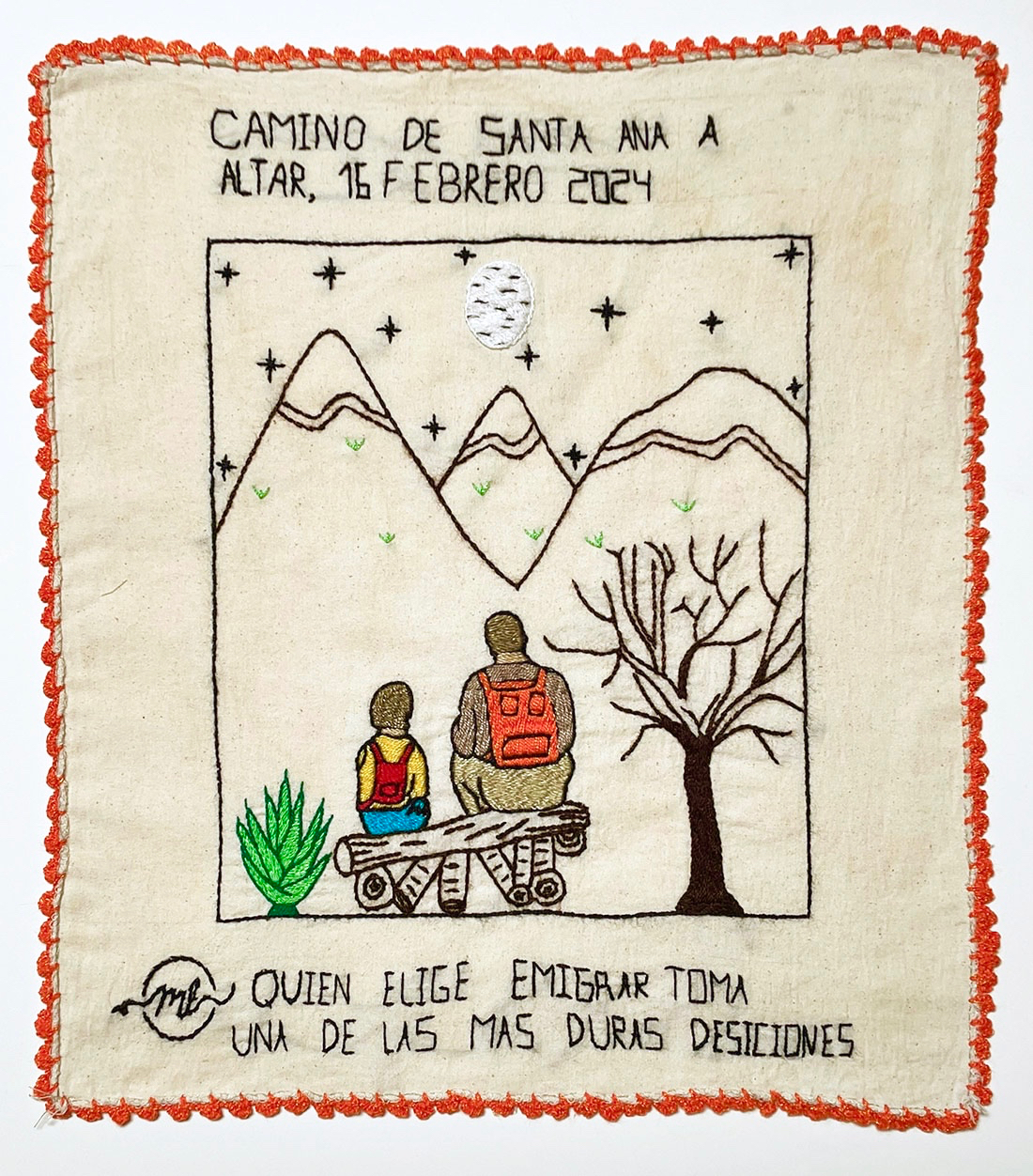
“Whoever chooses to emigrate makes one of the hardest decisions.”
“It is as if it were a photograph, it reflects the last day in the mountains, when my son cried to his father, because he was very thirsty and could not continue.”
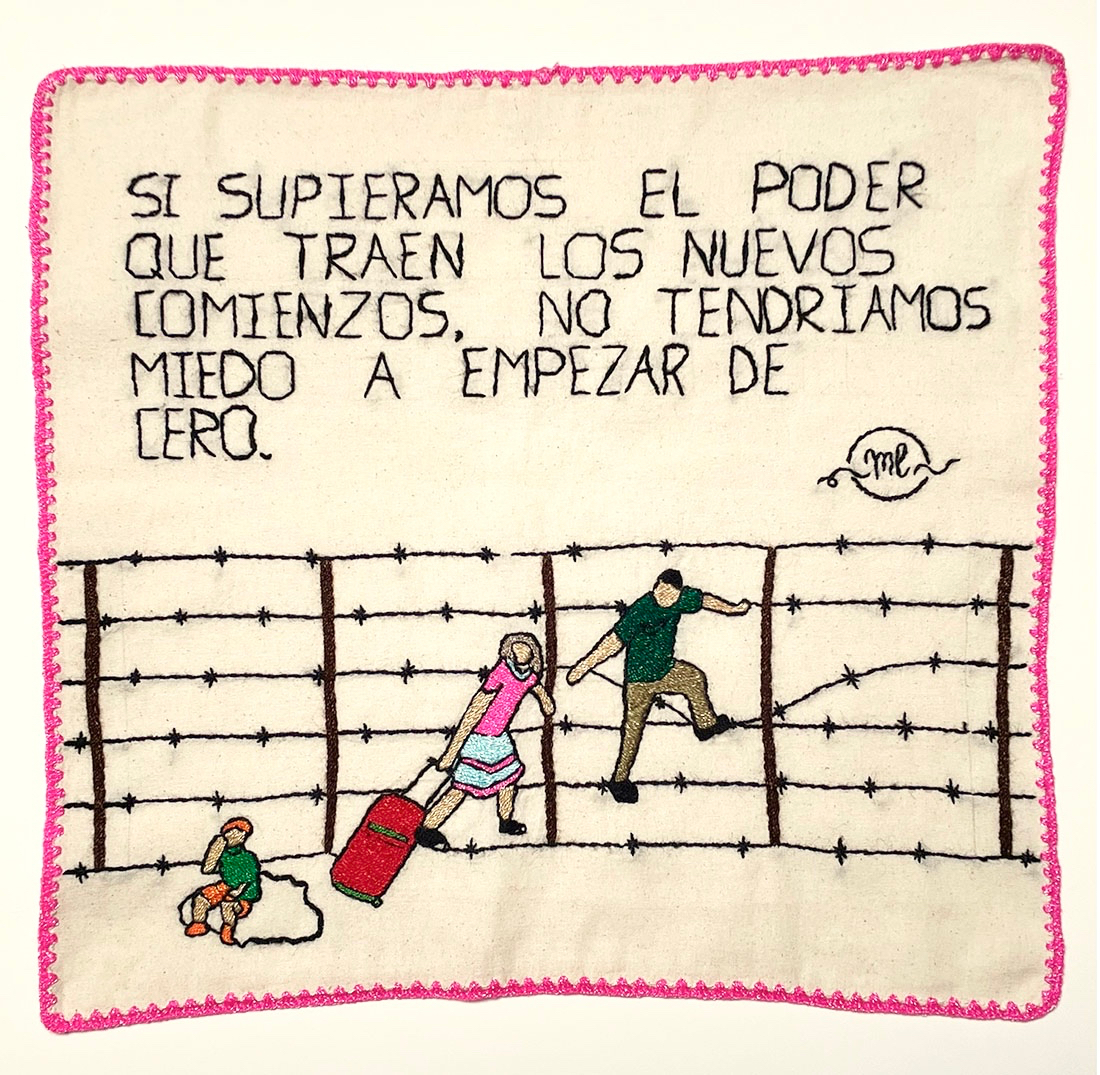
“If we knew the power that new beginnings bring, we wouldn’t be afraid to start from scratch.”
“One of the many wire fences that we passed while fleeing from the kidnappers who had weapons of all calibers, long and short range.”
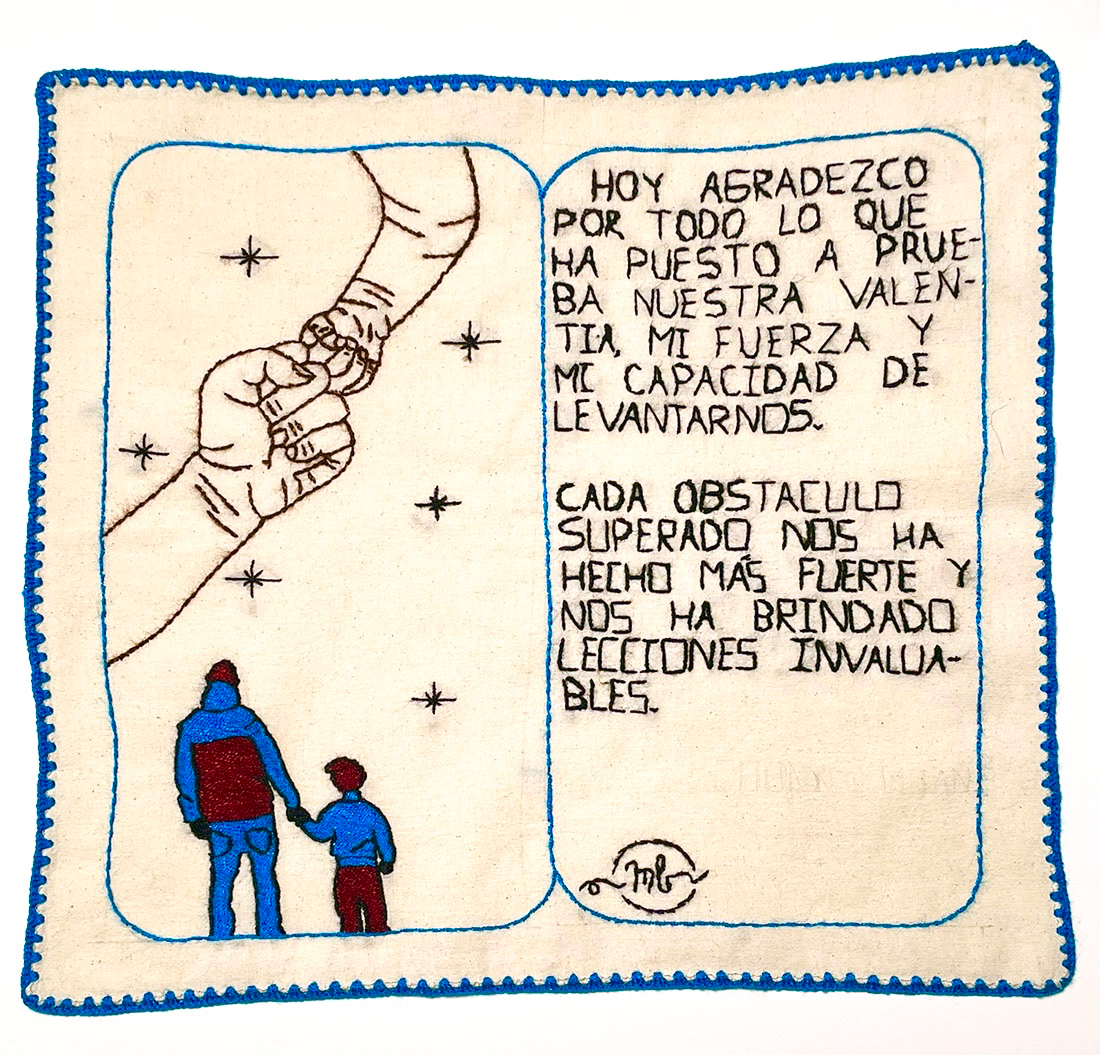
“Today I am grateful for everything that has tested our courage, my strength, and my ability to rise up. Each obstacle overcome has made us stronger and has given us invaluable lessons.”
“This is our gratitude to God and to the people who welcomed us here at the shelter because it was salvation, to feel that here we were no longer in danger like we had been in Altar, Sonora.”
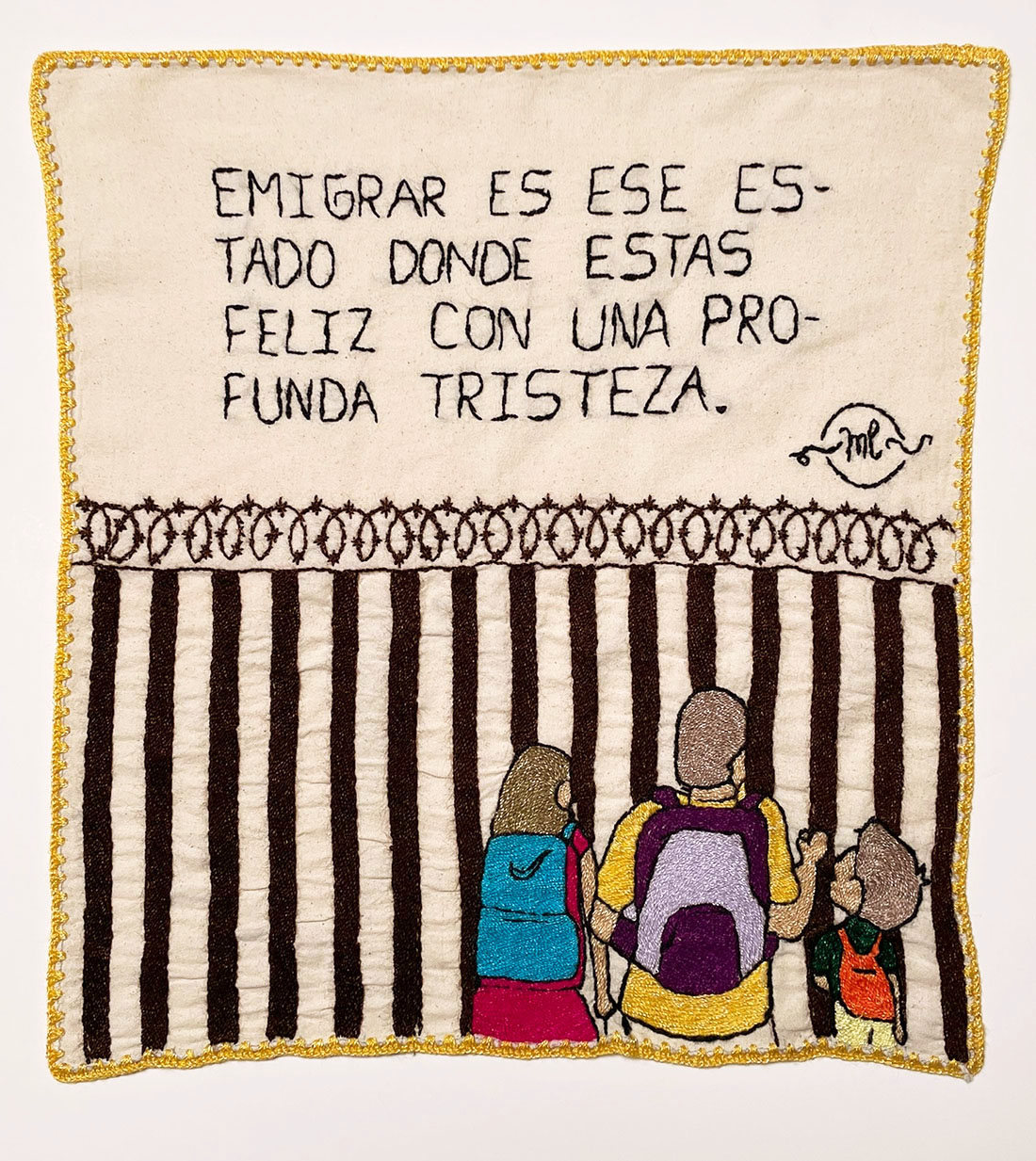
“Emigration is that state where you are happy with a deep sadness.”
“This was a visit we had to the wall and the deep emotion that we are going to fulfill our dreams, but we leave so much behind. I had to leave my mother.”
###
For more writing on the Arts of Migration:
Eye of Witness, Hand of Faith: The Art of Asylum and New Retablos at the Border
For the Eyes of Babes: The Art of Asylum
Migrant Woman Fleeing Violence Find Beauty and Healing in Embroidery
For a recently published story on the power of transgressive Cultural arts in conflict zones:
Thanks for reading! Subscribe for free to receive new posts and support my work.
 Art & Faith in the Desert